“In vitro” lab-grown meat: the future of ethical meat-eating?

happy-cow

A week in to being a vegan and I haven’t been struggling at all with not eating meat…yet. Since my passion to go from being a full-blown carnivore to not wanting to have anything to do with meat or dairy stems from ethical and environmental reasons, it hasn’t been that hard to resist. However, those meaty flavors are what draws anyone in to eating meat, so I was wondering today if we made meat in a controlled lab setting, could that solve some of our global problems?

When I started researching online about lab-grown meat, it was more to see where progress was at with it as I knew that it was happening. I’ve seen a lot of mention of growing replacement body parts and organs of late (even a 3-D printed ear) so it seems logical that we can grow edible flesh using the same stem cells. The thinking here of course that you only need a few cells from an animal so it doesn’t need to sacrifice its life and the resulting meat has no nervous system therefore it cannot feel pain. If you must eat meat, I can see no other ethical option than this one.

The Wikipedia listing for “in vitro” meat is quite comprehensive and indicates that the process has been around for about 15 years and initially arose out of experiments NASA was doing for astronaut food in the 90’s. More recently, techniques are getting closer to simulating the taste and texture of real meat. CNN reports that several companies are saying they are ready to bring their research to a commercially viable product but they will require the infrastructure to bring the cost down which is prohibitively high right now. But it won’t be too long before the “engineered meat is likely to be more of a “niche” product, priced somewhere close to Kobe beef, which is currently around $125-$395 a kilo.”

Cost-aside, it is certainly heading in the right direction and while it will be a long process of getting people to accept eating manufactured meat, I reckon it is an inevitability. The meat industry is completely unsustainable and, “as well as animal welfare concerns over rearing large numbers of farm animals in close proximity, the water use, farmland for animal feed, waste and greenhouse-gas emissions associated with meat production make it one of the most significant environmental problems in the world today.” (CNN)

Ethically, I have no problem with this so long as animals aren’t harmed in the stem cell extraction process, and, the manufacturers of this product don’t go down the path of a Monsanto or other GMO-abusing companies whereby the resulting meat is compromised nutritionally or with safety concerns. Experts in tissue engineering indicate that since the meat is cultured in this manner, supposedly additional nutrients and things like Omega-3 could be added to it to make it more nutritional than regular meat. “Cultured meat could also reduce the pollution that results from raising livestock, and you wouldn’t need the drugs that are used on animals raised for meat.”

I think I would eat this meat if it passed food standards and suitability testing. However, there are a lot of purists (and by “purist” I mean anyone who is currently unwiling to drop meat from their diet) who will have a problem with the meat unless it looks, smells, tastes and feels like meat. Since we are in the early days of this tech, I reckon it’ll be possible to get there in due time. Hopefully we’ll get there soon enough to keep the world from succumbing to this desperate state we’ve put it in.

Until the frankenmeat comes, we’ll just have to stop eating meat and killing innocent animals, now won’t we? 😉

Free energy will save our world

Poor planet Earth has so many problems with us humans as we plunder, ravage and abuse this green and blue sphere that we call “Mother”. Climate change is in full swing but worse than just increased earthquakes and dirty air is the fact that we simply cannot sustain ourselves with the amount of energy we use nor will we have enough clean water to drink in the foreseeable future (certainly some parts of the planets are far beyond this already).

What was needed was some directed thinking by some of the brightest minds in the world to come up with truly clean, limitless, sharable, cheap energy….and they may have done it! Watch this encouraging video from a presentation done at a TED event:

Be the change you want to see in the world

I love that quote by Gandhi; I have embraced it and strive to live by it but it’s surprisingly difficult. Not so much in the principle of it but rather the not-being-preachy-to-others part.

I try hard to live a simple life: happy with less needs, less “stuff”, less impact on this planet, less treating being financially successful like that’s the be-all, end-all of life. However, time and time again I need to be reminded that people will likely internally consider and respond to the subtle suggestion of observation of the way I conduct my life rather than having to explain why I think that the way they are doing things is wrong. If they see with their own eyes and in their own way how I respond to the challenges I face or handle certain lifestyle decisions and see that I am still happy (maybe less stressed, more free time, etc…) and functioning quite fine with less then perhaps they might want to consider incorporating some changes in their own life. Even if it has nothing to do with being personally happier as such, but seeing that I care about injustices, the world we live in plus the consideration for people around me, then the need to do something for the greater good might be inspiring in itself.

Even writing this down makes me feel preachy though. And a bit self-righteous. As if I am living the perfectly low-impact, community-centric, walking-with-the-poor, know-your-neighbor, self-sustaining lifestyle that I think everyone else should be striving for. I guess the aim of living this lifestyle that I believe in is that if there’s something — even if it’s just tiny — that makes someone reconsider something they could improve on in their own life, then the ball might start rolling to get more and more people beginning to change.

The reason for dwelling on these thoughts recently stemmed from my frustration the other night with hearing yet another self-absorbed person talking about how important and expensive their new car/house/furniture is, as if this is the most important part of their journey as a human being. I was frustratedly telling Heidi that I’d like to remind them of a few facts about how wasteful and shallow their consumer-driven, Earth-destroying lifestyle is, but she quickly reminded me of the risk of being labelled a hypocrite if even one thing in my life could be argued the same way (ie. driving a car, flying too much, using too many carbon emissions, living in a comfy house instead of under a tarp in the gutter, etc). Best to keep doing my best at what I’m trying to achieve and let examples of those actions give people some ideas.

Anyway, the very fact that I’m even writing this post is probably sounding hypocritical in its own right, but sometimes I just need to blather on to maybe make a point… 😀

Here; these guys say it really well and are being rather quite blunt about it!

Smart design: Solar windows

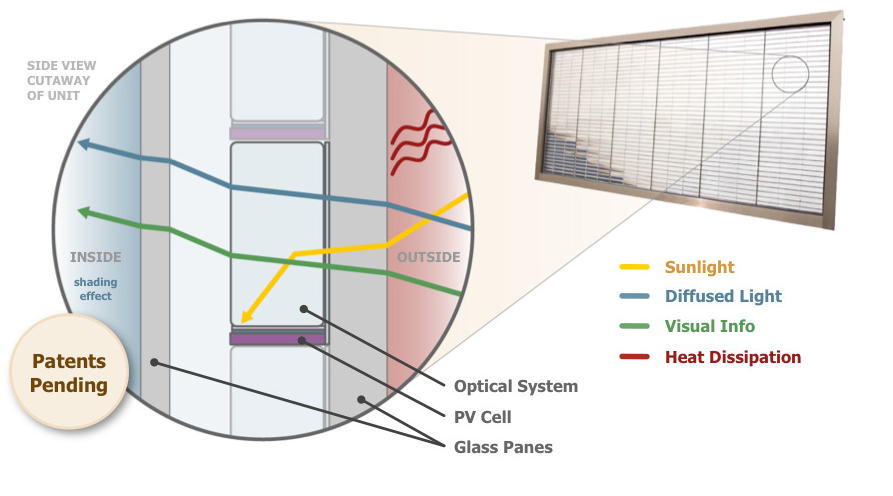
Hooray for smart people! This concept has been toyed-with by researchers for a couple of decades, but an Israeli group, Pythagoras Solar, has begun to sell their design that they have been working on the past 4 years.

The benefits to a solar window over the usual panels is that you have a triple-purpose element to your house whereby the sun’s heat is being shielded from entering the house but you are allowing light to enter as it normally would, and with added benefit of generating electricity at the same time. The added natural light means you use less electricity anyway, and the reduction of heat coming through the windows means less burden on insulation and cooling requirements inside the building.

With a financial recoup time of half that of normal solar panels, it’s looking to be a good investment.

As I personally think solar panels are ugly despite the great things they do, this to me seems like a much better option for anyone who likes natural light and to get “off the grid”! Good work Pythagoras!

Here’s an article from SmartPlanet that tells you more about the idea and company behind it.

Party-time! Tequila is a fab new bio-fuel option…

I thought this was a great article to share as the crop it addresses could be a game-changer in the bio-fuel industry. It’ll flood the world with tequila at the same time, but is that really a bad thing…?? 🙂

http://www.thegreenwayup.com/stories/making_tequila_tracks

(The Green Way Up guys raised money to drive a vehicle around the world using only bio-fuel; it’s a cool idea and worth checking out the other stuff they’re doing on this blog)

Swirly lifey stuff

I’m on the eve of my tenth move in 2 years, weary at the thought in principle but on further reflection, relishing the idea that I have very little “stuff” to actually move. What a change!

As recent as 2 months ago, I had to haul things I had in storage at a friend’s place in Brisbane over to another friend’s place (bless their hearts for being so kind to make room for my crap) which took a 1 1/2 ton truck and about 10 hours of my time to load and unload. This is of course stuff that I am not using, just towing about from one location to the next with consideration of using it at some point. Meanwhile, I have been successfully living my life for the past year and a half with none of it. Sure, I miss the odd thing like when I say “oh, I have a Breville in storage; would be good to have a toastie right now” or “my golf clubs are in storage,” but these things happen so infrequently as to not recall thinking of them moments later. So when I thought “oh here we go again, another bloomin’ move (substitute “bloomin” with a more colourful term), I was pleasantly surprised to find when I really thought about it, I have about 4 or 5 boxes of stuff, clothes and 4 or 5 items of furniture and that’s it. Easy. Yay!

Interestingly, I’m possibly moving out with my girlfriend’s friend (my beautiful Heidi is old-fashioned so we cannot live together yet and thus the living with her friend 🙂 ) who is very much a simple-living-eco-friendly-sustainability-loving-community-oriented person like I have become, which is a new experience for me. Perusing potential dwellings with someone who heads out to the backyard first to see where the veggie patch might go before looking at the house itself is different but refreshing; I like her priorities! After many years of looking at things through the standard lazy commercialised-living lens as many other people do, I’m truly starting to consider things like: hoping for rainwater tanks and solar panels on the property; how passive heating/cooling will work effectively in the house; what fruit trees exist on the land and how much space is there for growing veggies; ensuring there is opportunity for community gatherings and sharing meals with people; and making sure that shops are walkable/rideable to conserve fuel. Whereby I was quite happy to live alone until recently, I’m now reveling in the opportunity to live with someone else and develop a greater sense of community; something I’ve spoken about but not really put into practice yet. It’s quite exciting!

I’ll update when I find a new place and we’ll see how many of these new thoughts have been put into practice.

All of this moving comes amidst a push for funding on my human trafficking film which we’re starting to work on. My feelings about the environment and climate change became blurred when I was away looking at people dying or screwing up their lives from poverty, but I’ll save that for my next blog entry. G’night! 🙂

Lifestyle Report – as of May 2011

This is my second Report (since January’s) as a way of assessing my successes, targets, improvements and areas I need to be more vigilant with when it comes to simple, ethical, environmentally sustainable and community living.

It might not be an interesting entry to read but it’s a way to keep myself accountable and constantly improving my lifestyle.

I’ve highlighted positive changes in green and backwards steps red. So, as of today:

ETHICAL/SUSTAINABLE LIVING

• grocery shopping (with % of how often I do it)
— local green grocer for veg (60%)
— leftover bread free at end of baker business day (100%);
— skip-dipping/dumpster diving (0% but aiming to re-introduce it;
May: have been looking , but it’s hard to find anything in Adelaide)
— major supermarket for all else (100%);
— Fair Trade where possible (tea, chocolate, recent clothing)
— some organic (10% – food, soap & shampoo)
— use Ethical Guide to boycott bad companies, GM food (95%);
— boycott food with known cruel processes eg. veal (100% where known)
— food miles, locally produced (25%)
— meat consumption (15% of meals; May: this is mostly due to being poor)

• grow own food (not yet 0% but get some from friend 3%)

• household shopping: I only buy new from store if I can’t get from op shop or build myself;
— purchased new in past year:
—– furniture (0%)
—– clothes (10%)
—–accessories (15%)
—– car ( 0%)

• home energy:
— electricity:
—– solar/renewable = no
—– aircon/heating (10%)
—– computer (on 24/7, asleep when away & at night)
—– fridge (2/5 star rating)
—– dryer (0%)
—– water pump (everytime the tap is turned on);
— water:
—– rainwater tank (90%)
—– shower grey water for garden (0% May: stopped when I realised I didn’t have time to deal
with the garden and water is from tank anyway)
—– shower avg. duration (5 mins)
—– garden (0%)
—– dishwasher (0%)
—– washing machine (top loader 2/5 star rating)

• waste:
— food scraps (90%; goes to compost);
— wasted food (5%);
— recyclables like glass, paper, aluminium cans (95% to recycle bin, 5% kept for food/household storage);
— wasted paper (minimal use of printer, kitchen & recycled toilet paper)
— wood (90% saved for building material); May: haven’t built much now that I have what I need!
— white goods, electronics, equipment (0%);

Areas to Improve: fewer food miles; support local; buy organic if it makes sense & affordable (May: been very tight on cash the past few months so it’s hard to justify extra costs for organic sometimes); grow some own food; continue to consume less energy & town water. As it gets colder, it is tempting to use more heating but I’ll just have to be as resolute as possible and put on more clothes!

.

– – – – – – – – – – – – – – – – – – – – – – – – –

.

SIMPLE LIVING
• build most of my own furniture (lounge daybeds, coffee table, office desk, outdoor tables & seats)
• other furnishings have been donated (bed, futon, tv & DVD) or secondhand (kitchen table & chairs, office chair, rug); May: acquired two wooden trestle tables and some deck chairs i hard rubbish
• buy nothing that isn’t essential to the household or work
• work less, spend more time connecting with friends & family; May: disappointed as work has been all-consuming for the last 3 months; on the positive side, a chunk of that is due to a doco I’ll be shooting soon which is about helping people in need, so I think that’s good.
• spend money on essentials, friends, charities; May: out of necessity, been spending very little on me

Areas to Improve: connect more with real (not virtual) people

.

– – – – – – – – – – – – – – – – – – – – – – – – –

.

ENVIRONMENTAL
• approx. annual carbon footprint (avg. based on lifestyle as of today): 9.1 tonnes of CO2 (Aus avg. 16 tonnes; world avg. 4 tonnes)
• car usage per month – approx 300kms ; mileage (approx 10kms/L)
• bus instead of drive (15%)
• ride/walk/skate instead of motor transport (15% – 20min walk to shops)
• return flights in past year – domestic (3), international (0); May: about to embark on massive trip for doco for which I will be shedding environmental tears…26,000kms planned. This will blow my current Carbon Footprint figure out of the water 😦

Areas to Improve: take fewer flights; walk/skate/bus more rather than car; use less electricity; aim for 7-8 tonnes/yr CO2

.

– – – – – – – – – – – – – – – – – – – – – – – – –

.

COMMUNITY
• I live walking distance to my girlfriend and a couple of other friends; 5 minute drive to a couple more
• intentional community living (share house or close living) = no
• share property or resources with community (some household items, driving, food with girlfriend & her housemate; borrow from other friends occasionally)
• collect hard rubbish from neighbourhood
• engage in conversation or help with mentally/physically challenged people in neighbourhood (30%)
• give to charities (monthly to: 1 x global aid, 1 x animal, 1 x heart foundation, 1 x activism organisation )
• volunteer with some friends’ and charitable projects

Areas to Improve: aim to achieve closer and more intentional community; share more resources; be more accepting of minority/disadvantaged; give more to charities; get more involved with meaningful & helpful projects

MAY SUMMARY: overall, doing the right things still but not socialising much due to workload which is not a routine I want to get stuck in. That said, I still work from home and can shuffle my schedule around. In addition, I don’t commute which saves on time, carbon pollution and gives me more opportunity to be social. Some areas I can still be a bit more green.

Intentional Community living

“Intentional” and “authentic” community living are a couple of words/phrases I had never heard before about a year or so ago. When you live in a city in our society and follow the rest of the pack, like I did (and still do, to some degree), you are led to believe that we should spread ourselves out – wayyyy out – sprawling our cities to the max, stake out our 400-600 sq metres+ of land, and live at arm’s length from our neighbours and also, effectively, from the problems of the city/world. This “buffer” gives us our private space to stretch our legs, let the kids safely run amok, put in a swimming pool and successfully segregate ourselves from everything that might impinge on our peace and quiet and security. What it is also successfully doing, however, is isolating ourselves increasingly more from other people and their needs, struggles, support, and face-to-face interaction.

I personally tend to batch together the ideas of intentional & authentic community living as I think there are elements that overlap: intentional communities can be defined as a planned residential collective of homes and people who work as a team to see through their common visions and goals together, sharing responsibilities and resources including traditions, beliefs or spirituality. A brilliant article on this idea is at the Intentional Communities website (IC.org). In her book Designing Social Systems in a Changing World, Bela Banathy describes authentic community as “a group of individuals who have developed a deep and meaningful commitment to each other and to a shared meaning or purpose.” These members of the community “feel that they belong together believe that they can make a difference in the world by pursuing their shared vision and purpose, communicate with each other openly, honestly, and creatively”, deliberately avoid a hierarchical or bureaucratic system of organisation, instead “govern[ing] themselves by shared stewardship,” and nurture and practice genuine development of the members of the community, “taking full advantage of their unique and collective potential, knowledge, skills, creativity, and intuition.” There is a tendency for spiritual groups to use authentic community often to describe this coming together, but I think it has many other exciting applications as well.

[ check out our intentional community trip in 2015 ]

What I like about this whole concept is that it starts to knit back together our social networks that have becoming pulled apart and frayed by this suburban sprawl and our thinking that we are better off barricading ourselves from the people around us in the name of security and privacy. The thing is, I reckon the world was a much safer place in general when people lived more communally, with generations of families under the same roof, with “tribes” or communities integrated together with their kids playing safely with each other and people generally having much greater support systems all around them. The only reason we build the walls is because we don’t know our neighbours so we don’t trust them; we don’t let our kids just run off and play down the street unsupervised because we don’t trust anyone; parents take their kids to daycare because they have to pay for the expense of having so much unshared space in their protected private property which they’ve walled off from the neighbours who, had they got to know them better, would be able to communally take care of the kids. And so on. That of course is a minute tip-of-the-iceberg of the snowballing problems of how far our society has strayed from a true sense of community, but you get the idea…

OK, this wasn’t supposed to be a rant! I get that way a bit, don’t I?? 🙂

Getting back to why I like this concept, I think there are so many benefits that would make my life better, not only because of the type of person I am (keep to myself and lazy at making friends but enjoy and need those closer, personal relationships; increasingly environmentally and ethically-oriented lifestyle; need a better support base for struggles and personal growth and understanding), but because there are so many interesting dynamics that come into play when you get similarly-minded people coming together to invigorate and enhance their own lives and those around them. Or as Geoph Kozeny puts it: “a feeling of belonging and mutual support that is increasingly hard to find in mainstream Western society”. A lot of people have some of these networks in place and still live in the segregated lifestyle that I mention above, but they live a distance away from friends and groups that meet occasionally and require a lot of wasteful driving time and energy, and leave big gaps in between. I am increasingly craving the ability to have all those benefits available on tap.

I will outline my “idealistic” (and hopefully not unattainable) vision of intentional/authentic living in a new blog entry which I make as my master wish list, expanding on it as time goes on. Over time, it’ll be interesting to see if this type of community living can be achieved, and if so, if it lives up to the billing that I am giving it! It would be exciting to chronicle the process and see what unexpected challenges and achievements would come of it. I’d still love to hear from anyone living this way!

Quick links:
Bindarri Cohousing and intentional living Australia
Amazing list of all the worldwide IC’s (intentional communities)
Excellent article on what IC’s are

Green Smart Pots

I was in South Australia’s McLaren Vale wine-growing region recently and met a lovely gentleman and olive farmer named Tony who sold us some tasty homemade olive oil and then proceeded to show us some of his organic veggies. He had this amazing veggie patch with beautiful, healthy herbs and veggies all growing in these plastic tubs. He mentioned a business that his uncle had started called Green Smart Pots which were what we were observing here which have a clever self-watering system especially designed for Australia’s strict water restrictions. Little “wicks” draw the water up from the base and keep the plants healthy without over or under-watering them. This sort of thing has been around for awhile, but these were excellent designs that we could see working beautifully with our own eyes.

This is something I have been putting off due to being in a rental house situation and not wanting to alter things too much. That, and also not wanting to put a lot of effort into a garden only to leave one day and not be able to take it with me. This system definitely solves both problems and gives people with even the most modest amount of space a way to grow their own food and steal back from the big grocery stores the expensive, chemical-covered, food-mile laden and generally poor excuse for fresh veggies and herbs that they peddle!

Actions + words

Sometimes I think it’s easy to say but not do (when really you should), while other times you do but don’t tell (when really you should).

I find it’s so easy to either say or think that I should be doing something a certain way (like being more ethical, doing more exercise, helping people, eating more healthily, being more pro-active with many things, stopping unproductive behavior…to name a few), but then get stuffed up when it comes to putting these things into practice. Conversely, some activities are easy to do (eating unhealthily guilt-free, spending too much time on Facebook, enjoying the company of friends), even ones that might have been difficult in the past or are sometimes difficult for other people too (living simply with less stuff, earning less, shopping a bit more ethically/organically/fairly, focusing more on other people than myself), but don’t get talked about.

For example, today I woke up with a wretched pain in my back from an albeit long, 13-hour workday shooting a wedding yesterday. Fair enough, I was on my feet nearly the whole day, but the pain was made worse due to my aversion to exercise. Even simply doing a few crunches every day will strengthen my torso and keep my back from bearing all the load. I know this stuff, but I don’t just do it. A few minutes a day will save my ongoing pain and yet I just can’t get myself to expend the effort. I even say these things to myself while sitting in the kitchen eating a block of chocolate (Fair Trade chocolate, at least!). Sigh. These words are something that need some action attached to them!

On the contrary, I have surprisingly easily slipped into a low-consuming life, becoming quite adamant about staying away from consuming holy lands (aka. shopping malls), taking a hard line about racking up credit card debt, building my own furniture, being careful what I eat and how much I eat out, and being satisfied in general with less. While I act this out every day, it wasn’t until very recently that I’ve been talking up this lifestyle (in this humble little bloggie-blog!), something I still feel a bit funny about though as I am not pretending to know what I’m talking about.

Perhaps what I’m trying to decide is when is it important to just act with no words, when is it good to have words but no action and when do you need both?

I’m always quite happy to lavish my lovely girlfriend, Heidi, with lots of thanks and praise for guiding me into this more responsible world of frugality and giving, but she has learned with her lifestyle choices that sometimes actions need to speak for themselves. As I believe she quite rightly assumes, people are very reluctant to be told that they are doing something wrong and should change; they need to just see how it works for someone else and feel inclined to question why you do what you do. Seeing that this way of living or things that you’re doing makes them happy or less stressed or just feels right, might incite them to do it themselves, or at least ask more questions. One can always hope that if it’s a good thing, the idea or action will cascade through to their friends and so on and so on

Maybe words and actions are both required sometimes though; I was just reading from a brilliant and well-written book The Rough Guide to Ethical Living, and they suggest that it’s all well and good to eat organic, shop Fair Trade and make other ethical decisions about where your food and products come from, but sometimes the action of making the right choice needs to include a message that communicates what you’re doing. Simply making the choice doesn’t specifically tell one brand or retailer why you’re not shopping with them (if it’s due to their brand/product being seen as having poor production practices, eg. treatment of people or animals, poor emissions, or marketing practices); you need to not only make the purchase, but indicate what your problem is with the other brand/product. Even more ideal and impactful in terms of acting and telling is to cut your own carbon emissions then writing to your local MP and “encouraging them to lean on the government to pass legislation which requires everyone to reduce their greenhouse emissions.”

This is sound advice; I think I’m going to get into the habit of regularly writing to retailers (like, Coles – boycott Nestlé!), writing to brands (like, Nestlé – irresponsible marketing practices!) or MPs about a variety of green/sustainability things. I hope anyone reading this can challenge themselves to put into action at least one thing that they have been telling themselves to do but haven’t acted on it; or conversely, if you’re doing something great but no one knows about it that’s ok but you could be influencing a whole lot more people with being a bit more pro-active with letting them know about it! But don’t listen to me (yes, listen to me! heehee).