Being poor is good practice

Boy have I been cash-strapped of late; work has been dribbling in at a pace that is slower than my consumption no matter how much I try to make that output as small as possible. There’s some work on the horizon but it’s always just at arm’s reach when I need it in close. Admittedly though, it has been a good challenge and excellent practice at being stingy, creative and disciplined.

The greatest part of my discipline comes into play when it comes to my credit card; it is a necessary evil as I have a great deal of automatic payments that come from it, which is rather thankful as I would be scrambling much more otherwise. However, I have used it exceedingly rarely when it comes to anything that is not a necessity (ie. going out to restaurants, “impulse” buys, “stuff”) which I find is my biggest success during this period of moneylessness. The challenge of course is to maintain this stingy behavior when the cash does start rolling in, and for that I see this period as great practice. For example, I know there are a couple of job-related things coming up that I could use some new gear for, but I have been resisting and looking at DIY alternatives that I can build for much less in some cases. When I have the money, I have to resist just going out and buying those things new and keep on the DIY way of thinking.
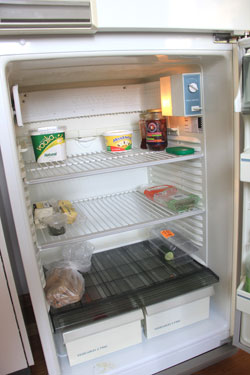
Being stingy is actually quite satisfying if it is confined to personal wants and desires but not relegating yourself to never going outside or being sociable. I’ve been guilty of the latter in the past, saying “oh, I can’t go visit friends cuz they’ll all just want to go out and spend money so I may as well just stay at home.” Luckily, I now have a lot more like-minded friends when it comes to living simply and saving money, so it’s easy to just hang out at someone’s place or do something with the deliberate intent on not spending money. My thrifty/stingy attitude extends to groceries and just getting the basics (while trying to remain healthy), driving less and taking the bus or walking more, scraping every last little bit of food from a jar/bottle/box and being more liberal with use-by dates (while not giving myself food-poisoning!). I’m only drinking cask wine and looking for 2-for-1 deals on big boxes which thankfully come along regularly (if I have nothing else, at least I have my grog!). I’m also conscious of things like excess toilet-paper usage, excess shampoo and toothpaste usage, wearing more clothes instead of turning on the heat (it’s been very cold in this house just lately) and feeding the dog slightly smaller portions of bulk-bought food to save a bit (no, I am not under-feeding my beloved pup!)

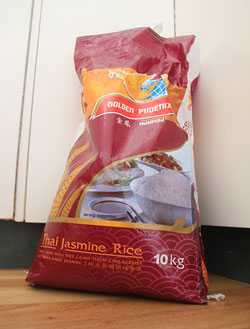
Creatively, I am managing to look at the cupboard and use what I see rather than just what I want (I know, a lot of my thoughts have to do with food! I do love my food…). This naturally results in eating a lot of rice-based dishes (from my 10kg sack of rice persistently offering itself to me from the corner of my kitchen); a surprisingly tasty dish is just steamed rice, a tin of chili-infused salmon or tuna, some green veg like zucchini or bok choy, and a bit of soy & sweet chili sauce. That’s about $2.50 for a big, tummy-filling bowl, and is pretty healthy too. In addition to food, I am rotating my clothing usage more consciously to get maximum wear requiring minimal washing frequency.
Anyway, tightening the old belt, as they used to say, is not so bad. I like having a few extra frills to make life a little less banal but it really is a good challenge to deprive yourself every once in a while, even if you aren’t financially hard-up. I reckon everyone should sacrifice something regularly if only to prove to yourself that you can, plus maybe save a bit of money/be healthier in the process. It also makes you appreciate all those little things that we all love in life that you tend to take for granted!

Green Smart Pots

I was in South Australia’s McLaren Vale wine-growing region recently and met a lovely gentleman and olive farmer named Tony who sold us some tasty homemade olive oil and then proceeded to show us some of his organic veggies. He had this amazing veggie patch with beautiful, healthy herbs and veggies all growing in these plastic tubs. He mentioned a business that his uncle had started called Green Smart Pots which were what we were observing here which have a clever self-watering system especially designed for Australia’s strict water restrictions. Little “wicks” draw the water up from the base and keep the plants healthy without over or under-watering them. This sort of thing has been around for awhile, but these were excellent designs that we could see working beautifully with our own eyes.

This is something I have been putting off due to being in a rental house situation and not wanting to alter things too much. That, and also not wanting to put a lot of effort into a garden only to leave one day and not be able to take it with me. This system definitely solves both problems and gives people with even the most modest amount of space a way to grow their own food and steal back from the big grocery stores the expensive, chemical-covered, food-mile laden and generally poor excuse for fresh veggies and herbs that they peddle!

Actions + words

Sometimes I think it’s easy to say but not do (when really you should), while other times you do but don’t tell (when really you should).

I find it’s so easy to either say or think that I should be doing something a certain way (like being more ethical, doing more exercise, helping people, eating more healthily, being more pro-active with many things, stopping unproductive behavior…to name a few), but then get stuffed up when it comes to putting these things into practice. Conversely, some activities are easy to do (eating unhealthily guilt-free, spending too much time on Facebook, enjoying the company of friends), even ones that might have been difficult in the past or are sometimes difficult for other people too (living simply with less stuff, earning less, shopping a bit more ethically/organically/fairly, focusing more on other people than myself), but don’t get talked about.

For example, today I woke up with a wretched pain in my back from an albeit long, 13-hour workday shooting a wedding yesterday. Fair enough, I was on my feet nearly the whole day, but the pain was made worse due to my aversion to exercise. Even simply doing a few crunches every day will strengthen my torso and keep my back from bearing all the load. I know this stuff, but I don’t just do it. A few minutes a day will save my ongoing pain and yet I just can’t get myself to expend the effort. I even say these things to myself while sitting in the kitchen eating a block of chocolate (Fair Trade chocolate, at least!). Sigh. These words are something that need some action attached to them!

On the contrary, I have surprisingly easily slipped into a low-consuming life, becoming quite adamant about staying away from consuming holy lands (aka. shopping malls), taking a hard line about racking up credit card debt, building my own furniture, being careful what I eat and how much I eat out, and being satisfied in general with less. While I act this out every day, it wasn’t until very recently that I’ve been talking up this lifestyle (in this humble little bloggie-blog!), something I still feel a bit funny about though as I am not pretending to know what I’m talking about.

Perhaps what I’m trying to decide is when is it important to just act with no words, when is it good to have words but no action and when do you need both?

I’m always quite happy to lavish my lovely girlfriend, Heidi, with lots of thanks and praise for guiding me into this more responsible world of frugality and giving, but she has learned with her lifestyle choices that sometimes actions need to speak for themselves. As I believe she quite rightly assumes, people are very reluctant to be told that they are doing something wrong and should change; they need to just see how it works for someone else and feel inclined to question why you do what you do. Seeing that this way of living or things that you’re doing makes them happy or less stressed or just feels right, might incite them to do it themselves, or at least ask more questions. One can always hope that if it’s a good thing, the idea or action will cascade through to their friends and so on and so on

Maybe words and actions are both required sometimes though; I was just reading from a brilliant and well-written book The Rough Guide to Ethical Living, and they suggest that it’s all well and good to eat organic, shop Fair Trade and make other ethical decisions about where your food and products come from, but sometimes the action of making the right choice needs to include a message that communicates what you’re doing. Simply making the choice doesn’t specifically tell one brand or retailer why you’re not shopping with them (if it’s due to their brand/product being seen as having poor production practices, eg. treatment of people or animals, poor emissions, or marketing practices); you need to not only make the purchase, but indicate what your problem is with the other brand/product. Even more ideal and impactful in terms of acting and telling is to cut your own carbon emissions then writing to your local MP and “encouraging them to lean on the government to pass legislation which requires everyone to reduce their greenhouse emissions.”

This is sound advice; I think I’m going to get into the habit of regularly writing to retailers (like, Coles – boycott Nestlé!), writing to brands (like, Nestlé – irresponsible marketing practices!) or MPs about a variety of green/sustainability things. I hope anyone reading this can challenge themselves to put into action at least one thing that they have been telling themselves to do but haven’t acted on it; or conversely, if you’re doing something great but no one knows about it that’s ok but you could be influencing a whole lot more people with being a bit more pro-active with letting them know about it! But don’t listen to me (yes, listen to me! heehee).

Lifestyle Report – as of Jan 2011

As a way of assessing my successes, targets, improvements and areas I need to be more vigilant with when it comes to simple, ethical, environmentally sustainable and community living, I’m going to blog here in this format regularly.

It might not be an interesting entry to read but it’s a way to keep myself accountable and constantly improving my lifestyle.

So, as of today:

ETHICAL/SUSTAINABLE LIVING

• grocery shopping (with % of how often I do it)
— local green grocer for veg (25%);
— leftover bread free at end of baker business day (100%);
— skip-dipping/dumpster diving (0% but aiming to re-introduce it)
— major supermarket for all else (100%);
— Fair Trade where possible (tea, chocolate, recent clothing)
— some organic (10% – food, soap & shampoo)
— use Ethical Guide to boycott bad companies, GM food (95%);
— boycott food with known cruel processes eg. veal (100% where known)
— food miles, locally produced (25%)
— meat consumption (25% of meals)

• grow own food (not yet 0% but get some from friend 3%)

• household shopping: I only buy new from store if I can’t get from op shop or build myself;
— purchased new in past year:
—– furniture (0%)
—– clothes (10%)
—–accessories (15%)
—– car (40%)

• home energy:
— electricity:
—– solar/renewable = no
—– aircon/heating (10%)
—– computer (on 24/7, asleep when away & at night)
—– fridge (2/5 star rating)
—– dryer (0%)
—– water pump (everytime the tap is turned on);
— water:
—– rainwater tank (75%)
—– shower grey water for garden (10%)
—– shower avg. duration (5 mins)
—– garden (0%)
—– dishwasher (0%)
—– washing machine (top loader 2/5 star rating)

• waste:
— food scraps (75% to compost);
— wasted food (10%);
— recyclables like glass, paper, aluminium cans (90% to recycle bin, 10% kept for food/household storage);
— wasted paper (minimal use of printer, kitchen & recycled toilet paper)
— wood (90% saved for building material);
— white goods, electronics, equipment (0%);

Areas to Improve: fewer food miles; support local; buy organic if it makes sense & affordable; grow some own food; consume less energy & town water.

.

– – – – – – – – – – – – – – – – – – – – – – – – –

.

SIMPLE LIVING
• build most of my own furniture (lounge daybeds, coffee table, office desk, outdoor tables & seats)
• other furnishings have been donated (bed, futon, tv & DVD) or secondhand (kitchen table & chairs, office chair, rug)
• buy nothing that isn’t essential to the household or work
• work less, spend more time connecting with friends & family
• spend money on essentials, friends, charities

Areas to Improve: connect more with real (not virtual) people; volunteer more time to help others

.

– – – – – – – – – – – – – – – – – – – – – – – – –

.

ENVIRONMENTAL
• approx. annual carbon footprint (avg. based on lifestyle as of today): 9.24 tonnes of CO2 (Aus avg. 16 tonnes; world avg. 4 tonnes)
• car usage per month – approx 500kms; mileage (approx 10kms/L)
• bus instead of drive (15%)
• ride/walk/skate instead of motor transport (15% – 20min walk to shops)
• return flights in past year – domestic (4), international (0)

Areas to Improve: take fewer flights; walk/skate/bus more rather than car; use less electricity; aim for 7-8 tonnes/yr CO2

.

– – – – – – – – – – – – – – – – – – – – – – – – –

.

COMMUNITY
• I live walking distance to my girlfriend and a couple of other friends; 5 minute drive to a couple more
• intentional community living (share house or close living) = no
• share property or resources with community (some household items, driving, food with girlfriend & her housemate; borrow from other friends occasionally)
• collect hard rubbish from neighbourhood
• engage in conversation or help with mentally/physically challenged people in neighbourhood (50%)
• give to charities (monthly to: 1 x global aid, 1 x animal, 1 x heart foundation)
• volunteer with some friends’ and charitable projects

Areas to Improve: aim to achieve closer and more intentional community; share more resources; be more accepting of minority/disadvantaged; give more to charities; get more involved with meaningful & helpful projects