5 Pros and Cons to semi-trailer homes

What sorts of things should you consider when thinking about building your tiny house out of an ex-refrigerated semi-trailer? It is a great way to build especially for DIYers, but there are things to watch out for as well. Mike looks at his top 5 pros and top 5 cons for going this route for your future tiny home.

Check out the video at the bottom of this post if you’d rather watch than read 🙂

The Surprising Pros and Cons of Building a Tiny House Inside a Semi-Trailer

If you’ve ever looked at a tiny house and thought, “I love it… but could I possibly have more space, more stability, and a little less anxiety?” — then let me welcome you into the peculiar, underrated world of the ex-refrigerated semi-trailer tiny house.

Heidi and I live in two of these gentle giants, and over time we’ve learned what works, what doesn’t, and what simply makes you smile and shake your head at your own life choices.

Here are the top pros and cons — the things you absolutely want to know before diving into one of these beasts.

The Pros: Why a Semi-Trailer Makes an Amazing Tiny Home

1. The Sheer Size (It’s Basically a Studio Apartment on Wheels)

It still surprises people when they step inside. A typical refrigerated trailer is around 12–13 metres long2.5 metres wide, and 2.7 metres high inside. That gives you a huge rectangular canvas — no odd angles, no quirky rooflines, no sloping ceilings designed for hobbits.

Just… space.

Space to design.
Space to breathe.
Space to spread out your tools and pretend you know exactly what you’re doing.

And when you’re building a tiny home, that simplicity is priceless.
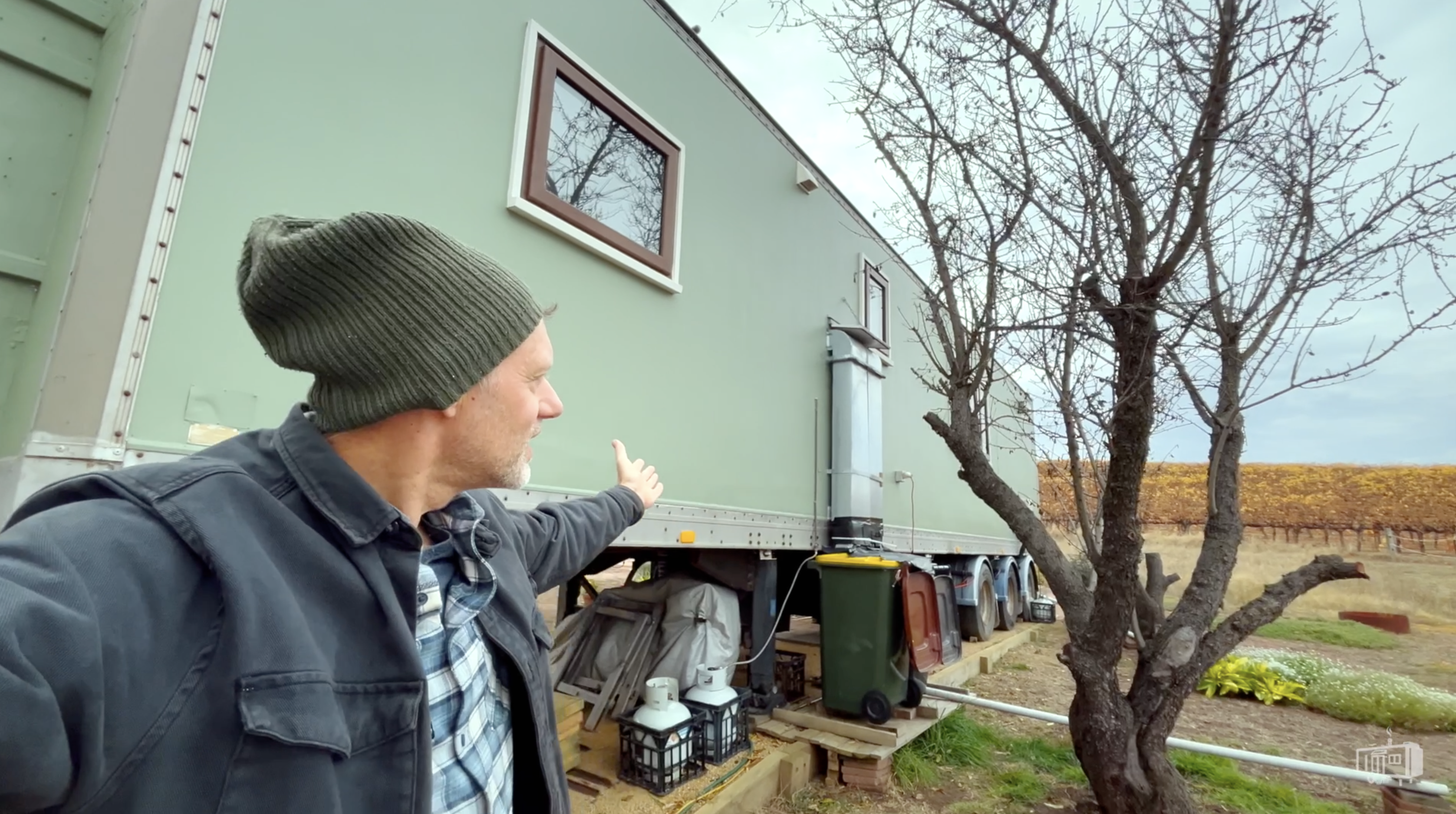
A person pointing towards a modified ex-refrigerated semi-trailer tiny house, showcasing its green exterior and window

2. The Price (Yes, Really)

This is where semi-trailers quietly destroy the competition.

Our two trailers cost $10,000 total — that’s 64 square metres of ready-made structural envelope for less than the price of a bare tiny house chassis.

Walls, roof, floor, frame — all done.
Made from fibreglass, steel, and aluminium built for endurance.

In tiny-house-land, that’s a unicorn-level bargain.

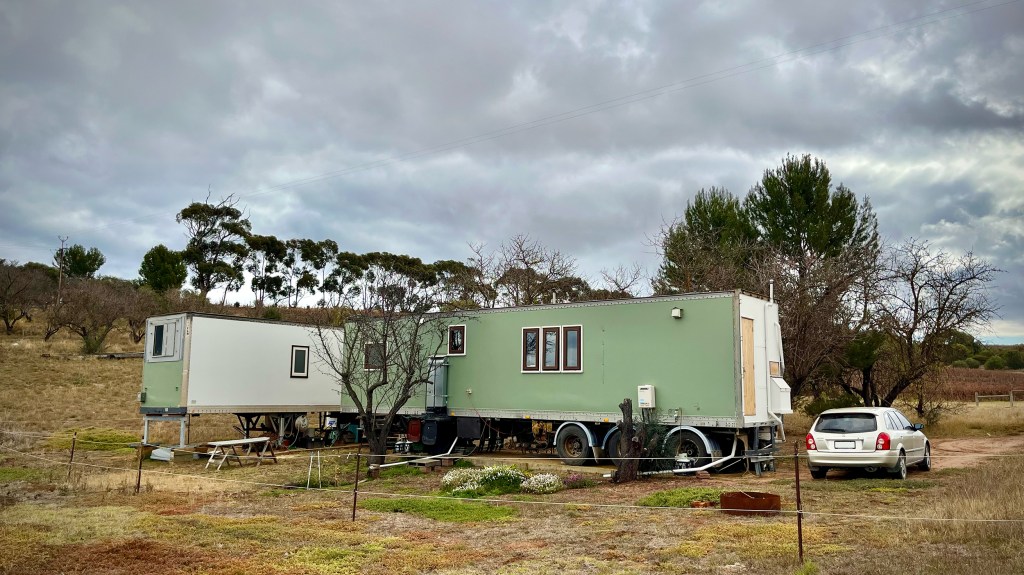
Two ex-refrigerated semi-trailers converted into tiny homes, situated in a grassy area with trees in the background.

3. The Ease of Building (A First-Time Builder’s Dream)

The joy of building inside a semi-trailer is that the structure is already doing the heavy lifting.

Want a door?
Cut the hole, weatherproof it, pop the door in.

No structural framing.
No load-bearing walls.
No engineering anxiety about whether that cute light fixture secretly weighs as much as a small goat.

Inside, weight restrictions vanish. Marble benchtops? Concrete floors? Go wild.

It’s the closest thing a DIY builder will ever get to playing a life-sized version of The Sims.
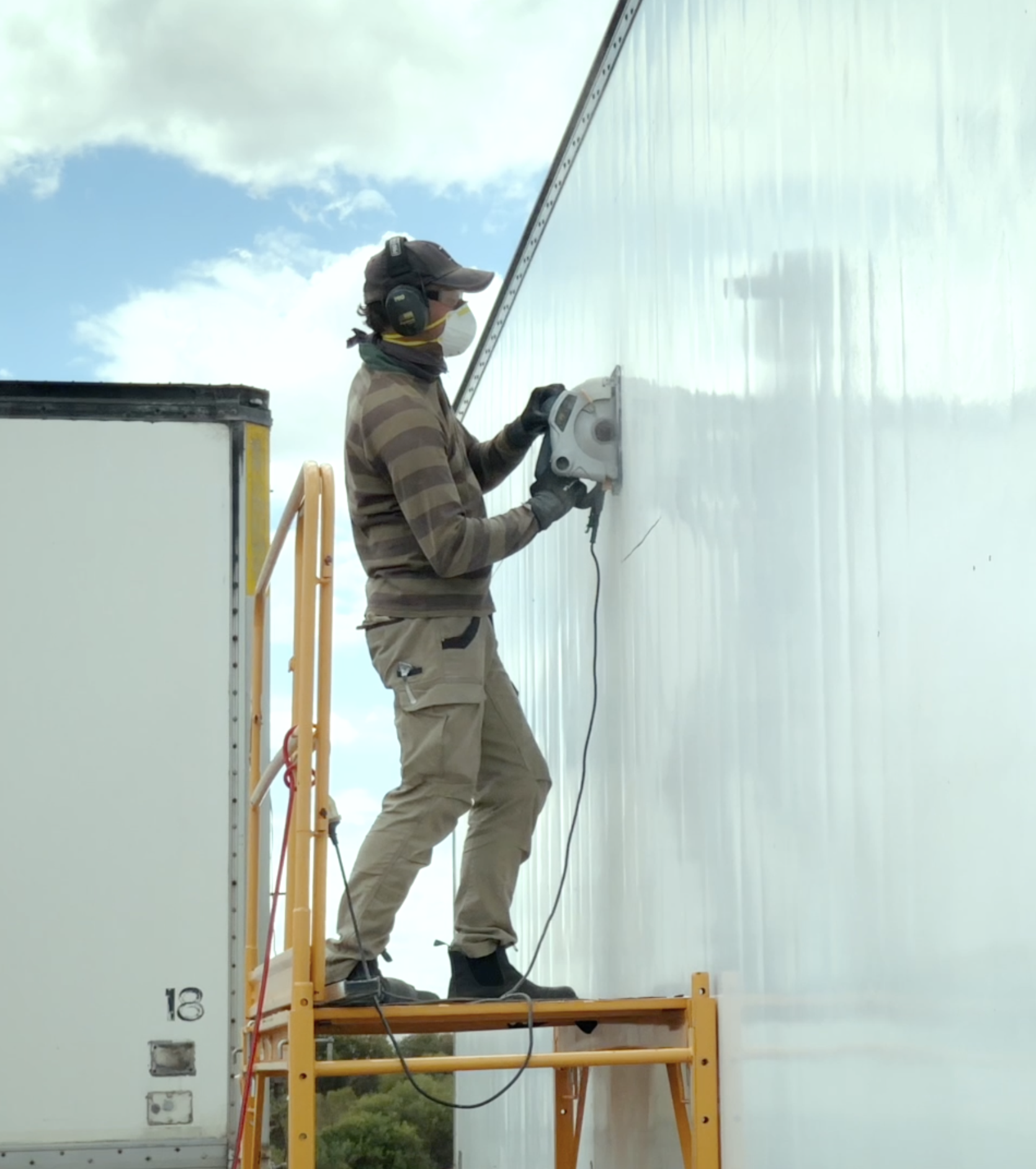
A person using a circular saw to cut the exterior wall of a semi-trailer while standing on a yellow ladder, wearing safety gear including headphones and a dust mask, against a backdrop of partly cloudy blue sky.

4. Road Safety and Stability (A Heavy Beast Is a Safe Beast)

A semi-trailer is built to carry 35 tons at full load, cruising down highways like it’s nothing.

So your tiny house ends up with:

  • Airbag suspension
  • Massive wheels
  • A bulletproof steel chassis
  • Remarkable stability in all weather

Compared to towing a lightweight tiny house, this thing is a zen monk rolling down the freeway.

A semi-trailer converted into a tiny house, parked in a grassy area under a cloudy sky.

5. No Loft Living (Depending on Who You Are, This Is Glorious)

Some people love lofts. Some people love not smacking their head at 2am because they forgot to duck.

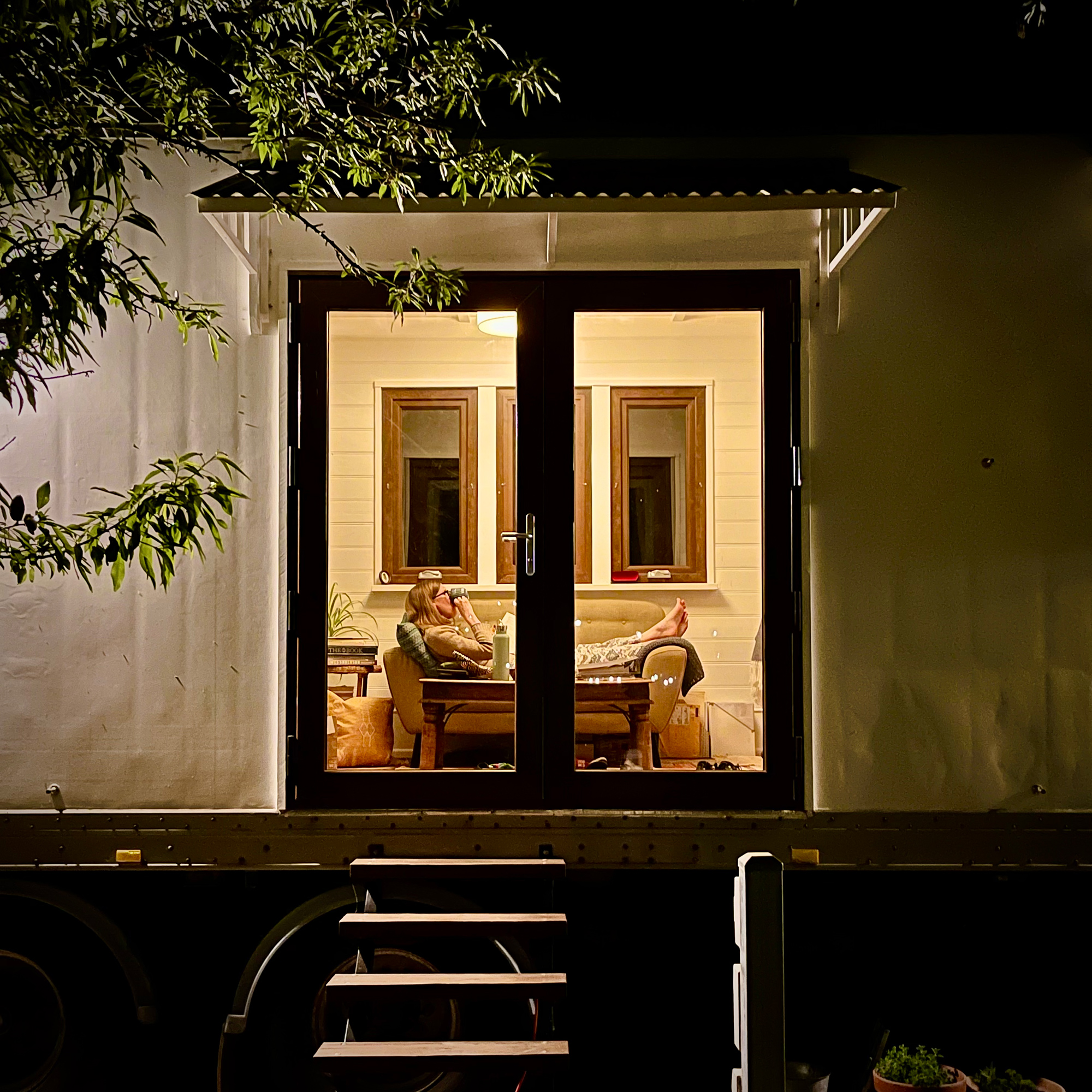
We chose single-level living: high ceilings, no ladders, no crawling into bed like a tired cat.

We even installed a lift bed to reclaim floor space when needed.
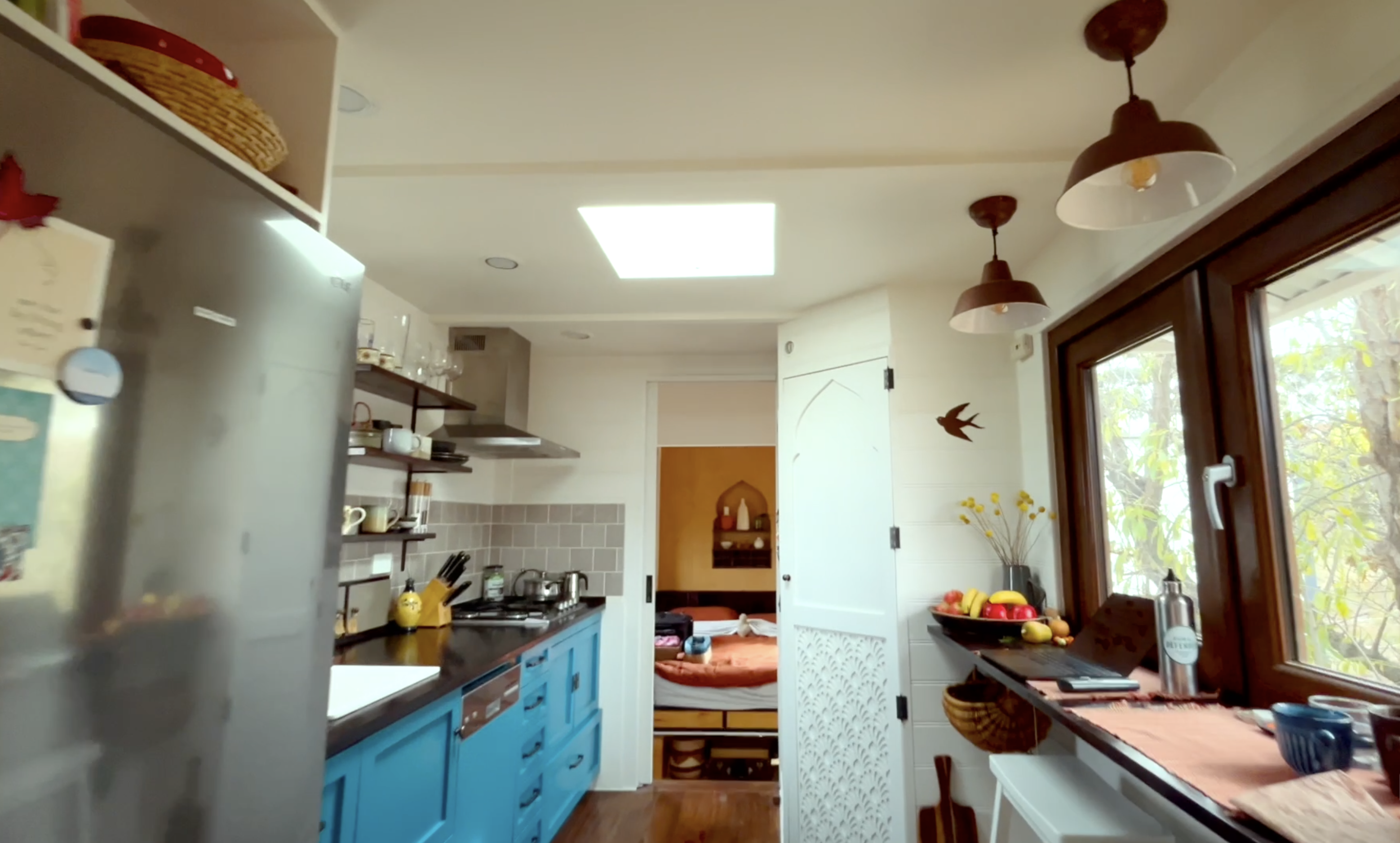
Interior view of a tiny house built inside a semi-trailer, featuring a kitchen area with blue cabinets, a refrigerator, shelves with dishes, and large windows allowing natural light.

Bonus: Giving Industrial Waste a Second Life

Each trailer is around 15 tons of metal and fibreglass. Most end up rusting in paddocks.

Repurposing one is an act of quiet environmental kindness — rescuing literal tonnes of material from landfill and turning it into a home.


The Cons: What You Need to Know Before Buying One

1. You’re Building Inside an Old Vehicle

Let’s be honest — these things spent their lives hauling frozen goods across Australia.

Expect rust, dents, roof repairs, bowed walls, and strange angles that test your patience.

The cheaper the trailer, the more quirks you inherit. You’re buying character… sometimes more than you bargained for.

2. It’s… a Big Box

If you dream of a tiny cottage with a pitched roof and storybook charm, this may not scratch that itch.

Semi-trailers are functional rectangles. You can beautify them, but they’ll still be rectangles with a very practical past.

An ex-refrigerated semi-trailer converted into a tiny house, showcasing its rear view with closed doors and a simple wooden staircase leading up to its entrance.

3. Flat Roof = No Easy Rainwater Harvesting

The flat roof simplifies building but complicates water collection.

If you’re off-grid, you’ll need a false roof, angled structure, or separate catchment setup. Skylights can add another layer of complexity.

A flat roof of an ex-refrigerated semi-trailer

4. The Monster Tires

Six per trailer. Twelve total. Each one is $1,000 new or about $100 used.

They elevate the house beautifully and give great under-floor access, but they also age, crack, and occasionally explode at inopportune times.
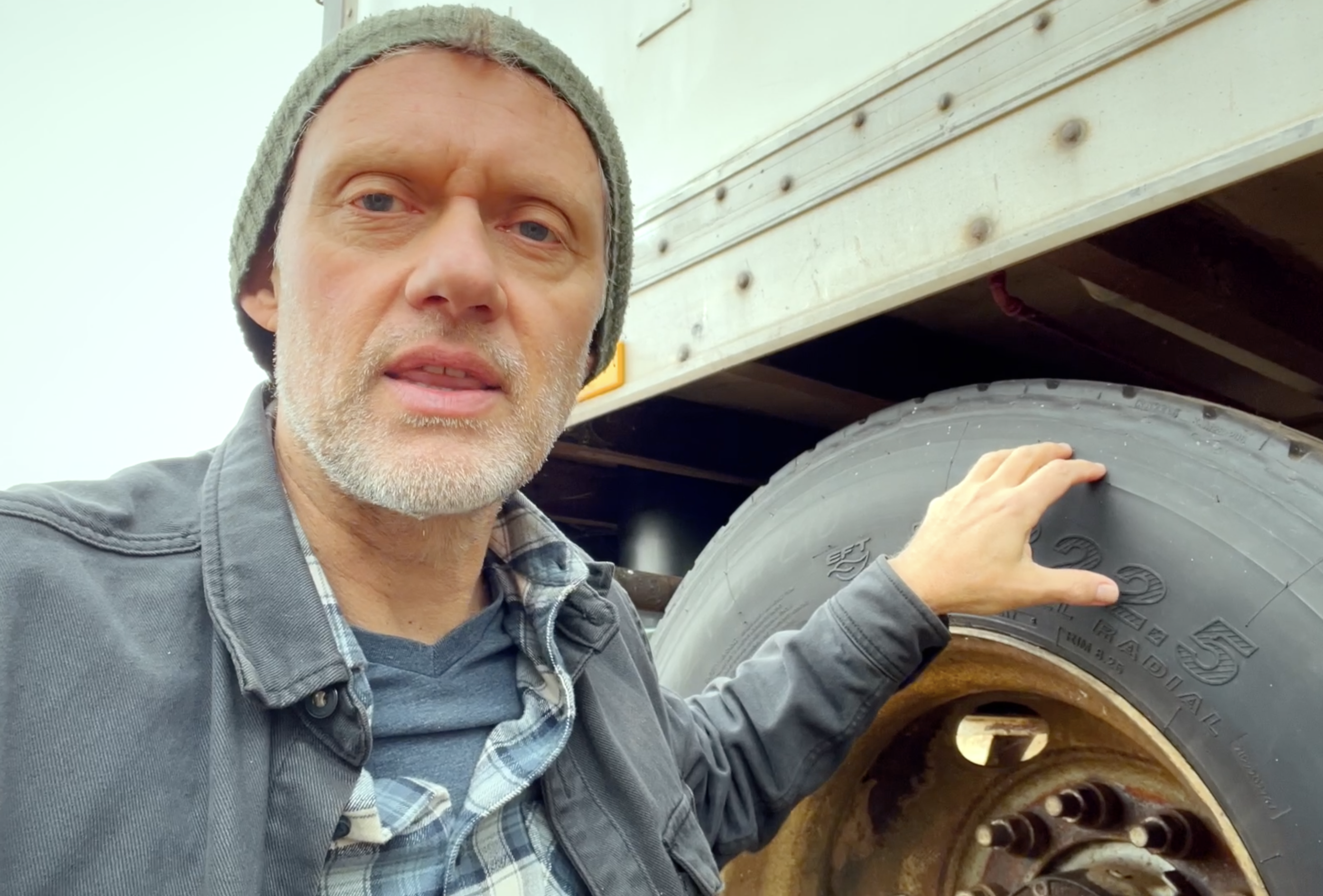
A person inspecting the tire of a semi-trailer, highlighting its size and condition.

5. Moving Isn’t Something You Do on a Whim

To move a semi-trailer tiny house, you need:

  • A heavy-duty truck
  • A driver
  • Scheduling
  • A little luck

You can’t just hitch it to your family ute and head off. If you ever need to move quickly — bushfires, land issues — it takes planning.

Final Thoughts

Semi-trailer tiny houses aren’t for everyone, but they’re incredible for the right person.

If you value space, stability, affordability, and the satisfaction of upcycling a multi-tonne industrial relic into a cosy home… this might be the path for you.

I hope this guide helps you think through your options. If you want to explore your own ideas or run designs by someone who’s made all the mistakes already, I’m always happy to help.
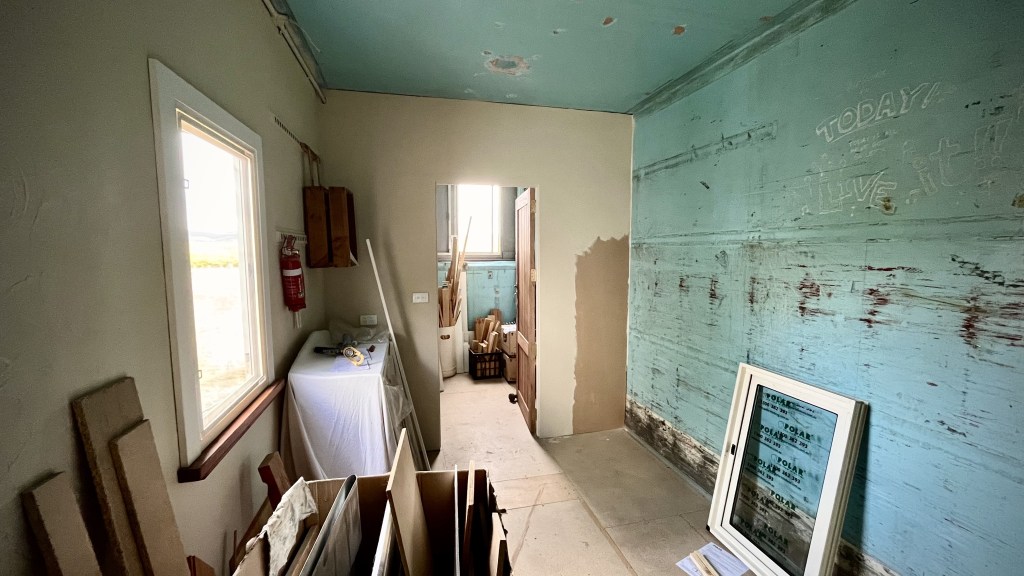
P2 progress: Rendering, window and toilet

Progress of the transformation of our second semi-trailer has happened in fits and starts, but I’ve seen some real transformation with our bedroom and bathroom areas. Slowed by factors like economic issues, the silly season and focusing on other business ideas, things haven’t been chugging along as I’d like, but sometimes the foundational work appears to be slow. Slap a coat of paint on something, implement a final component and suddenly you can gain inspiration and motivation with where the project is going.

My second video instalment in the building update of this second semi-trailer attachment (P2) to our main home (P1) (whose build I covered in an extensive video series between 2019-2022) shows some significant aesthetic changes from the original tour video I did of P2 in which I had already jumped ahead with some of the work I had done to form the basis of this new phase of building. In that sense, this video series will be far less comprehensive than the original P1 series as I started this project with no interest in filming it and then of course regretted that when I decided it would be a cool idea. Lesson learned: just film some stuff anyway…you can always just ignore/delete it if you don’t need it.

Anyway, here’s Episode 2! Thanks for watching and being a part of the journey ☺️💚✌🏼

Mike chats on TinyHouse podcast

It was a pleasure to be asked to join tiny house expert and aficionado Ethan Waldman on his The Tiny House podcast recently while I was in Canada (Ethan is based in Vermont). He has done hundreds of episodes and has a great blog and channel interviewing tiny house owners from all over and diving into all-things tiny living.

Throughout this episode, Ethan and I chatted about the lifestyle and building journey that Heidi and I have done, exploring not just the practical aspects of the build like custom cabinetry and space-saving features like our innovative elevator bed, but also the sustainable lifestyle that drives us. We got into the nitty-gritty of what converting a semi-trailer entails, creating a comfortable and functional living space, as well as addressing the challenges and rewards such a project brings. I appreciated being asked to come onto the programme and the smart questions and curious nature of Ethan. Thanks for the opportunity and I hope you had some interested listeners!

Have a listen to the Podcast here:

Transforming a Semi-Trailer into a Stylish Tiny Home Tiny House Lifestyle Podcast

I am thrilled to introduce our guest, Mike Crowhurst, a seasoned tiny house dweller and the creative mind behind one of the most unique tiny homes I’ve seen in a while! Mike and his wife Heidi spent three years crafting a 45-foot ex-refrigerated semi-trailer into a gorgeous tiny home. Throughout this episode, we'll dive into Mike's journey of tiny house living, exploring not just the practical aspects like custom cabinetry and space-saving features like an innovative elevator bed, but also the sustainable lifestyle that drives him. We'll also get into the nitty-gritty of converting a semi-trailer into a comfortable and functional living space, addressing the challenges and rewards such a project brings. So buckle up as we get a tour of Mike’s impressive tiny house and learn how he has optimized every inch of his home for maximum living.In This Episode:🚚 Tiny House Towing Challenges: The intricacies involved in transporting a tiny house safely, including the type of vehicle required and the importance of professional trucking expertise to avoid potential hazards.🏠 Semi-Trailer Conversion Journey: Mike's personal adventure of converting a 45-foot refrigerated semi-trailer into a sustainable and innovative tiny home.❄️☀️ Insulation and Climate Adaptation: The insulation options used in the semi-trailer, Mike's additional insulation efforts, and adaptation to the Adelaide climate.💡 Procuring a Trailer: Insight into the process of acquiring a semi-trailer, highlighting considerations like checking for rust, maintenance history, and tips on where to find decommissioned trailers.🗄️ Tiny House Storage Solutions: Mike outlines the storage enhancements in his tiny home, describing various built-in options that maximize space without creating a cramped feeling.🛏️ Elevator Bed Innovation: The unique design and functionality of the elevator bed in the tiny house are explained, showcasing how space-saving features contribute to the minimalist lifestyle.🤝 Online and Real-Life Communities: Encouragement for listeners to seek advice and share experiences within the tiny house community, both in-person and online, to foster collective wisdom and support.Send us a textSupport the showListen. Subscribe. Rate. Review. Apple Podcasts Spotify More… Follow Ethan. Mastodon Instagram Pinterest Facebook Want to say 'thank you' for the show? Buy me a coffee!

Peek into my other world

I’ve been a bit quiet on the tiny house content-production front as a few things in other life realms have been occupying my time. Despite having brushes in a few pots, I am still thankful for a flexible lifestyle that allows me to attend to other things when they come up. Honestly, I don’t know how people with families, 2 jobs and big mortgages do it and stay sane. So while this post feels like it digresses into other areas, I feel like it does dovetail full-circle with regards to minimalist living…

So, besides going through our slowest time of the year financially (Heidi and I are self-employed freelancers and the Australian summer season post-Christmas is a flat time where no one is spending money on what we do), I am making a trip overseas soon to help my ageing parents who have requested some help around medical-related issues. I have had to figure out more ways to bring home the vegan bacon so it has meant more gig work (UberEats) and returning back to my old career of filmmaking.

Well, I’m not quite cobbling the gear together and doing any video jobs (yet), I realised that my video production company, Red Earth Films, has a lot of quality material just lying around doing nothing. My business partner and I were trying to make a living on this over a decade ago, and YouTube plus streaming networks weren’t quite where they are now in terms of being a solid option for monetising indie films. While we did trial a digital platform, it was alongside DVD/BluRay releases and attempts at getting public broadcasters (SBS, ABC) or theatrical operators to show our stuff (and pay us for it!). So the idea came about to just release our offerings online for free with hopes that we might gain a following and drive eventual earnings through YouTube and the like. Until now, everything was locked up because we still thought we could get pay-per-view earnings.

So with that in mind, take a quick break and watch this short little Red Earth intro video I did yesterday to advertise this new direction. After this shameless plug, continue reading the post below! 😀

Thanks for watching. You did watch, right? 🤗

Life as a freelance creative is actually the perfect pairing with tiny house living. For the bulk of my life, being an independent creative has involved patchy earnings whilst still having the same bills to pay as everyone else. Sometimes you have a waterfall windfall job, and sometimes it is like the desert with not an oasis in sight. Worst then is when the latter happens (and you busily blew the excess of the windfall on travel and eating out rather than saving for a rainy day), and you need to plug the money gaps with work outside your skill area just to make ends meet.

I definitely find there are far less of those extremes lately with minimalist and tiny living. It’s obviously happening to us at the moment to a degree, but the pressure for other folks doing it tough is far more intense when inflation, soaring rent rates and so on keep biting you. If you are someone who has dedicated your life to creative pursuits, then you know how much harder again it is in this day and age.

Returning to my filmmaking material has been good to revisit as well, as it is like looking at a photo album and realising that you have actually done some good work in the past which informs the future you. My work revolved around compassionate human stories and so I feel like there is a tie-in with sustainable, minimalist and vegan living: compassion is at the heart of it all. Heidi and I live minimally as we believe that it is the healthy thing to do not only for our life-balance but for the planet. Choosing not to eat animal products is compassionate to animals, the planet and other people. We choose sustainable shopping options because we believe it is helping others. All this suggested altruism sounds like a lot of self back-patting but I honestly believe that there isn’t enough sacrifice in the lives of a typical westerner. Heidi and I are far from perfect in this regard, but I feel like there’s a strong desire in both of us to leave the planet as minimally scarred from our existence as possible once we are gone.

Thanks for reading my ramble and for following me along on our journey. I’ll be trying to produce some new content soon for Big Tiny Adventure, but if you are interested to take a peek into my Other World, please have a poke around on Red Earth Films’ YouTube channel as we continue to upload blasts from the past, like those mentioned in the video above. Peace!! ✌🏼💚🌱

PS. If you are looking for a talented graphic designer who has a impressive repertoire of working with NGOs and other honourable clients, please visit Heidi Rurade Design!

Examining our DIY composting toilet system

Given that toilets and sewage are something that most people – including myself for most of my life – never really think too much about, when I express just how much I am thankful for the idea of composting toilets, it probably sounds like a strange exaggeration. Composting toilets are not only environmentally sound, clean and functionally simple but they are also the most natural way (figuratively and metaphorically) to deal with human waste. Ours is particularly simple and that is its beauty, along with being inexpensive. Let’s have a look at what sorts of benefits that this type of system offers over flushing toilets and where they work best, how ours works and where we might make improvements.

Benefits and Uses

First up, let’s look at 10 reasons why composting toilets can be seen as superior to flushing toilets (especially in the right context).

  1. Water Conservation:
  • Composting toilets do not require water for flushing, contributing to significant water conservation. For example, even with water-saving loos in Australia (3L per half flush, 6L per full) meaning a family of 4 flushes around 28,000 litres of drinking-quality water down the bog every year. In Adelaide, this constitutes 18% (32 GL) of all mains water use from the 200 gigalitres we use every year. It takes energy and resources to purify water, a lot of energy to operate desalination plants and in a state where rainfall is due to decline by as much as 30% by 2050, we can’t afford to minimise the importance of fresh water.
  1. Environmental Impact:
  • Flushing toilets contribute to water pollution through the release of sewage into water bodies. Composting toilets eliminate this form of pollution, as they do not produce liquid waste that requires treatment. Best of all, “humanure” is natural and, when composted and dealt with appropriately, can be used as a positive way to restore soil health.
  1. Significant Reduction in Energy Use:
  • Traditional sewage treatment and water supply systems involve significant energy consumption. Composting toilets effectively take away all the energy consumption from the system other than some manual labour in managing your compost.
  1. Off-Grid Capability:
  • Composting toilets are perfectly suited for off-grid living or in remote areas where access to water and sewage infrastructure is limited. They provide a sanitation solution without the need for extensive plumbing. Once you remove “black water” from your waste system (in most areas, only toilet water is black water now), it is easy to deal with grey water with zero sewage involvement.
  1. Nutrient-Rich Compost:
  • Not only environmentally friendly from a water or energy perspective, compost produced by composting toilets can be a valuable resource for gardening and agriculture. It is rich in nutrients and can be safely used as fertilizer after proper composting.
  1. Odour Control:
  • A common concern is that composting toilets smell worse than flushing loos. A properly set up composting one is designed to minimize or eliminate odours through proper ventilation and microbial decomposition. A dry bucket loo will have no odour (other than smells created “in-progress” which is the same as any toilet! 😛 Advanced models often have features like fans and venting systems to keep the compost dry as moisture is usually the only contributor to smell.
  1. Reduced Infrastructure Costs:
  • Installing traditional sewage systems and water supply infrastructure can be expensive. A composting toilet can be as simple as a bucket under a toilet seat with organic covering material up to a traditional-looking toilet with a chambered unit under the house. Not having a “wet” system means plumbing can be DIY and is very simple to maintain or repair.
  1. Resilience to Water Shortages:
  • During droughts or water shortages, traditional flushing toilets may face restrictions or challenges. Some eco-minded folks will put a brick in the toilet tank to conserve water or other modifications, but the fact is, toilets need water to work effectively without blocking up. Composting toilets provide a reliable and independent sanitation solution that doesn’t rely on water availability.
  1. Reduced Strain on Sewage Systems:
  • In areas with overburdened sewage systems, composting toilets can help reduce the strain on infrastructure, preventing issues like sewage overflows and backups. On a localised level, a “blocked toilet” is a thing of the past with a composting toilet, rendering a toilet plunger permanently unneeded! Hooray! It doesn’t matter what you throw down the loo as long as it can naturally break down. In one house we lived in, our old pipes would be routinely infiltrated by tree roots which resulted in horror scenes of raw sewage burbling up through a backyard grate. Yuck-o.
  1. Adaptability to Various Climates:
  • Composting toilets can function effectively in a range of climates, including cold and remote areas, where traditional sewage systems may be challenging to implement. Frozen pipes aren’t going to affect this system, and hot environments only help get the composting process moving along faster.

Bonus point: Silence. Rather than worrying about plopping or tinkling sounds in a wet loo, nor the sound of a toilet flushing (eg. in the quiet of the night or numerous times with guests over), there is complete silence. Not something to be underestimated in its importance.

Based on many of these reasons, I personally think that we should see a whole lot more people giving composting toilets a try, however the reality is of course much different. Local regulations, and the specific needs of a given community will dictate what is “allowed” or not. Sadly, despite fresh water being a disappearing resource, city councils will probably never adopt any other system other than the one they have as they see human waste as a public health (even though flushing toilets are still reliant on people using and maintaining them properly). However, with more people going off-grid and expanding into semi-rural areas, this is entirely a possible solution.

composting toilet, off-grid, custom design, tiny house on wheels

Our composting toilet experience

We came into the composting toilet idea early on after seeing how effective they were and how many people used them during our Intentional Community trips. There were indoor and outdoor loos-with-views, fancy loos, simple loos. The one thing in common was that they were all inoffensive to use, clean and required no special plumbing. Including our time building our tiny house, we haven’t had a flushing toilet since early 2019. Largely we have not missed it at all:

Pros: the environmental considerations listed above, easy to keep clean, quiet, no unclogging or flooding concerns, no mechanical issues like tank stuck filling.

Cons: requires manually levelling the accumulated pile occasionally for better coverage, can get smelly if people wee in it (see challenges below), no flushing water should things stick to the bowl, every 6 weeks or so the bin needs swapping and old compost needs burying.

composting toilet, Eco-loo, tiny house, off-grid

Our set-up is based on ones that we saw for sale by companies like Green-Loo who have large multi-chamber polycarbonate units that can fit under tiny houses and will allow the composting activity to occur within. Some units like the Separett include unique urine diverters but you still need to empty compartments plus it requires you to always sit down and I just don’t personally like the way they look. The Green-Loo system is well thought out but much more expensive than we wanted to spend, but we modelled ours off that idea.

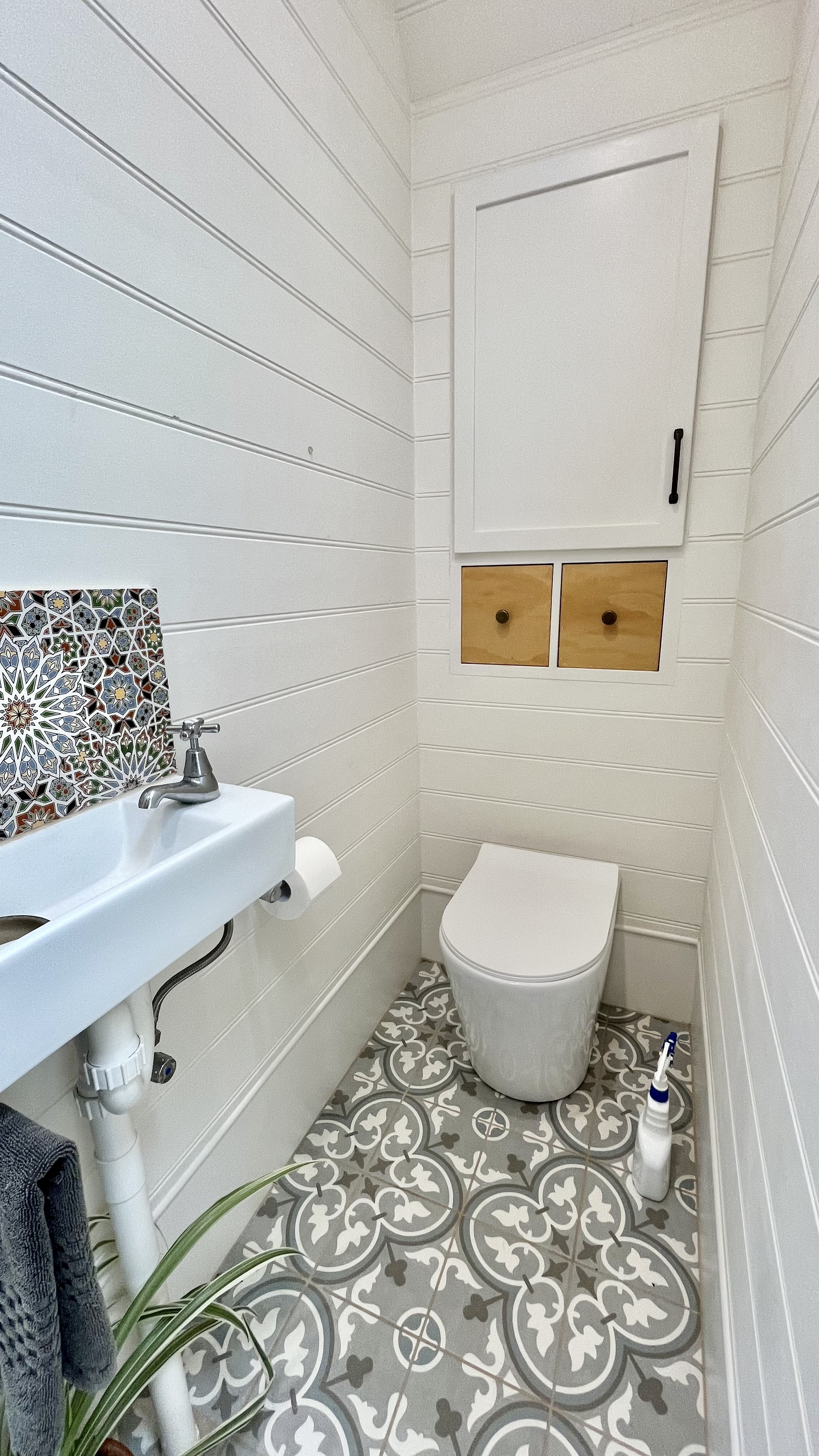
The perk to building in a semi-trailer body is the height from the ground. Having just over a meter of clearance means that we could slip a standard wheelie bin underneath which would provide us with a waste receptacle at a fraction of the price of a dedicated system ($75 per bin from Paramount Browns, delivered). We found some handy plans of how to fit-out a bin for this purpose and then just modified it to work with the Green-Loo pedestal toilet, which was our biggest expense ($450). A good-quality fan which sits in-line in the large exhaust pipe out of the bin ran us about $100 too.

the outdoor set-up of the composting wheelie bin and exhaust system

The design is based around the idea that there is a sub-compartment separated by a mesh barrier that allows liquids to accumulate in the lower reservoir and then a hose from that lower area allows fluids to leak into a run-off pit as needed. The mesh barrier keeps the solids compost up top and then near the very top of the bin is a hole for the vent pipe and fan. The wheelie bin has its attached lid hanging off the back, unused until it gets swapped for a fresh bin, then closed up and sat in the sun to ferment. A standalone lid with a hole cut in the middle hugs the main toilet shaft from the house above and sits snug over the bin to keep it sealed up. In the house, the toilet pedestal looks like any other toilet and the only giveaway is no tank or flusher. To further conceal the nature of the system, we have a couple of storage boxes built into the wall as drawers which hold the bulking material that you use to cover your business in the toilet after you’ve gone. Added innovation: the bulking material boxes are in a two-way hole that leads out to the back of the trailer where two large bulk storage bins reside in the wall of the trailer. They can each hold about 200 litres of material so it allows us to easily top up the internal bins without having to drag anything in through the house.

Watch the video at the bottom of this page of how I put it all together and what the system looks like.

The result: a largely fuss-free toilet experience but not without both some caveats and planned changes. Initially, we used the toilet for all activities with the intent to allow liquids to drain out, keeping things dry enough not to smell with the fan doing its job to dry out what was there and draw away remaining smells. In the winter and when the bin is less than half full, this worked well enough. If we didn’t use enough covering material (or the right covering material…it took us time to get that right) then it might smell for a short time after a wee until it got soaked up into the pile (we tend to use bulk garden compost mixed with soil from our yard for solids and pet bedding sawdust for liquids). With two of us working from home, it was just too much fluid in the system so I just went outside for my contribution (which wasn’t terrible: there is no one around where we are and it gets me outside). Come summer, the toilet smelled a bit more which led to Heidi avoiding weeing into the toilet at all and using a bucket and then dumping outside. Obviously this is not rendering our toilet system too useful if we are only using it each once a day!

With the decision to keep our other semi-trailer (P2) and fit it out as a guest space, we decided it made sense to add a toilet there too. On a couple of our intentional community visits we came across duel toilet set-ups and thought this made sense in P2. This way we can make the toilet in our main house (P1) a dedicated wee-only toilet which will allow it to be used many times a day, with a dedicated wee-only toilet right next to a dedicated poo-only toilet in P2. The only downsides to this idea are that it means someone must use the poo-only (which is really just like the one in P1 now, so it can take fluids too if someone is unsure of what might come out 😱) for poo, and never never do a number 2 in the wee toilet which will be fitted with essentially a funnel connected to a hose! Also, my handy-dandy bulking material bins will be rendered useless in P1 (although, I’ll set it up so that the original set-up can be easily implemented if that suits us in some future scenario).

Overall, we really like the composting toilet set-up. We have a special microbacterial spray that speeds up the process of composting in the toilet and doubles as a cleaner so keeping the bowl clean is easy. It looks good, there is no splashing or flushing or brushing required. There is no plumbing, septic, sewage costs and most importantly, water wastage. It does require a slightly more hands-on approach to swap out bins and bury compost, plus manage bulking/covering material.

If you want to visually check out the process and the result, have a watch of the video below. Let me know if you have any questions or comments in the section below!

The Perils of living in a house on tyres

Do tiny house tyres explode? Unlike some tiny houses which live on small trailers and get propped up off their tiny wheels when parked, it’s a bit different with our semi-trailer home.

In this short video, we respond to questions of how durable our tiny home tyres are and how we have prepared for their support and maintenance. Enjoy and thanks for watching! 💚

The Living Big Christmas special

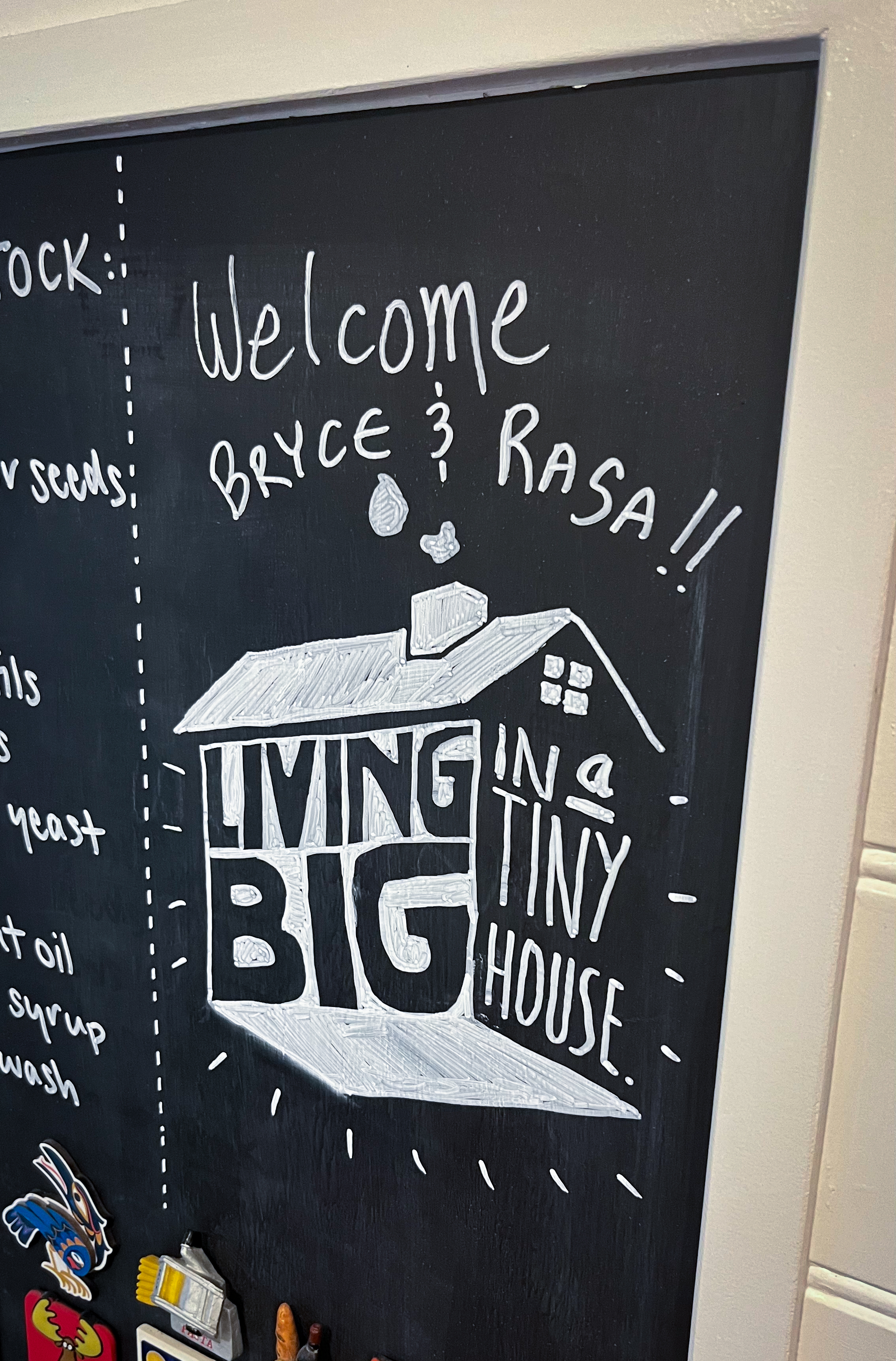
We recently squeaked into the 2023 line-up of tiny house featured on Bryce Langston’s Living Big In A Tiny House series and that now includes the Christmas round-up. There are some amazing homes this year and the video features a holiday messages from their owners. We are lucky to be included in this collection as there are some exceptional designs and stories from other tiny home builders. Have a look at this spirited video and have a fantastic Christmas season! 🎄🍾🥳 🎉


If you missed the original video tour of our tiny house, you can find it here…

Lower stress and gaining more precious time. Our journey of downsizing and simple living.

Our journey to reducing the complications in our life has taken a few years, but the results are palpable: feeling less money-stress, having time to truly breathe in life and not feel like it is dragging you along, space to explore what is most meaningful to you. Even just find a space to “waste” time and become bored to stir up creativity are all valuable things.

In this video, Mike talks about what we have learned and the tips and tricks to start thinking about how you can simply your existence for the betterment of not only your own life but for relationships and the environment. Enjoy and thanks for watching! 💚

Bryce and Rasa

Bryce Langston

If you are one of those people who see these two names and immediately know who I am referring to then Congrats! You are definitely a tiny house nerd like us 😃 If not, then – don’t worry! – you are still allowed to read this post haha. For those who don’t watch as much online Tiny House content, Bryce Langston is a YouTuber who has gained a sizeable following with a channel he created called Living Big In A Tiny House. Since about 2015, his life partner and now camerawoman extraordinaire is Rasa Pescud and the two of them recently paid us a visit.

We were lucky enough to catch their eye with our unique semi-trailer based tiny house design. In late October they were coming to South Australia anyway (for Adelaide’s first tiny house expo) and hoped to film some content for their show. I haven’t mentioned this until now as I wanted to make the big surprise reveal on this page when the show was edited and ready for launch…and now here we are! The show link is embedded at the end of this page, but if you’re interested in our impressions and details of the experience then read on…

Having watched the show for many years but not recently, it came as a surprise to see that some of their top-rated videos had view counts of 15, 25 and even 50 million! Heidi and I were pleasantly surprised that we had made the cut but also started to get those feelings of inferiority creeping in. Suddenly we didn’t feel like the exterior of our place was up to scratch compared to all the cute “house-y” looking places that are typically featured on the show. Even though it has been a financial barrier to get our deck put up already, we suddenly felt the urge to try to figure out how we could best showcase our place for an audience of potentially millions. In the end, we realised that stressing ourselves was unnecessary and that the setting of our place, the work we’d done on the interior and even the semi-trailer look of the place were what made it unique enough. I guess time will tell if people feel the same once they watch the episode!

What did happen with precision timing however was that 2 weeks prior to filming, a leak developed in the kitchen skylight, something that have never been an issue before (in THIS skylight. You can experience the full trials and tribulations of the saga of the other skylight in the original construction video series). The original troublesome skylight eventually got properly fibreglassed but since this kitchen one had never been an issue, I had been lazy and left it. So I needed to drop everything and get it done. On top of that, the roof looked patchy from different paints over different times, so I would also need to repaint the entire thing as I knew Bryce would be doing his aerial drone shots. Skip to the end and the job was done with 2 days to spare. It still holds rainwater like a little lake up there, but that’s tomorrow’s problem 😅

The house got its best clean in a year, Heidi put on her room-dressing hat and made the place look as close to a showroom as possible and then bam, Bryce and Rasa were suddenly in our lounge room. It wasn’t as trippy as I thought it’d be to see them on their channel one minute and in our space the next, but I could chalk some of that up to the fact that they are a very unintimidating 2-person team and of course because they are very friendly and approachable. For me it helped to have done a lot of video production to know the mechanics of what to expect and not be put off by speaking to the camera. Heidi got a bit tongue-tied due to not having that kind of experience but did very well all things considered. She just needed to be reminded that editing will do wonders with helping achieve a tight, coherent video and so hopefully that comes across in the final video as she was concerned afterwards about that.

As far as the actual experience, it was a long 12-hour day on the first of the 2 days that they were here but it was broken up by having Heidi, Bryce and I involved at different times while Rasa set up the shots she wanted. The take away for both Heidi and I was being able to spend a few quality hours just chatting with Bryce who is well-read and interesting plus a good listener. We feel like we connected well with each other over the weekend, went out to breakfast together and then subsequently caught up with them the following weekend at the Expo. Knowing just how many people they connect with in a given week, it was nice to be able to have that focused time and establish a good relationship.

Have a watch of the video they produced and see what you think!

A new video channel and lifestyle!

For the past 4 years (2019-2023), tiny house life has been front and centre in our world. Before that, we were on a path to something tiny house and minimalism related for several years. It is exciting now that it has fused into a vision where we are living in the house and want to share more of this life and opportunity with others. Enter: Heidi and Mike’s Big Tiny Adventure on YouTube!


Up until recently, the ongoing videos I did for my tiny house building series entitled the.semitrailer.project were an amalgamation of clips that I shot while simultaneously putting together the house (a journey, I might add, that was the first of its kind for me, so definitely busy learning on the job!). These videos gradually increased in production quality as I saw that the material resonated with viewers, plus my background in video production enticed me to be more creative. That, and I’m a goof with a weird sense of humour, something I hope gives folks a chuckle while they watch. 😛 These videos all just resided on my video production YouTube channel the Cunning Crow (my production company is Cunning Crow Productions).

With the desire to expand this video series and giving them a standalone place to live, we wanted to use the opportunity to showcase all things related to tiny houses in our locality (South Australia, to start) with particular focus on: other semi-trailer conversations, things we learned on our journey, the lifestyle perks and challenges to tiny house living, helpful tips to people starting on this journey and minimalism conversations through interviews and personal perspectives. Being well-connected to our Adelaide tiny house community, we want to talk about what is going on here, particularly with the housing crisis, changes to council legislation to do with THOWs (tiny houses on wheels) and just the exciting things going on in this area which aren’t often focused on in other tiny house pages or channels.

Heidi has been keen to dive deeper into this way of life as she has a lot to say with regards to ethical, sustainable and minimal living. We hope to see her periodically on the channel or when she has the chance to blog her thoughts here. Given my daily involvement with the build and being relaxed on camera meant that it has been me on video more often than not. It will great to get Heidi’s voice into the mix as she has been an equal part to this journey to date!

The new channel is live and we’d love for you to follow or subscribe to our journey. The hope is to truly provide a useful resource to our audience for a variety of reasons, whether you are just tiny house curious, thinking about or starting your own journey, wanting to do your part to help progress the tiny house movement or just looking for something authentic and different to watch. Whatever it is, welcome on board via this site or through our video channel ☺️🏠💚