Lifestyle Report – as of Mar 2013

This is my third Report (since 2011…oops! I’ve been busy) as a way of assessing my successes, targets, improvements and areas I need to be more vigilant with when it comes to simple, ethical, environmentally sustainable and community living.

It might not be an interesting entry to read but it’s a way to keep myself accountable and constantly improving my lifestyle. NEW to this installment is the addition of my recent vegan ways.

I’ve highlighted positive changes in green and backwards steps red. So, as of today:

ETHICAL/SUSTAINABLE LIVING

• grocery shopping (with % of how often I do it)
became a vegan (Feb 2013)
— local green grocer for veg (75%)
— leftover bread free at end of baker business day (10% – eating less bread but not near bakery anymore);
— skip-dipping/dumpster diving (0% – slack but they are hard to find and I’m not really looking)
— major supermarket for all else (80%);
— Fair Trade where possible (tea, chocolate, recent clothing)
— organic where possible/affordable (25% – food, soap & shampoo)
— use Ethical Guide to boycott bad companies, GM food (50% – need more vigilance here);
— boycott food with known cruel processes (100% where known)
— food miles, locally produced (50%)
— meat consumption (0% of meals)
— dairy consumption (5% – just a couple of slips)

• grow own food (5-10% – tomatoes, eggplant, herbs)

• household shopping: I only buy new from store if I can’t get from op shop or build myself;
— purchased new in past year:
—– furniture (0%)
—– clothes (10%)
—–accessories (15%)
—– car (0%)

• home energy:
— electricity:
—– solar/renewable = no
—– aircon/heating (15%)
—– computer (off at night)
—– fridge (2/5 star rating)
—– dryer (0%);
— water:
—– rainwater tank (0% – no longer have one)
—– grey water for garden (15% – washing machine only)
—– shower avg. duration (5 mins)
—– garden (10%)
—– dishwasher (0%)
—– washing machine (top loader 2/5 star rating)

• waste:
— food scraps (100% goes to compost);
— wasted food (5%);
— recyclables like glass, paper, aluminium cans (95% to recycle bin, 5% kept for food/household storage);
— wasted paper (minimal use of printer, kitchen & recycled toilet paper)
— wood (90% saved for building material); haven’t built much now that I have what I need!
— white goods, electronics, equipment (10% – new stereo receiver);

Areas to Improve: fewer food miles; support local; buy organic if it makes sense & affordable; grow more of our own food; continue to consume less energy & town water. As it gets colder, it is tempting to use more heating but I’ll just have to be as resolute as possible and put on more clothes! Press onwards with vegan lifestyle.

.

– – – – – – – – – – – – – – – – – – – – – – – – –

.

SIMPLE LIVING
• build most of my own furniture (lounge daybeds, coffee table, office desk, outdoor tables & seats)
• other furnishings have been donated (bed, futon, tv & DVD) or secondhand (kitchen table & chairs, office chair, rug);
• buy nothing that isn’t essential to the household or work
had to move stored furniture from Queensland to South Australia
• work less, spend more time connecting with friends & family; (has been a very busy past 3 years. Trying to find that work-life balance again)
• spend money on essentials, friends, charities;

Areas to Improve: connect more with real (not virtual) people

.

– – – – – – – – – – – – – – – – – – – – – – – – –

.

ENVIRONMENTAL
• approx. annual carbon footprint (avg. based on lifestyle as of today): 7 tonnes of CO2 (Aus avg. 16 tonnes; world avg. 4 tonnes). This is not including my poor flight behavior below 😦
• car usage per month – approx 400kms ; mileage (approx 10kms/L)
• bus instead of drive (15%)
• ride/walk/skate instead of motor transport (10% – 15min walk to shops)
• return flights in past year – domestic (6), international (1); Unfortunately, the past couple of years have been baaad. Last year was mostly the flights during our tour around the country for our documentary film.

Areas to Improve: take fewer flights; walk/skate/bus more rather than car; use less electricity; aim for 7-8 tonnes/yr CO2

.

– – – – – – – – – – – – – – – – – – – – – – – – –

.

COMMUNITY
• I now live with my wife so no more commuting to see one another; most friends are the same distance or closer now though
• intentional community living (share house or close living) = no
• share property or resources with community (some household items, driving, food with my wife’s best friend; borrow from other friends occasionally)
• collect hard rubbish from neighbourhood
• engage in conversation or help with mentally/physically challenged people in neighbourhood (0%)
• give to charities (monthly to: 1 x global aid, 1 x animal, 1 x activism organisation, 1 x community fund )
• volunteer with some friends’ and charitable projects
community gatherings for shared weekly meals and social activities

Areas to Improve: aim to achieve closer and more intentional community; share more resources; be more accepting of minority/disadvantaged; give more to charities; get more involved with meaningful & helpful projects

MARCH 2013 SUMMARY: overall, doing the right things still but still not socialising much due to workload. Some areas I can still be a bit more green. Would love to get more friends to jump onboard different aspects of sustainable, ethical or green living but am still trying to take the approach of “be the change you want to see in the world” however it is not always easy not to promote/preach, be judgmental or not be hypocritical…

Justin Timberlake wants you to go to Veganville

Ah, Saturday Night Live…I can’t watch you anymore from Australia but there are still some classics being made. JT was always good at making memorable ones:

The thing I like about this as well is that there is a message in the script but it is carefully written as to not be preachy. I think that is powerful and very effective! (I think it’s at a funny angle cuz it probably has NBC unhappy it’s being shared. Still fun to watch…

(Sorry that the link keeps going dead. NBC and their tyrannical ways keep making people take down copies of this skit from YouTube. Idiots)

“In vitro” lab-grown meat: the future of ethical meat-eating?

happy-cow

A week in to being a vegan and I haven’t been struggling at all with not eating meat…yet. Since my passion to go from being a full-blown carnivore to not wanting to have anything to do with meat or dairy stems from ethical and environmental reasons, it hasn’t been that hard to resist. However, those meaty flavors are what draws anyone in to eating meat, so I was wondering today if we made meat in a controlled lab setting, could that solve some of our global problems?

When I started researching online about lab-grown meat, it was more to see where progress was at with it as I knew that it was happening. I’ve seen a lot of mention of growing replacement body parts and organs of late (even a 3-D printed ear) so it seems logical that we can grow edible flesh using the same stem cells. The thinking here of course that you only need a few cells from an animal so it doesn’t need to sacrifice its life and the resulting meat has no nervous system therefore it cannot feel pain. If you must eat meat, I can see no other ethical option than this one.

The Wikipedia listing for “in vitro” meat is quite comprehensive and indicates that the process has been around for about 15 years and initially arose out of experiments NASA was doing for astronaut food in the 90’s. More recently, techniques are getting closer to simulating the taste and texture of real meat. CNN reports that several companies are saying they are ready to bring their research to a commercially viable product but they will require the infrastructure to bring the cost down which is prohibitively high right now. But it won’t be too long before the “engineered meat is likely to be more of a “niche” product, priced somewhere close to Kobe beef, which is currently around $125-$395 a kilo.”

Cost-aside, it is certainly heading in the right direction and while it will be a long process of getting people to accept eating manufactured meat, I reckon it is an inevitability. The meat industry is completely unsustainable and, “as well as animal welfare concerns over rearing large numbers of farm animals in close proximity, the water use, farmland for animal feed, waste and greenhouse-gas emissions associated with meat production make it one of the most significant environmental problems in the world today.” (CNN)

Ethically, I have no problem with this so long as animals aren’t harmed in the stem cell extraction process, and, the manufacturers of this product don’t go down the path of a Monsanto or other GMO-abusing companies whereby the resulting meat is compromised nutritionally or with safety concerns. Experts in tissue engineering indicate that since the meat is cultured in this manner, supposedly additional nutrients and things like Omega-3 could be added to it to make it more nutritional than regular meat. “Cultured meat could also reduce the pollution that results from raising livestock, and you wouldn’t need the drugs that are used on animals raised for meat.”

I think I would eat this meat if it passed food standards and suitability testing. However, there are a lot of purists (and by “purist” I mean anyone who is currently unwiling to drop meat from their diet) who will have a problem with the meat unless it looks, smells, tastes and feels like meat. Since we are in the early days of this tech, I reckon it’ll be possible to get there in due time. Hopefully we’ll get there soon enough to keep the world from succumbing to this desperate state we’ve put it in.

Until the frankenmeat comes, we’ll just have to stop eating meat and killing innocent animals, now won’t we? 😉

Aussie vegan products reviewed – part 1

food-reviews logo

Since I am very fresh rolling with my recent decision to become a vegan/vego, I figure that I may as start classifying what I eat not only for helping people out there but even just to remember what I’ve liked and haven’t on my journey.

It’s early days and I haven’t gotten any further than the local Woolies so the variety is pretty non-existent so far. But it’s somewhere to start and to be fair, Woolies seems to be trying hard to do the right thing with their ‘Macro‘  line of goods, and clearly identify non-dairy options within that line. Woolworth’s has strikes against it however which may preclude shopping there much, as they contribute heavily to gambling addiction in this country and own an awful lot of pokie machines. Buying goods is never as straightforward as you think, now is it??

NOTE: I am coming from the perspective of a recent/former meat-eater who is not trying to show how much different vegan products are from their original counterparts, but rather if they can stand alone as decent things to eat, while still trying to somewhat satisfy my cravings for the originals. So I’m not going to come down too hard on them unless they are just truly nasty-tasting, but they will get top marks if they are both delicious and provide a great replacement for the original meat or dairy product.

To kick veganism off, I wanted to replace certain things right away: milk, yogurt, cheese and no meat of course.  So I started with:

  • Macro (Woolworth’s) Vegetarian Soy Cheese with chives. FLAVOUR: Quite nice, subtle chive taste; not too sharp. Slightly bland otherwise. TEXTURE: good cheesy character; grates easily; melts pretty well and has a cheese-like mouth-feel. PRICE/VALUE: $5 for 200g so expensive-ish
  • Parmalat Soy Life Yogurt – Vanilla Creme flavour. FLAVOUR: I like vanilla so it was quite faithful to that. Vague soy element but overall quite yogurt-like. TEXTURE: very yogurt-like in texture and consistency. PRICE/VALUE: $3 for 2x175g so not much more than other individual-pack yogurts. I couldn’t see a bulk one but would buy that next time.
  • 730941Macro (Woolworth’s) Organic Almond Milk (sweetened; tetra pack) FLAVOUR: Other than subtle almond/soy flavour, very milk-like when drinking straight. I imagine you could easily disguise it as milk in anything. TEXTURE: same consistency. Would be hard to detect as not milk in tea/coffee/cereal, etc. PRICE/VALUE: $3.39 for 1 litre so about 2.5 times the price of a Devondale tetra 1 litre. I like that it is organic though as its competitors aren’t.

I couldn’t find any other cheese or yogurt substitutes in Woolies, and they didn’t do a mayonnaise alternative there. I did buy a Sanitarium Soy Milk (So Good) but haven’t tried it yet. I’ll be seeking other replacements this week at a couple of dedicated health/vegan shops and online.

My meat-eating lately really had been restricted already to once a week or so with beef and chicken but nearly daily with fish (smoked or tinned salmon). I decided to try some meat-like soy items as I wanted to make pizza. So I got some pepperoni and also some bacon:

  • Sanitarium Bacon Style Rashers. FLAVOUR: Kind of not really bacon but also just bland. Bacon has such an intense flavour that it really needs to be amped up here. In a BLT type sandwich, you could barely tell it was there. On the fry-pan, it does manage to get that bacon smell though and if you cook it to near crispy it’s a bit better. TEXTURE: as I would expect, simulating bacon’s texture and mouthfeel iVD_Deli_Luncheon_Henchen_375gs tough, and this doesn’t really come close or tries to really. More like a processed sandwich meat. PRICE/VALUE: $4.50 for 145g so expensive-ish compared to real bacon and doesn’t really deliver.
  • Sanitarium Pepperoni (spicy). FLAVOUR: Better than the bacon for sure. Pleasant to eat directly and on a pizza it was quite effective. Not as intense as real meat, but pretty good substitute. TEXTURE: a bit similar to the soy cheese in texture. Or the bacon perhaps, but that is more like real pepperoni. PRICE/VALUE: $5.75 for 200g so about twice the price of normal pepperoni.

I’ve heard about a chicken product by Beyond Meat in North America which is supposedly the first non-meat product to have nailed the mouthfeel and flavour of chicken. This makes me very excited and I hope it’ll make it to Australia in the near future. I’ll be in Canada/US mid-year, so if not before then, I’ll see what it’s like when I get there!

EDIT: Some research on soy has alerted me to just how bad these unfermented products are for us except in extreme moderation. Check out my blog entry on this!

I’ll keep updating reviews as I get products over time!

A born-again vegan speaks: Don’t Eat Meat!

Time really does fly, doesn’t it? The last couple of years have been busy and fruitful though with my conviction growing continuously to find ways to make this world a more just place to live, and make me less of a hypocrite.

One step I took this week (and the reason I felt compelled to get back on the blog-writing saddle) in becoming less of a hypocrite was to drop meat and animal products altogether from my life. I have loved animals for as long as I remember yet for some reason I was eating meat. Granted, for health and finance reasons I’ve been eating less meat the last couple of years plus donate monthly to the Humane Society, but I still saw livestock as some lesser creatures not deserving of much consideration as to their welfare. In my mind (and the minds of many millions of people in this world) their purpose in this world is to be our food.

Screen Shot 2013-03-02 at 10.13.30 PM

When the lightbulb finally came on this week, I truly couldn’t believe how truly STUPID and SELFISH and CRUEL I have been for most of my life, directly responsible for the deaths of thousands of beings on this planet through my life. Creatures who have done no crime other than being born the wrong species around humans. I have been so distraught at this thought the past couple of days that it literally makes me weep at every thought of these poor animals being sent to a premature death for my culinary pleasure.

That’s nowhere near the worst of it though. If an early death was the worst these animals had to endure one could say they got off easy compared to the reality. The ABUSE, TORTURE, VIOLENCE, DISRESPECT and complete lack of humane treatment is troubling to say the least. This level of cruel behaviour concerns me to such a degree as to wonder if any humans can be trusted. We have become such a violent species, that one has to wonder how far off the fabled End Of The World really is. That we are capable to perform these cruel acts (farmers), knowingly push products that not only harm animals but cause great distress to this planet (food manufacturers), purchase these products despite the avalanche of research and information telling us what really goes on behind the scenes with both the animals and the damage to the planet (everyone) is shocking and abhorrent. Meanwhile, we are happy to claim humans to be the most intelligent species on the planet supposedly capable of the greatest empathy, love and caring which is, frankly, the biggest load of flaming hypocrisy ever perpetrated in history I believe.

If for some reason you feel strongly against what I am saying then you are the growing minority. Thankfully (and I’m trying not to be judgmental here being that I am a recently born-again vegan) people are coming around and starting to recognise the err of our ways. There are countless websites, blogs, government stats, scientific journals and media reports telling us that meat is bad and that our world and its citizens are suffering for it. Here is an excellent overview of the problem for example. In this blog, Sara Deegan has done research from various sources and provided us with testimonials and general info about the problem. Quoting a few bits of info from her page (she is American so some info reflects that perspective):

  • Agricultural runoff is the number one source of water pollution, according to the Environmental Protection Agency.
  • The methane resulting from the burps and farts of 10 billion domestic cows a year is a direct cause of global warming (methane is at least 40 times more potent as CO2 gases, eg. from your car)
  • If everyone in America were to adopt a plant-based diet we would reduce global greenhouse gases by six percent—a significant proportion considering that we contribute to 25 percent of the world’s greenhouse gases.
  • According to a statistic by PETA, “If every meat-eating American skipped one meal of chicken per week and substituted vegetarian foods instead, the carbon dioxide savings would be the same as taking more than a half-million cars off the U.S. roads.”
  • Factory farms create more greenhouse gases in our environment than all of the cars, motorbikes, airplanes, boats, and trains on earth combined.
  • More than 50 percent of the corn grown in the U.S. is used for animal livestock. Nearly 80 percent of U.S. land is used for factory farms. Fifty percent of our food supply goes to feeding domestic animals. So while people across the globe starve to death, our cattle remain well fed.
  • Cattle grazing is the number one cause of destruction of the rainforest and we are destroying the rainforest at an alarming rate of 75 million acres a year. That is 144 acres per minute. And 2.4 acres a second. Every burger we consume destroys a small plot of land in the rainforest.
  • It’s estimated that 2,500 gallons (or 16,000 litres) of water is used per every one pound (or kilo) of meat. Comparitively, it takes 33 gallons of water to grow a pound of carrots. To grow one pound of wheat requires 25 gallons of water. One sixteen ounce steak uses the same amount of water you need for six months of showers.
  • The average American eats 97 pounds of beef a year. You’d save more water by not eating a pound of meat than you would by not showering for an entire year.

I watched an excellently produced and powerful documentary recently – Peaceable Kingdom – that zeroes-in on animal welfare and cruelty in farms as told by farmers themselves, all of which in this particular film are reformed killers of creatures who are speaking from a very familiar place that other farmers should be able to relate. Of course, groups like PETA do amazing work and find ways to educate people without attacking them, which is really the only way we’re going to make people come around to their senses. Here’s PETA’s Casey Affleck talking about the agonising de-horning process that cows go through clearly showing animals struggling in immense pain by sadistic “farmers”. There are countless others I’ll link to over time, but those are a few I’ve recently discovered.

PK_cover

The main problem now with meat-eating is that people who wish to continue with this lifestyle are actually imposing their interests on the rest of the world as there are countless stats to show that the vast quantities of animals bred for consumption are the NUMBER ONE CONTRIBUTOR TO GLOBAL WARMING including depletion of fresh water reserves as well as fish stocks in our oceans (experts have noted that we are now within 40 years of completely fishing the seas empty of sea-life. That is – pardon my french – fucked).

I feel ashamed to have been a part of these destructive meat needs for so long, even going so far as defending my practices and quantifying it because of our (supposed) intelligence or placement in the food chain. But there is no part of me, in good conscience as a citizen of this planet, that can continue to eat meat knowing now what I know. So my hope is that if you have read this far and checked out some of the links here plus researched it yourself, you cannot continue eating meat either. To eat meat is to directly contribute to a barbaric practice, to destroy our planet and to reduce us to crude life forms who condone violence and abuse to satisfy our culinary desires. Believe it or not, that is not overstating it at all; we will perish in our souls, as a species and a planet if we don’t reverse this trend now.

Be the change you want to see in the world

I love that quote by Gandhi; I have embraced it and strive to live by it but it’s surprisingly difficult. Not so much in the principle of it but rather the not-being-preachy-to-others part.

I try hard to live a simple life: happy with less needs, less “stuff”, less impact on this planet, less treating being financially successful like that’s the be-all, end-all of life. However, time and time again I need to be reminded that people will likely internally consider and respond to the subtle suggestion of observation of the way I conduct my life rather than having to explain why I think that the way they are doing things is wrong. If they see with their own eyes and in their own way how I respond to the challenges I face or handle certain lifestyle decisions and see that I am still happy (maybe less stressed, more free time, etc…) and functioning quite fine with less then perhaps they might want to consider incorporating some changes in their own life. Even if it has nothing to do with being personally happier as such, but seeing that I care about injustices, the world we live in plus the consideration for people around me, then the need to do something for the greater good might be inspiring in itself.

Even writing this down makes me feel preachy though. And a bit self-righteous. As if I am living the perfectly low-impact, community-centric, walking-with-the-poor, know-your-neighbor, self-sustaining lifestyle that I think everyone else should be striving for. I guess the aim of living this lifestyle that I believe in is that if there’s something — even if it’s just tiny — that makes someone reconsider something they could improve on in their own life, then the ball might start rolling to get more and more people beginning to change.

The reason for dwelling on these thoughts recently stemmed from my frustration the other night with hearing yet another self-absorbed person talking about how important and expensive their new car/house/furniture is, as if this is the most important part of their journey as a human being. I was frustratedly telling Heidi that I’d like to remind them of a few facts about how wasteful and shallow their consumer-driven, Earth-destroying lifestyle is, but she quickly reminded me of the risk of being labelled a hypocrite if even one thing in my life could be argued the same way (ie. driving a car, flying too much, using too many carbon emissions, living in a comfy house instead of under a tarp in the gutter, etc). Best to keep doing my best at what I’m trying to achieve and let examples of those actions give people some ideas.

Anyway, the very fact that I’m even writing this post is probably sounding hypocritical in its own right, but sometimes I just need to blather on to maybe make a point… 😀

Here; these guys say it really well and are being rather quite blunt about it!

Lifestyle Report – as of May 2011

This is my second Report (since January’s) as a way of assessing my successes, targets, improvements and areas I need to be more vigilant with when it comes to simple, ethical, environmentally sustainable and community living.

It might not be an interesting entry to read but it’s a way to keep myself accountable and constantly improving my lifestyle.

I’ve highlighted positive changes in green and backwards steps red. So, as of today:

ETHICAL/SUSTAINABLE LIVING

• grocery shopping (with % of how often I do it)
— local green grocer for veg (60%)
— leftover bread free at end of baker business day (100%);
— skip-dipping/dumpster diving (0% but aiming to re-introduce it;
May: have been looking , but it’s hard to find anything in Adelaide)
— major supermarket for all else (100%);
— Fair Trade where possible (tea, chocolate, recent clothing)
— some organic (10% – food, soap & shampoo)
— use Ethical Guide to boycott bad companies, GM food (95%);
— boycott food with known cruel processes eg. veal (100% where known)
— food miles, locally produced (25%)
— meat consumption (15% of meals; May: this is mostly due to being poor)

• grow own food (not yet 0% but get some from friend 3%)

• household shopping: I only buy new from store if I can’t get from op shop or build myself;
— purchased new in past year:
—– furniture (0%)
—– clothes (10%)
—–accessories (15%)
—– car ( 0%)

• home energy:
— electricity:
—– solar/renewable = no
—– aircon/heating (10%)
—– computer (on 24/7, asleep when away & at night)
—– fridge (2/5 star rating)
—– dryer (0%)
—– water pump (everytime the tap is turned on);
— water:
—– rainwater tank (90%)
—– shower grey water for garden (0% May: stopped when I realised I didn’t have time to deal
with the garden and water is from tank anyway)
—– shower avg. duration (5 mins)
—– garden (0%)
—– dishwasher (0%)
—– washing machine (top loader 2/5 star rating)

• waste:
— food scraps (90%; goes to compost);
— wasted food (5%);
— recyclables like glass, paper, aluminium cans (95% to recycle bin, 5% kept for food/household storage);
— wasted paper (minimal use of printer, kitchen & recycled toilet paper)
— wood (90% saved for building material); May: haven’t built much now that I have what I need!
— white goods, electronics, equipment (0%);

Areas to Improve: fewer food miles; support local; buy organic if it makes sense & affordable (May: been very tight on cash the past few months so it’s hard to justify extra costs for organic sometimes); grow some own food; continue to consume less energy & town water. As it gets colder, it is tempting to use more heating but I’ll just have to be as resolute as possible and put on more clothes!

.

– – – – – – – – – – – – – – – – – – – – – – – – –

.

SIMPLE LIVING
• build most of my own furniture (lounge daybeds, coffee table, office desk, outdoor tables & seats)
• other furnishings have been donated (bed, futon, tv & DVD) or secondhand (kitchen table & chairs, office chair, rug); May: acquired two wooden trestle tables and some deck chairs i hard rubbish
• buy nothing that isn’t essential to the household or work
• work less, spend more time connecting with friends & family; May: disappointed as work has been all-consuming for the last 3 months; on the positive side, a chunk of that is due to a doco I’ll be shooting soon which is about helping people in need, so I think that’s good.
• spend money on essentials, friends, charities; May: out of necessity, been spending very little on me

Areas to Improve: connect more with real (not virtual) people

.

– – – – – – – – – – – – – – – – – – – – – – – – –

.

ENVIRONMENTAL
• approx. annual carbon footprint (avg. based on lifestyle as of today): 9.1 tonnes of CO2 (Aus avg. 16 tonnes; world avg. 4 tonnes)
• car usage per month – approx 300kms ; mileage (approx 10kms/L)
• bus instead of drive (15%)
• ride/walk/skate instead of motor transport (15% – 20min walk to shops)
• return flights in past year – domestic (3), international (0); May: about to embark on massive trip for doco for which I will be shedding environmental tears…26,000kms planned. This will blow my current Carbon Footprint figure out of the water 😦

Areas to Improve: take fewer flights; walk/skate/bus more rather than car; use less electricity; aim for 7-8 tonnes/yr CO2

.

– – – – – – – – – – – – – – – – – – – – – – – – –

.

COMMUNITY
• I live walking distance to my girlfriend and a couple of other friends; 5 minute drive to a couple more
• intentional community living (share house or close living) = no
• share property or resources with community (some household items, driving, food with girlfriend & her housemate; borrow from other friends occasionally)
• collect hard rubbish from neighbourhood
• engage in conversation or help with mentally/physically challenged people in neighbourhood (30%)
• give to charities (monthly to: 1 x global aid, 1 x animal, 1 x heart foundation, 1 x activism organisation )
• volunteer with some friends’ and charitable projects

Areas to Improve: aim to achieve closer and more intentional community; share more resources; be more accepting of minority/disadvantaged; give more to charities; get more involved with meaningful & helpful projects

MAY SUMMARY: overall, doing the right things still but not socialising much due to workload which is not a routine I want to get stuck in. That said, I still work from home and can shuffle my schedule around. In addition, I don’t commute which saves on time, carbon pollution and gives me more opportunity to be social. Some areas I can still be a bit more green.

Human trafficking and the flesh trade

As a determined proponent for ethical living, I try to do my part in a couple of ways: charitable monthly donations to various groups but also in film-making, my career and passion.

For a couple of years, the film-making didn’t have a particular focus; I was just interested in the medium and wanted to tell stories. I’ve gradually become more visually oriented and am just as keen to shoot the story as to tell it. But the focus of the content has become clearer as I’ve been working more with care-givers, support agencies, churches and disadvantaged people; I see that I am making films about compassion. And empowerment. And vulnerability, empathy, caring, people-over-profits, hope and love. It’s very encouraging to have your eyes opened to ALL the people of this world, not just my immediate community or country, as there are so many amazing stories and people out there. There’s a lot of challenging and often sad stuff that comes with that, but in every struggle, there’s a voice to be heard, someone who has something important to share, and I feel like it’s my responsibility to be listening carefully.

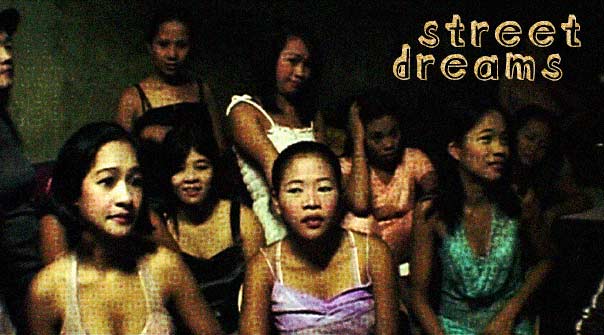
Ethical living in the respect of how we live here (in Australia, in the western world) often comes down to how we spend our money and the footprint that we are leaving on this planet. However, sometimes ethical living needs to be more about the welfare of people afar due to the inequities and injustices that are being done to them as a result of things that aren’t as obvious. Two of those things is human trafficking and international flesh trading. This has become the topic of a documentary that my film partner Jason and I want to shoot for our company Red Earth Films. The film is going to be called Street Dreams.

There are literally millions of children and women (mostly) who are virtually (and sometimes, literally) enslaved as workers in many parts of the world, and often this “work” is in the sex industry. The primary reason for wanted to provide greater exposure for this fact in our film is less because of what they are doing, but how they’ve come to be there. Through an endless cycle of poverty and abuse, these women are forced as children to enter a world where they are prostituting themselves to support their often broken family, broken due to prior abuse but not perpetuated from this line of work selling sex to violent and abusive customers. Often these women (or girls) were raped early on, then are shamed in their community and so feel compelled to, if nothing else, support their family financially as they are now outed for religious or strict cultural reasons. This is very briefly covering only a small part of the problem as there are also the issues of international exploitation, corrupt and seedy lawmakers, unethical and amoral behavior, outdated and unfair male dominance and so much more.

However, our film aims to fuel hope for these girls. They don’t need to feel shame and resort to the sex trade. Nor must they feel that this will go on forever; with small NGOs and individuals out helping girls become educated, trained in other areas and having their self-confidence restored, there is a great deal of action on the ground that provides a reason for hopefulness. We aim to explore the people who are providing this hopeful light as well as exploring what personal dreams and ambitions the girls have as they go down the road to potential rehabilitation.Seeing them overcome the inequities of their world and rise above it would be an amazing thing to see and capture in our story.

We’re very excited about this project and are currently fundraising to be able to visit South-East Asia to shoot the film in a couple of months. If this sounds interesting to you, please visit our website for more info. We feel it’s an important story to tell and everyone is better off when injustices like this are exposed and action is taken.

Defeating my cravings

Yum!! No, no...naughty...

No matter how much great-tasting healthy food I eat, I never crave it like I crave junk food: chocolate, hot chips, ice cream, potato/corn chips. Why does stuff that tastes so good have to be bad for you?? (I know there are healthier versions of all these items, but I don’t crave those versions either!) Naturally, you don’t have to be a health-food Nazi to live simply, but I suppose as you start living ethically, all these things follow suit as it seems that so many of the companies that produce junk food are also unethical in their business practices (I wonder why this is? No really, I want to know why!).

I got a craving tonight for ice cream. I told myself that I could supplant this need with salt & vinegar chips if the ice cream was unattainable. It was 10:30pm. I had my car keys in hand and I thought “what are you doing? You don’t need this right now, at this time of night. And, all the companies who make what I want are evil!” I was so very right! Sitting down at the computer and looking online (ah, the Internet, how I love thee…), I found that my second ice cream choice, a McDonalds hot fudge sundae, comes from a company voted several times as the world’s most unethical company. From destroying rainforest to building farms for their cattle to illegally underpaying staff, they are a wasteful and shameful company from a respectable business point of view. I knew their food was fatty and unhealthy, but this will seal the deal for me never going there again.

My first ice cream choice, Streets’ Magnum series, I found listed in the great iPhone app “Shop Ethical!” which is a searchable database that tells you all about most food products sold in Australia and rates them for their ethical behavior. Streets is a Unilever subsidiary, and Unilever have a poor ethical score due to animal testing and human rights issues, and generally poor ethical practices, shameful for one of the largest companies in the world.

The backup plan of potato chips would have either come from Doritos (owned by Pepsico who sit near the bottom of several responsible shopping guides and ethiscores; though I could’ve gone with CC’s who get a decent score) or salt n’ vinegar ones from Smiths (also Pepsico; Samboy or Kettle would be ok). There are some alternatives to the unethical companies but you have to know who is owned by whom. For example, between the infamously dubious Nestlé, Mars and Kraft companies, there are hundreds of subsidiaries that you probably don’t realise have these irresponsible umbrella groups controlling them. When I was looking for dog food in Coles today, every single bag of dry food was owned under Mars & Nestlé even though there were all of: Purina, Lucky Dog, One, Beneful, Pedigree, Pal, Chum, My Dog, Good-o, Optimum and Supercoat. In addition to boycotting these companies, best to write the producers and suppliers and tell them what you think as it’s the only way they’ll know that we want some change to take place. I wrote Coles today to tell them this.

Anyway, at the end of it all, I safely convinced myself that I was doing the right thing by denying myself of these treats (which in itself is very good practice) and instead had some fresh bread dipped in balsamic vinegar & fresh, local olive oil. ‘Twas tasty for my tum too; better yet, it was tasty for my conscience! 🙂

Intentional Community living

“Intentional” and “authentic” community living are a couple of words/phrases I had never heard before about a year or so ago. When you live in a city in our society and follow the rest of the pack, like I did (and still do, to some degree), you are led to believe that we should spread ourselves out – wayyyy out – sprawling our cities to the max, stake out our 400-600 sq metres+ of land, and live at arm’s length from our neighbours and also, effectively, from the problems of the city/world. This “buffer” gives us our private space to stretch our legs, let the kids safely run amok, put in a swimming pool and successfully segregate ourselves from everything that might impinge on our peace and quiet and security. What it is also successfully doing, however, is isolating ourselves increasingly more from other people and their needs, struggles, support, and face-to-face interaction.

I personally tend to batch together the ideas of intentional & authentic community living as I think there are elements that overlap: intentional communities can be defined as a planned residential collective of homes and people who work as a team to see through their common visions and goals together, sharing responsibilities and resources including traditions, beliefs or spirituality. A brilliant article on this idea is at the Intentional Communities website (IC.org). In her book Designing Social Systems in a Changing World, Bela Banathy describes authentic community as “a group of individuals who have developed a deep and meaningful commitment to each other and to a shared meaning or purpose.” These members of the community “feel that they belong together believe that they can make a difference in the world by pursuing their shared vision and purpose, communicate with each other openly, honestly, and creatively”, deliberately avoid a hierarchical or bureaucratic system of organisation, instead “govern[ing] themselves by shared stewardship,” and nurture and practice genuine development of the members of the community, “taking full advantage of their unique and collective potential, knowledge, skills, creativity, and intuition.” There is a tendency for spiritual groups to use authentic community often to describe this coming together, but I think it has many other exciting applications as well.

[ check out our intentional community trip in 2015 ]

What I like about this whole concept is that it starts to knit back together our social networks that have becoming pulled apart and frayed by this suburban sprawl and our thinking that we are better off barricading ourselves from the people around us in the name of security and privacy. The thing is, I reckon the world was a much safer place in general when people lived more communally, with generations of families under the same roof, with “tribes” or communities integrated together with their kids playing safely with each other and people generally having much greater support systems all around them. The only reason we build the walls is because we don’t know our neighbours so we don’t trust them; we don’t let our kids just run off and play down the street unsupervised because we don’t trust anyone; parents take their kids to daycare because they have to pay for the expense of having so much unshared space in their protected private property which they’ve walled off from the neighbours who, had they got to know them better, would be able to communally take care of the kids. And so on. That of course is a minute tip-of-the-iceberg of the snowballing problems of how far our society has strayed from a true sense of community, but you get the idea…

OK, this wasn’t supposed to be a rant! I get that way a bit, don’t I?? 🙂

Getting back to why I like this concept, I think there are so many benefits that would make my life better, not only because of the type of person I am (keep to myself and lazy at making friends but enjoy and need those closer, personal relationships; increasingly environmentally and ethically-oriented lifestyle; need a better support base for struggles and personal growth and understanding), but because there are so many interesting dynamics that come into play when you get similarly-minded people coming together to invigorate and enhance their own lives and those around them. Or as Geoph Kozeny puts it: “a feeling of belonging and mutual support that is increasingly hard to find in mainstream Western society”. A lot of people have some of these networks in place and still live in the segregated lifestyle that I mention above, but they live a distance away from friends and groups that meet occasionally and require a lot of wasteful driving time and energy, and leave big gaps in between. I am increasingly craving the ability to have all those benefits available on tap.

I will outline my “idealistic” (and hopefully not unattainable) vision of intentional/authentic living in a new blog entry which I make as my master wish list, expanding on it as time goes on. Over time, it’ll be interesting to see if this type of community living can be achieved, and if so, if it lives up to the billing that I am giving it! It would be exciting to chronicle the process and see what unexpected challenges and achievements would come of it. I’d still love to hear from anyone living this way!

Quick links:
Bindarri Cohousing and intentional living Australia
Amazing list of all the worldwide IC’s (intentional communities)
Excellent article on what IC’s are