
~ DESTINATION FOUR: THE CHANNON, NSW ~
Cows, creepy-crawlies and communal living.
One of the most common remarks that I have heard by folks who lived at or know the Dharmananda community is that they think it’s one of the best they have come across. For two weeks Heidi and I incorporated ourselves into this community discovering that the quality relationships, good ethos, strong values and beautiful location does indeed support the high esteem that this community is held in.
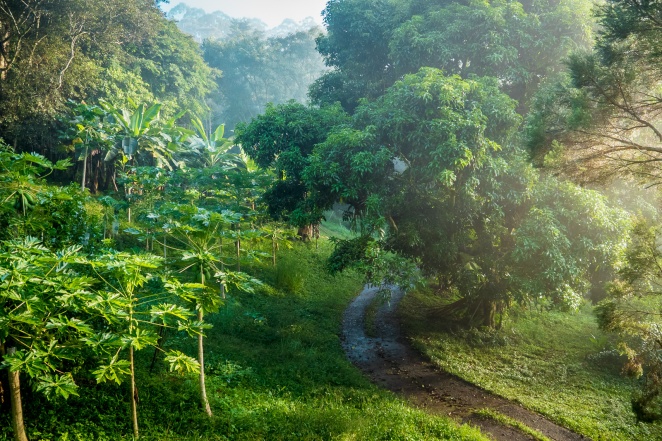
Interestingly (well, to me anyway), this trip has consisted of us randomly picking communities that we know nothing about but sound good to visit and then turn out to be historically significant in one way or another. It turns out that communal living on the Dharmananda property actually preceded the 1973 Aquarius festival. Aquarius is largely considered to be the birthplace of most of the communities in Australia that have existed for over 40 years. In this region (and arguably Australia), Dharmananda and Tuntable Falls (our second choice while researching) are considered the best known and well-respected communities, with Bodhi Farm right up there (a place we might visit as we head south in July). It was a privilege therefore to be opportunity to spend time with this group and find out what makes it so unique.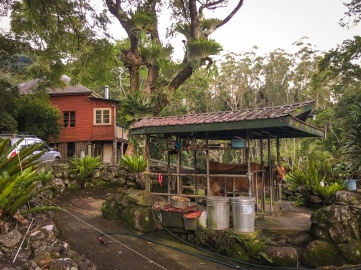
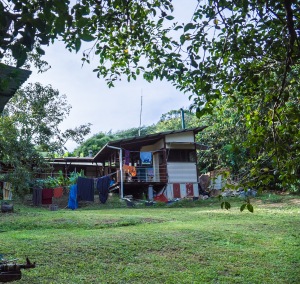
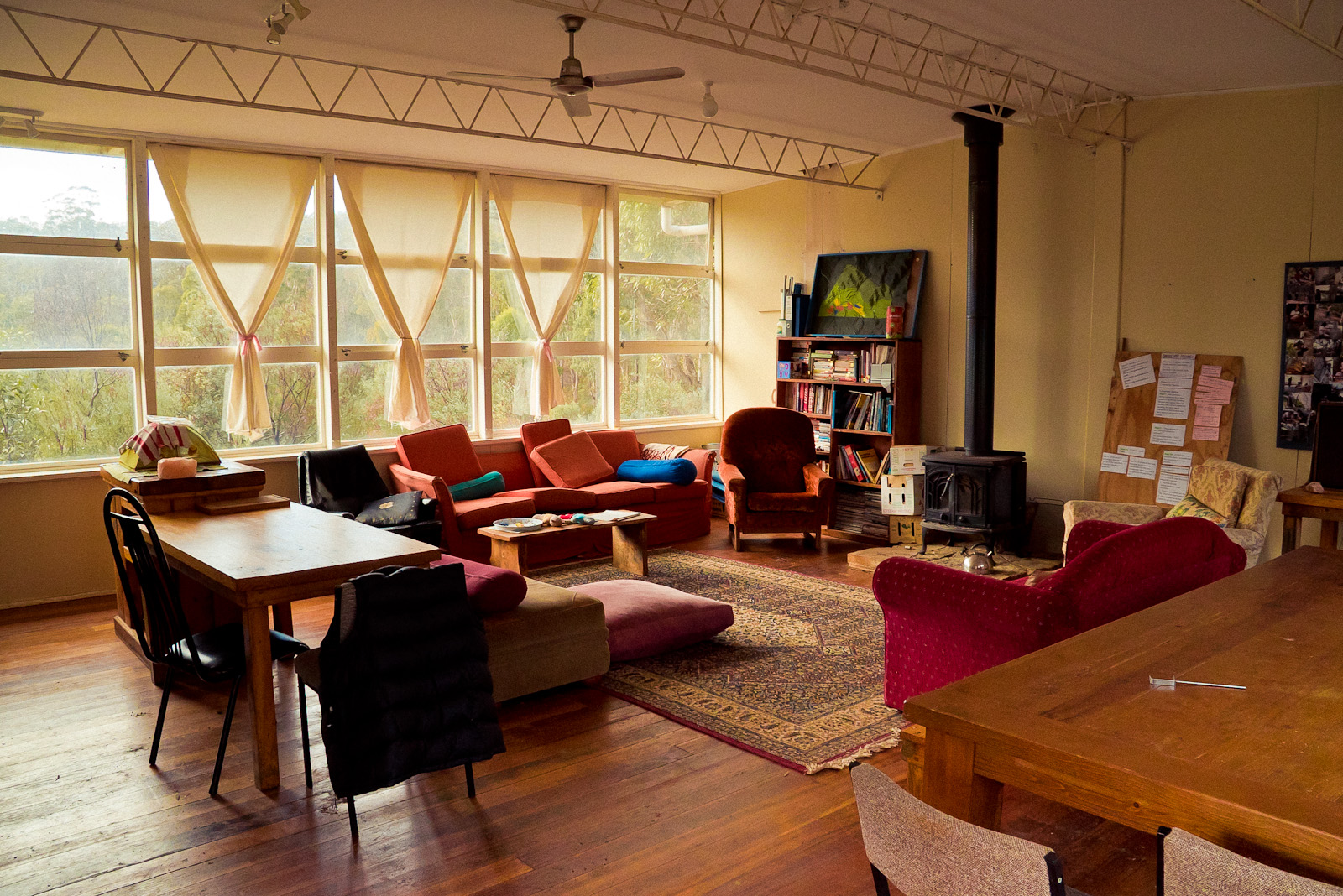
Right off the bat, our day-one first impressions were a mingling of the people, the place, the creatures and the dairy. The people were outgoing and friendly though you could sense that WWOOFers and other visitors were a common occurrence seeing as how well-oiled their guest machine worked! My first thoughts of the place itself are rich with adjectives: densely lush tropical forest; creative open-plan homes made from recycled materials; a homey and cozy community house; buggy, rough, open, remote, quiet.  The creatures were quite visible from the outset with the web of a hand-sized spider positioned strategically by the door to the community kitchen, a large huntsman welcoming us to our room, skittling cockroaches in and on everything when we opened the door, and a carpet python living in the rafters above our bed. Welcome to the jungle! Lastly, as we were welcomed by mooing bovines, the fact that this is a working dairy farm wasn’t lost on us during planning (an interesting challenge given our leaning towards veganism), but we decided to look past that initially and focus on the people and relationships before delving more deeply into the state of the cows.
What makes Dharmananda such an intriguing place? Well, a few things: the members of the community are an eclectic mix of personalities, many of whom (particularly the founders and those born into the community) have been here more than half their lives. They care for the land and for each other, their bond with both ensuring ongoing health and unity. There is a good blend of creative, practical and relational skills with everyone participating in their roles with dutiful acceptance. There’s also not too few or too many folks here: at around 20-25 at any given time, a good balance has been struck between in-your-face-all-the-time and I-never-see-some-people. 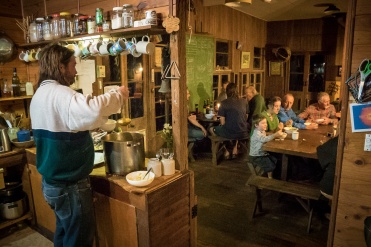 There is a shared meal available nearly every night at the community house with most people taking part at some point through the week. Besides the humans, an abundance of wildlife and wildness in general is both a virtue and something that you need to get accustomed to, but for the most part it is stunningly beautiful, tranquil and a wondrous thing to be able to be so close to nature. Credit for this forested and lush environment goes to the founders who rehabilitated barren animal-grazing land and made it what it now is. You’d scarcely believe that it was largely devoid of trees 45 years ago given the current diversity of native flora (and, increasingly, eradication of non-native weeds) plus rich habit for birds and creatures.
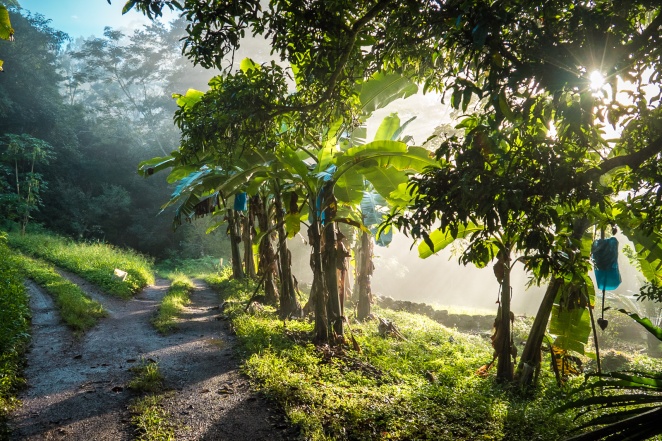
The people and the place. That’s pretty much Dharmananda’s magic ingredients in a nutshell!
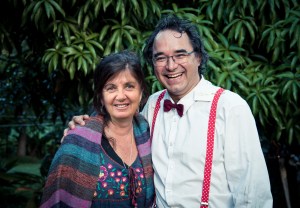
For Heidi and I, coming in again under the label of WWOOFers, the deceptively simple idea of “people and place” needed to be experienced first-hand, and it reminds me again of the importance of staying in a community for a little while. As we pulled out weeds for folks like Sho – a Japanese chap who came 15 years ago as a WWOOFer and never left – or Leigh – a fixture since 1979 who is the King of the Cows – we gleaned a great deal of interesting info about the community at different stages. 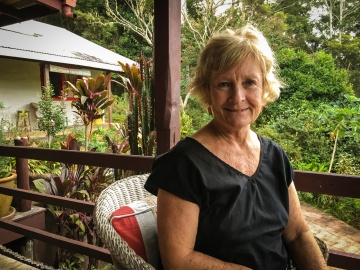 Maggie – a stylish, humorous and feisty 84 year old member – makes cheese during the week and has regaled us with stories of the farm. Carol (pictured) – one of the original founders and a sassy tell-it-like-it-is woman with a beautiful house on the hill – was quite candid about Dharm’s history and her thoughts on her ageing community family. We were also lucky enough to experience the group in social activities together, like Saturday dinner where everyone is looser with wine, laughs and board games, or at their monthly meeting where we got to experience their decision-making and democratic behavior with one another at work.
You might note that above I said pulling “weeds” and not “weed”. Dope. Pot. Ganja. Marijuana: no matter what you call it, it’s not available here. Dharmananda has had a strict “No Dope, No Dole” policy for most of its existence which is probably why it is a tight and focused community still after 44 years. Where other communities have to worry about raids and secretive activity surrounding what their community gets up to, Dharmananda seems pretty clean. According to neighbour Chris, that’s not to say that they haven’t been lumped together with the other communities in the eyes of the police. Chris regaled us with stories of actual gunships that have landed on the property from time-to-time as the Australian Federal Police (AFP) periodically perform drug raids. Apparently the AFP refer to Dharmananda as “Sector 4” while Chris’ place has defiantly actually used their Sector 5 moniker as their official community name – in true rebellious activist spirit. Those early days and the busts of the 80’s and 90’s must have been some wild times in this region!
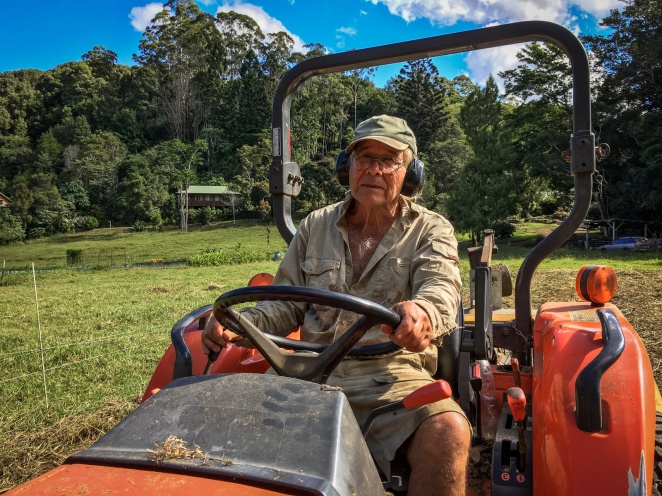
Leigh, one of the early members, on his trusty tractor
From a farming point of view, the heart of Dharm is the dairy operation. A number of interesting things transpired to do with this, as I went in as a staunch believer that dairy is part of a cruel industry, somewhat unhealthy and ultimately an unnecessary activity. However, heading onto the farm, I wasn’t wearing my Vegan hat and didn’t feel trepidation about the forthcoming experience, likely due to the fact that I really had no basis for comparison having never spent any time on a dairy farm. 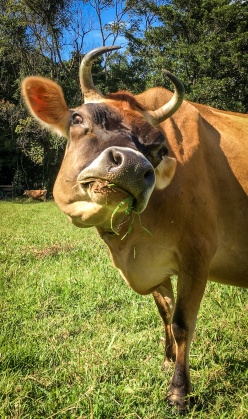 On about day 3 at Dharm, however, male calves were just being separated from their mother (and due for slaughter; a cruel by-product of the dairy industry) and had started a two day-long crying out to each other, day and night, which was difficult to experience. That evening, at a dinner table filled with community members who spend hours a week processing the dairy and living off of it, we had a fairly lively conversation about the ethics behind it and Leigh surprised me with taking a firm but compassionate stand about how he struggles with parts of the dairy routine, like separating the calves. A sly reminder to the other members at the table, he commented that “this is all done so we can eat our cheese and butter.” This impressive show of humanity was coming from the man who has carefully tended to the cows 7 days a week for over 30 years. I would learn over the rest of our stay that he treats those cows with diligent care, talking to them and calling them by name. Watching the cows follow him around made me realise that there was a lot of heart invested into what he does. It’s one of those strange hypocrisies that humans are often involved with, and despite my inherent objection to the whole idea of dairy, I could see genuine caring and good intentions behind the way the cows were treated here which says a lot about the type of people who live at Dharmananda. Due to the lengths that they go to to care for the animals, who in turn fertilise the land for their veggies, I could no more condemn them than I could myself for driving a petrol-powered car and contributing to polluting the Earth. It was a healthy thing to experience; I could more clearly separate intensified factory dairy farming done by faceless corporations from this sort of small, bio-dynamic and holistic approach.
  My feelings about consuming dairy remain the same, but I am not lumping everyone together into one box.
The farming part of life inspired some interesting conversations with community members. From at least 4 separate conversations, I was told that Dharmananda wouldn’t have been someone’s first choice anymore if they knew how centred around the dairy, labour and food production that it is. In fact, each of these people mentioned neighbouring Bodhi Farm as their preferred choice. In their next breath though, all those individuals also said that it was the people that kept them here and they were all family so they endured. It did cause Heidi and I to perk up our ears with interest about Bodhi Farm, however. We are considering visiting there on this trip too; from comments we heard, it sounds like the virtues are that that Bodhi is in the quiet forest, more aesthetically-oriented, more focused on music and creativity and less on farming and labour, less about vehicles and more practising/observing Buddhism. Certainly some of those considerations would likely be shared by Heidi and I as we are interested in arts-centred communities with a spiritual core. It therefore makes Dharmananda even more of an enigma; people are compelled to come and stay despite the lifestyle not necessarily being their first choice. It says something about the vibe or people or location or something deeper….but I also sense that change is in the air. 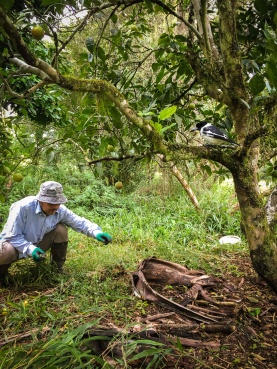 The big question will be: once this particular “constellation” of folks (as Carol calls the founders and current group) moves on, will the next generation maintain this type of farm-centric existence?
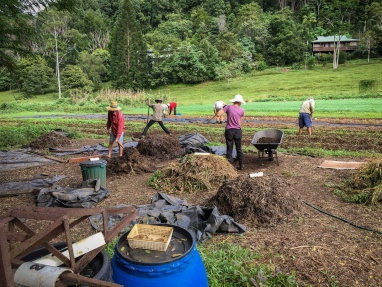
Overall, our experience of life in the community was very positive. As WWOOFers, we generally worked 4 hours a day from 9am til about 1 or 2pm with generous morning tea and lunch breaks, after which we could do as we pleased. We probably had our fill of weeding tasks as about 75% of what everyone wanted us to do involved that, but we did learn a lot about native vs non-native plants, prepared the food beds for Dharm’s next crops, participated in the regeneration of the bushland and  helped improve the community in general. The downside might be that we also got bitten by ticks, jumping ants and leeches in the process, but we worked alongside a 2 metre carpet python one day, which was pretty exciting. We got to spend most of our days outdoors, chatting with community folks, basking in the unusually warm late-autumn sunshine and soaking up the clean air in the beautiful forest.
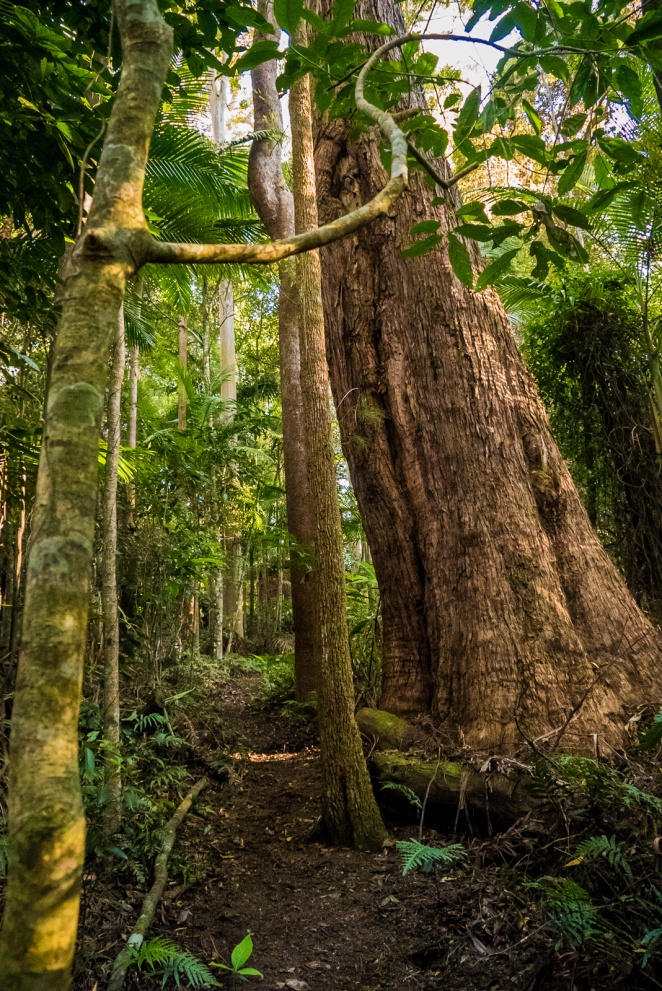
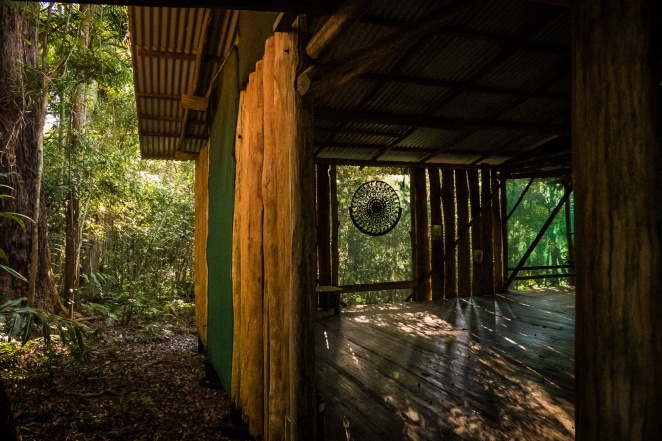
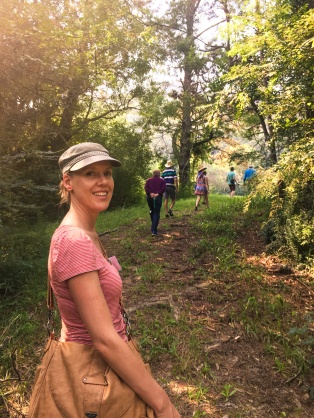
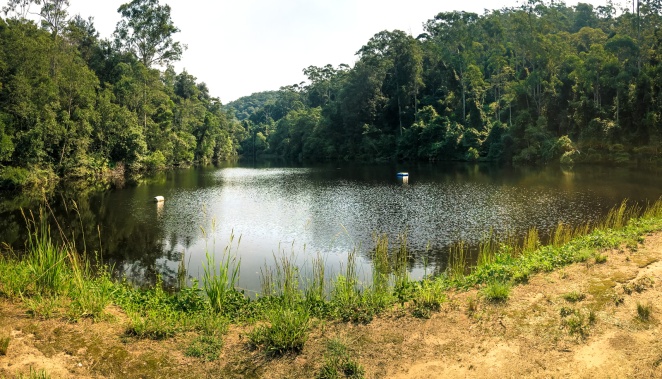
One of our exciting WWOOFing assignments was to go up to the meditation centre that was co-built and co-owned by Dharm and Bodhi, on the top of their hilly property in the untouched, ancient rainforest. This retreat was graced by hundreds-of-years-old trees, with little “cootees” (or sleeping/mediation huts) dotted around, a communal kitchen and a large centre for group mediation. I thought the farm was pretty peaceful, but up here there were no human-created sounds except the whip birds and wildlife. 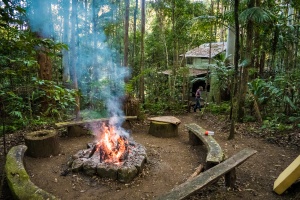 Even the sun and wind could barely get through the dense trees. We were very thankful for the invite to come up with Jen and her partner and stay over night as this place clearly illustrated to me one of the reasons that people are so passionate to save these forests and to live in this soul-filling region. (I’ve posted a bunch more photos from this beautiful spot plus the rest of Dharmananda in my photo gallery)
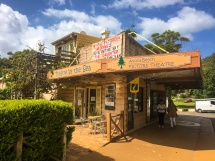
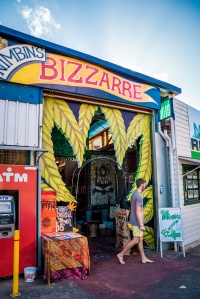 We rounded out our visit with trips to the local village, The Channon, which had a throw-back feel to it, plus we saw their famous monthly market which was all local arts and crafts complete with all the old hippies and other locals walking around there. A must-see on our list was also famous Nimbin and it’s healthy hemp and pot industry, but it had a bit of a seedier feel to it than I expected. Still, it was a very interesting spot and worth a visit. The countryside in the region is impossibly pretty; truly Australia’s Tuscany in my opinion. Without a doubt, we need to explore the area more as it is thick with intentional communities and the exciting community-at-large makes it one of the most interesting parts of the country for like-minded folks, I imagine. Dharmananda was a great introduction to the area and I hope we can experience more of it and learn from the pioneers of communal living in Australia!
There was so many amazing photo opportunities in this region and on the property that I made a separate gallery to show off more pics than what fits in this blog post.
As always, please check out Heidi’s site about this visit as well for her unique insights on our journey.
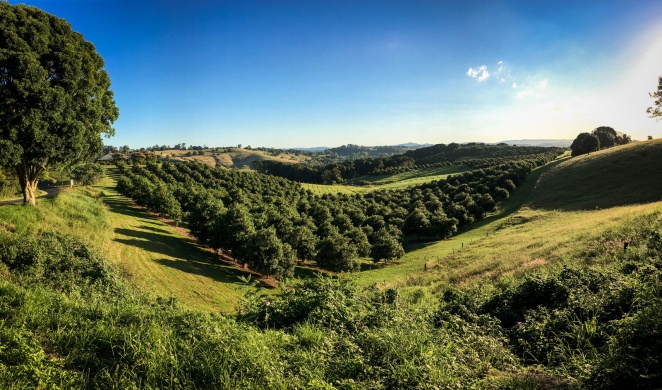

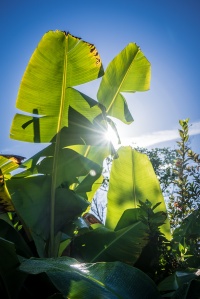 About 20 minutes drive south of Coffs Harbour and close to the eclectic town of Bellingen which is back-dropped by a stunning Dorrigo National Park, this sub-tropical zone is our first real taste of the more northerly climes of Australia – wetter, more humid, more lush. It is an excellent climate for organic farming, straddling Mediterranean and tropical, and features lush rainforest, picturesque mountains, achingly-beautiful surf beaches and small, inviting towns. Heidi and I felt a lot of external loves and soul-filling elements clicking together here right off the bat.
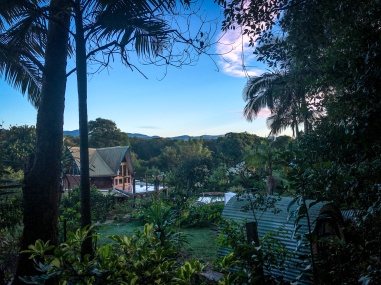 This community began in an appropriately activist manner: in the late 70’s, happy hippie folk used the farm land for environmentally joyful pursuits and were friendly with the local farmer who owned it. In 1981, the property came available for sale and Japanese interests swooped in with designs on redeveloping the land into a resort and golf course. The farmer sided with the concerned hippies and chose to sell the land to them which the group managed to do via their “alternative networks”. Hooray! This wily rogue of determined environmentalists defeated the big developers and have since cared very well for the land, even
  having part of it deemed a protected national park (Bongil Bongil).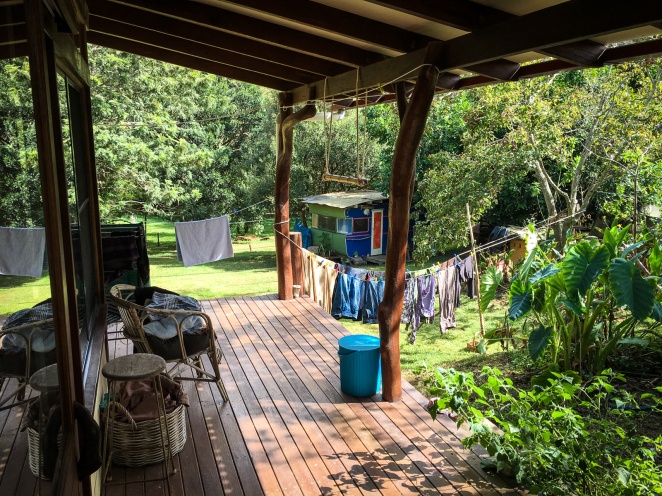
 chain-link in public areas, speed and traffic signs and so on. In my opinion, this is still and has always been one of the defining factors of living in community: you live together, trust each other and provide safe, harmonious and attractive common spaces that generally don’t require division or external policing. Going back into these conformist settings once you’ve been in a community like this immediately makes me feel uncomfortable. Mainstream society is largely not natural.
 Conflict resolution and internal politics are things that we have heard about in every community so it is clear to us that it a good system needs to be established early on. Members indicate that this didn’t really happen in Bundagen and this is their only real issue. Clearly they have made it work on some level to last this long, but the potential for fallout came into full illumination with a community member who was causing a rift between villages and individuals for many years. As good stewards of communal-living principles, the community-at-large have employed ongoing attempts at personal support over time, but sterner measures were being discussed. By all counts, this is unusual but it seems like something that has gone on far longer than is needed as the community didn’t have a comprehensive plan on to come down hard on frequent offenders. A further downside that we experienced was gossip, not just from this but from other things, which I suspect could cause other rifts if left unchecked.
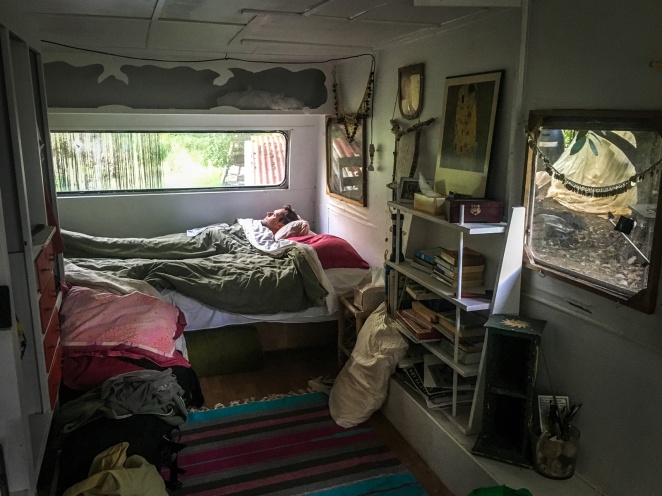
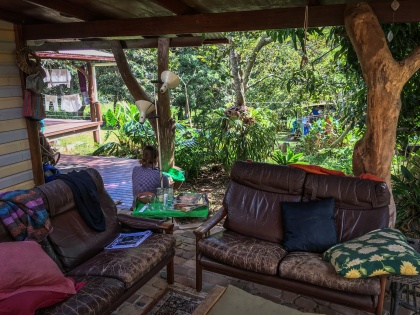 On the plus side, Bundagen is lush, natural and beautiful with countless birds, monitor lizards, possums and bush turkeys in your garden (and the occasional python living in your rafters!); easygoing smiling folks from different walks of life doing creative and inspirational things with their diverse dwellings, clothing and interests; music/sing-along nights, working bees, clothing-optional bathing at the beach (apparently in the early days, even member meetings were in the nude!), wild organic gardens behind many homes, yoga/meditation sessions run by members; and a relaxed way of organising, administering and “being”. The downside, comparatively, might be what Bruderhof excelled at: structure and order, balanced education, blended multi-generational groups onsite, community unity (with gossip largely “outlawed”) and a central drive (Jesus) that affected every person; all this the kind of stuff that won’t happen without some forethought. Now, I know Bundagen residents would probably argue that some of those things are exactly what they don’t want, and I would personally choose a more organic lifestyle over a heavily constructed one, but there are levels of structure that Bundagen might consider virtues to employ, especially in light of their self-assessment on conflict resolution. And that’s not to say that Bundagen was lacking in a spiritual core; I think most people there felt some affinity with the Spirit, the land or both, they simply didn’t all subscribe to the exact same programme.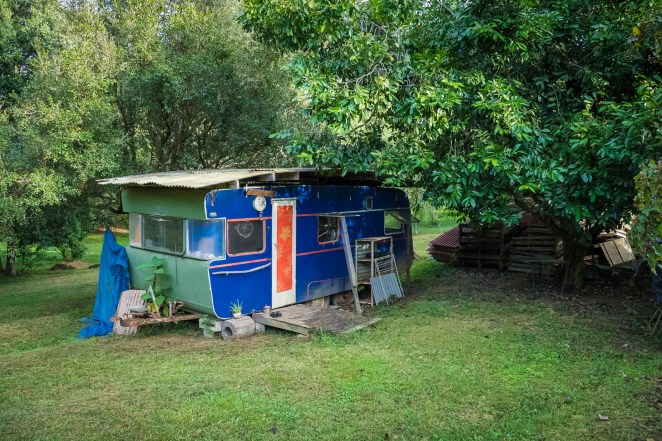
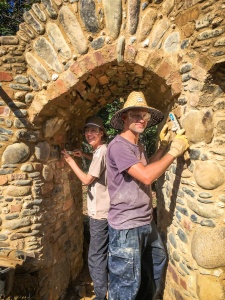 Giri had us help with constructing an artistic stone wall and other manual labour, and Jo was interested in our skilled labour so we helped her with a logo and website for her business. We enjoyed their hand-crafted open-plan mud-brick home which really took advantage of the lush surrounds, and was only a 5 minute walk from the warm ocean where we often started or ended our day with a swim. The sense of peace and serenity that the location and lifestyle offered to the folks in Bananas village was quite memorable, and I could easily see why it would be enticing to live there for decades – despite the occasional conflict – as so many had done. Membership is closed at Bundagen as they are full, which also really says something about the place. Definitely a little slice of heaven!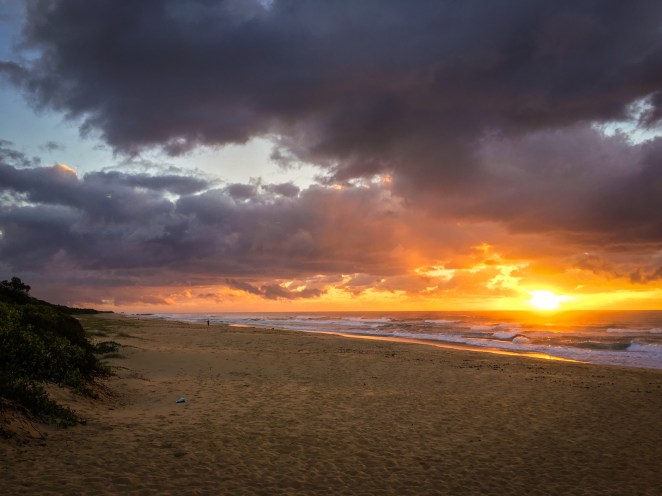
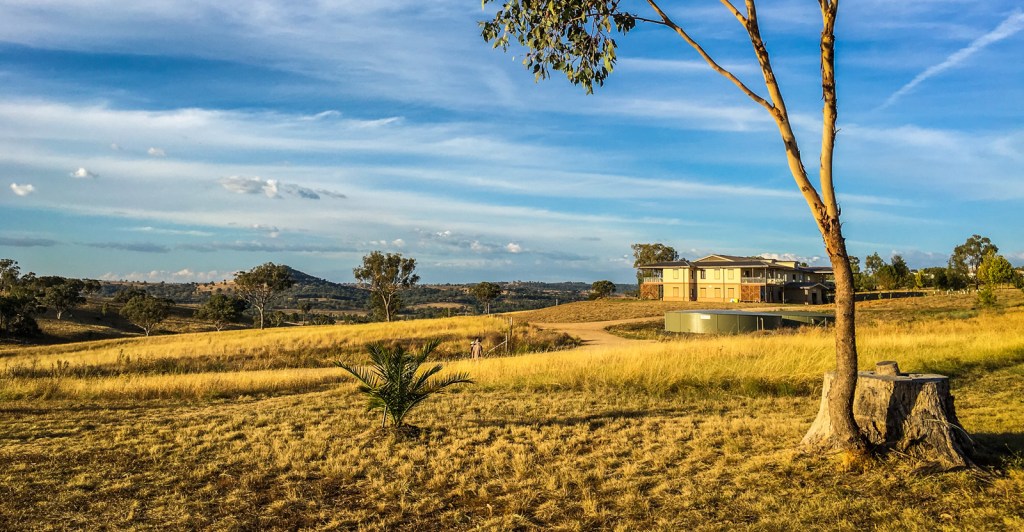
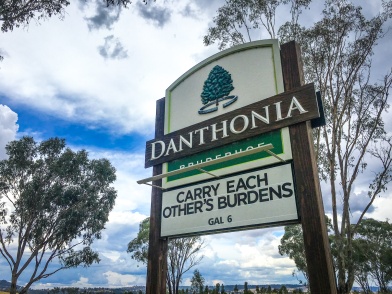
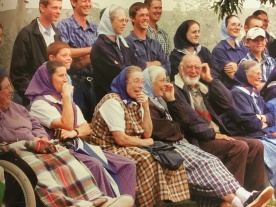 In terms of “authentic community”, Bruderhof takes the
  All clothing is supplied as required and they have largely settled on a “uniform” of sorts: blue jeans and checkered shirts for men, somewhat formless Amish-style long dresses with head scarves for women. Rather than see these as sacrifices, Members embrace them as gifts: a way to keep them focused and pure; a way to keep life simple and sustainable; a way to dispense of the frivolities and unnecessary intrusions of modern life; and especially a way to keep their mind on the task of serving Jesus.
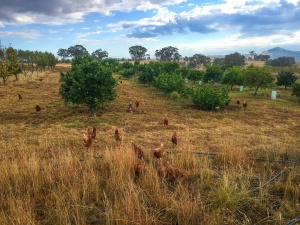 I give full credit for the whole community making a valiant attempt to accommodate us with a vegetarian diet instead (sidebar story: there was a funny moment when a “Tyrolean folk song” about the harvest was sung that featured the lines: “If we raised nothing for people to eat // Then what would they live on if there were no meat? // No roast and no dumplings, for coffee and cream // No eggs and no chickens – Oh what a bad dream!” which had people around us giggling. Heidi and I sang the ending “oh what a good dream!” instead 😀 )
 Most people that we met started their day before sun-up, so breakfast invitations were a constant source of struggle for me to be ready to talk at 6am. And this wasn’t idle chit-chat; in nearly every circumstance, some deep-down faith discussions were the topic on hand. As I mentioned above, this was something I wrestled with as my spirituality is a complicated mix of things that doesn’t fit neatly into a box. It might seem petty to mention given the extreme hospitality we experienced, but the only thing that bothered me was the level of evangelism that seemed to be happening in numerous visits. I fully understand that if you are committed to your faith and it is supposed to be a joyful centre of your existence then you want to share that, but I certainly felt like we were being challenged and preached to (and me, a little judged perhaps) at times.
 This wasn’t just because we were new; I saw everyone doing the same
 speaking of our hosts – Bill and Grace Anna – they were incredibly helpful, accommodating and forthcoming with their desire to make sure our stay went smoothly. Bill is soft-spoken with a wry sense of humour and gave us lots of reading material to take with us; Grace Anna was kind and fed us numerous times as well as provided guidance on campus. We are very thankful for both of them and the dozens of others we met and whom welcomed us in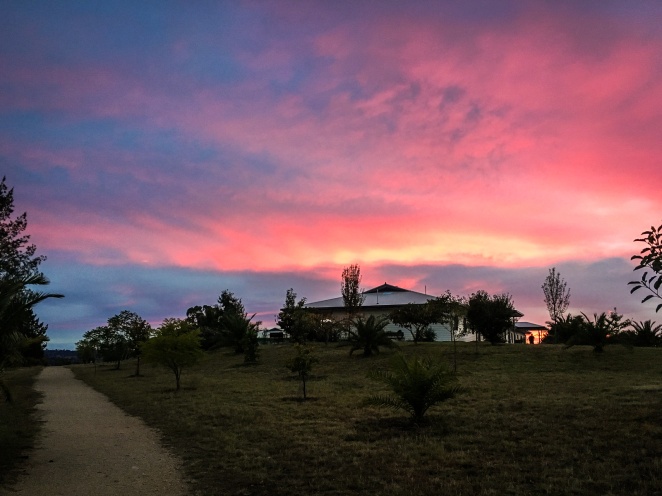

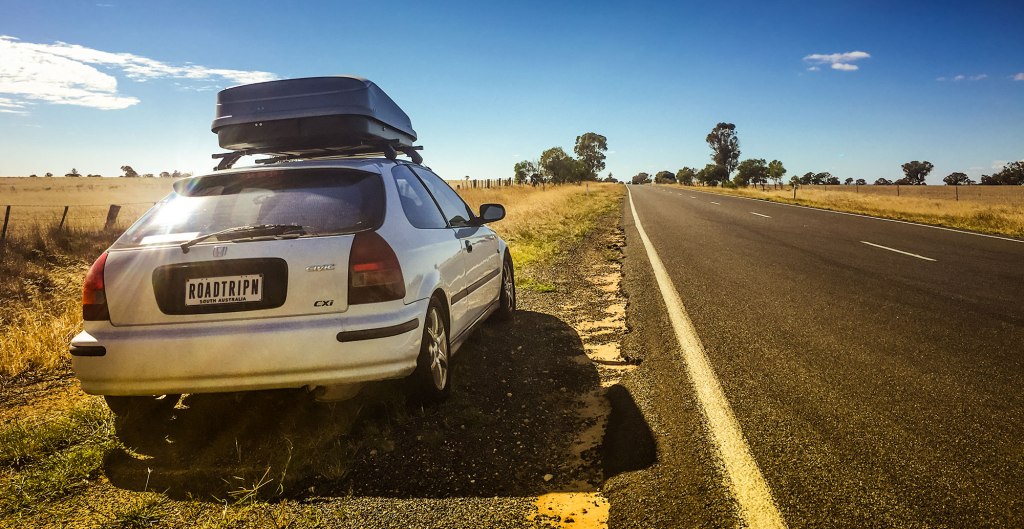
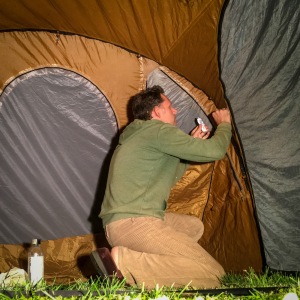 A few days before that, I indiscriminately grabbed boxes of camping gear from our long-term storage, and packed them into our car without even looking inside them to check everything was there. Thinking of this now confirms to me the somewhat blasé nature of this current expedition we are embarking on compared to the “fanfare” of last year’s first trip. That’s not to say I am treating this trip lightly, but perhaps I am approaching it with a bit more knowledge and confidence in this life direction we’re learning about.









 Big Tiny Adventure