Lower stress and gaining more precious time. Our journey of downsizing and simple living.

Our journey to reducing the complications in our life has taken a few years, but the results are palpable: feeling less money-stress, having time to truly breathe in life and not feel like it is dragging you along, space to explore what is most meaningful to you. Even just find a space to “waste” time and become bored to stir up creativity are all valuable things.

In this video, Mike talks about what we have learned and the tips and tricks to start thinking about how you can simply your existence for the betterment of not only your own life but for relationships and the environment. Enjoy and thanks for watching! 💚

Vegan foods reviewed – sour cream showdown

Here we go with some vegan sour creams as I’ve been in that mode lately. These feelings come and go as I occasionally channel my 20-something self from the 1990s when I lived in Brisbane and engaged in post-nightclub late-night binges of CCs and sour cream courtesy of my friend Christine. My current corn chip of choice of course has no cheese, but I am somewhat addicted to Nature Delight’s Tasty Lime and Chilli chips which I wouldn’t even bother reviewing as I would just be carrying on about the generous coating of spices on every chip 😄😄😄

Now I know to non-vegans there is a feeling that the idea of vegan sour “cream” is an unholy concept given the expectation that this is wholly a dairy confection. As vegans know, dairy is scary (please have a quick read of my blog post on this topic for more info!). Despite the fact that most recipes can be successfully veganised these days, there are some standalone food items that are more challenging to replicate, particularly if you are someone who traditionally believes that there is only one way for things to taste. Sour cream is one of those things that poses a bit of a challenge to vegan food producers and we are here to test the current crop of options.

I haven’t had dairy sour cream for quite some time, but the recollection is to achieve a balance of creamy smoothness which is also pleasantly tart. Some early or hasty vegan brands used lemon for the tartness but it is a clumsy approach that creates an inferior result. These offerings employ different tactics to varying levels of success. Today we look at an old favourite as a bit of a baseline comparison with a couple of recent finds.

vegan-symbol

These reviews are particularly geared towards former omni eaters who are keen to have that meat or dairy favourite available as a tasty cruelty-free equivalent.

About the ratings system: Ratings are for what I consider the important elements of an appealing food product, with “Texture” being one that you might not normally see for other food reviews, but to me it is quite indicative of the success of a meat or dairy substitute. I choose “Value” over “Price” as vegan foods are generally more expensive than their meat or dairy counterparts (or rather, the latter are unreasonably and irrationally cheap given what they are) so I choose to focus on how good they are for the amount you pay.

On to today’s reviews:


** SOUR CREAM SHOWDOWN **

PRODUCT 1: TOFUTTI BETTER THAN SOUR CREAM

Type: non-dairy Sour cream
Country of origin: USA
tofutti.com

259850

overall-5
flavourrating-5
texturerating-4
valuerating-4

vs


PRODUCT 2: MADE WITH PLANTS
Type: non-dairy Sour cream
Country of origin: Australia
madewithplants.com.au

9415

overall-5
flavourrating-3
texturerating-3
valuerating-4

vs


PRODUCT 3: DIBBLE
Type: non-dairy Sour cream
Country of origin: Australia
dibblefoods.com.au

9415

overall-5
flavourrating-5
texturerating-5
valuerating-5

REVIEWS:

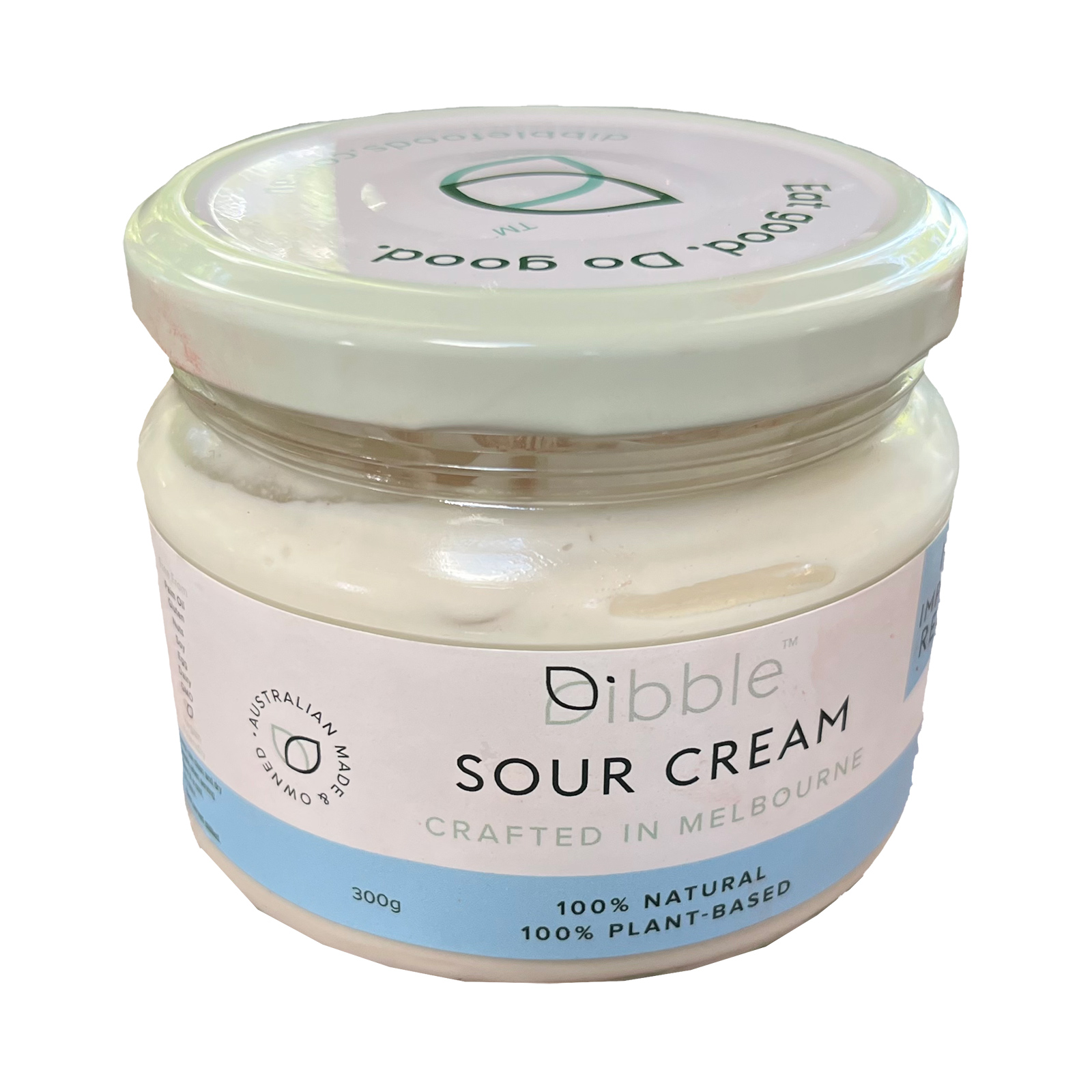
New to my world is the Dibble brand which is out of Melbourne. It is presumably a niche brand as I have only seen it at a Foodland here in Adelaide which I know specialises in a larger variety of vegan smallgoods. Having tried a few dodgy sour cream attempts, I am always wary of wasting my hard-earned $$ on a big fat disappointment, but Dibble thankfully came through with the goods! Their jar says “New improved recipe” and what I noticed with online reviews of their first version was that people had a problem with their faba bean ingredient giving an unpleasant texture (we’ll talk to you in a sec, Made With Plants). What they do very well in this incarnation is to ditch the faba bean and introduce pea protein and natural gum guar, the latter of which the Tofutti uses. While having a very different texture to the Tofutti, it has a firmer almost “whipped” texture which is quite appealing (though I suppose, not technically identical to dairy sour cream). Where Dibble really shines is coming up with an excellent balance between the tart and the creamy. I personally don’t like it too tart but I still do want it there.

The Made With Plants grew on me in the sense that it smells and has the tangy taste of a dairy-cultured cream which is possibly the most accurate of this group to its dairy counterpart. Whether that is what you want is another thing. I find it almost a bit too sour as if it is going off slightly. What I didn’t care for was the runny “thickened cream” texture nor the distinct faba bean “after-tongue”. Yes, I think I made up a word there. You’ll know if you try it: you have a bite, swallow and then are left with a weird “glaze” on your tongue which is not too pleasant in my opinion. I definitely think it’s the faba bean though it could be one of the thickeners.

The Tofutti is a very different beast. The texture is a clearly firmer than dairy sour cream or the others here, but if you stir it, it whips up into a super-smooth confection. Its versatility comes in that it is not too sour but enough so in a subtle and accurate way to be definitively sour cream so it can be blobbed on top of nachos, or stirred into a mushroom stroganoff or just anything needing a sort of neutral thick and creamy stir-in. On it’s own it is also very good, though you start tasting that it’s not quite the same as the dairy version; however, I don’t recall ever eating sour cream straight from the tub anyway.

The verdict is a close-call: I love the ease and versatility of the Tofutti, but the Dibble was an appealing balance of all sour cream attributes. It’s also cheaper than the Tofutti which is a US import, so definitely adds to the costs a bit due to that. Made With Plants sadly isn’t really a contender with the other two according to my palette, but it is quite sour if you like that sort of aspect of a sour cream. The tongue glaze knocked it down a notch for me though.


Thanks for reading! Let me know what your favourite sour cream is so I can check it out or review it. What do you love about it? Do you disagree with my assessments? Let’s fight! 🤣 No, I’d love to know as we all have different tastebuds 😁

Vegan foods reviewed – part 6 (USA edition)

I recently came back from LA due to some family responsibilities and while I didn’t get much time to explore the full gamut of vegan offerings while there, I did make sure to try some new stuff at the grocery stores.

If you’ve tried and loved Follow Your Heart products, I was delighted to find that they started as a restaurant/store decades ago and that place happened to be near where I was staying. (This was more of an anecdote because I was excited to visit their awesome restaurant…I’m not reviewing their food this time around! 😛)

This entire aisle is vegan food; a mind-boggling vista if you’ve ever been to a normal grocery store!

Anyway, today we have some fun offerings from Daiya, Clean South, Sweet Earth and So Delicious.

These reviews are particularly geared towards former omni eaters who are keen to have that meat or dairy favourite available as a tasty cruelty-free equivalent.

About the ratings system: Ratings are for what I consider the important elements of an appealing food product, with “Texture” being one that you might not normally see for other food reviews, but to me it is quite indicative of the success of a meat or dairy substitute. I choose “Value” over “Price” as vegan foods are generally more expensive than their meat or dairy counterparts (or rather, the latter are unreasonably and irrationally cheap given what they are) so I choose to focus on how good they are for the amount you pay.

On to today’s reviews:


PRODUCT: CLEAN SOUTH – VEGAN BUFFALO WINGS
Type: Prepared meal
Country of origin: USA
Clean South


clean south wings

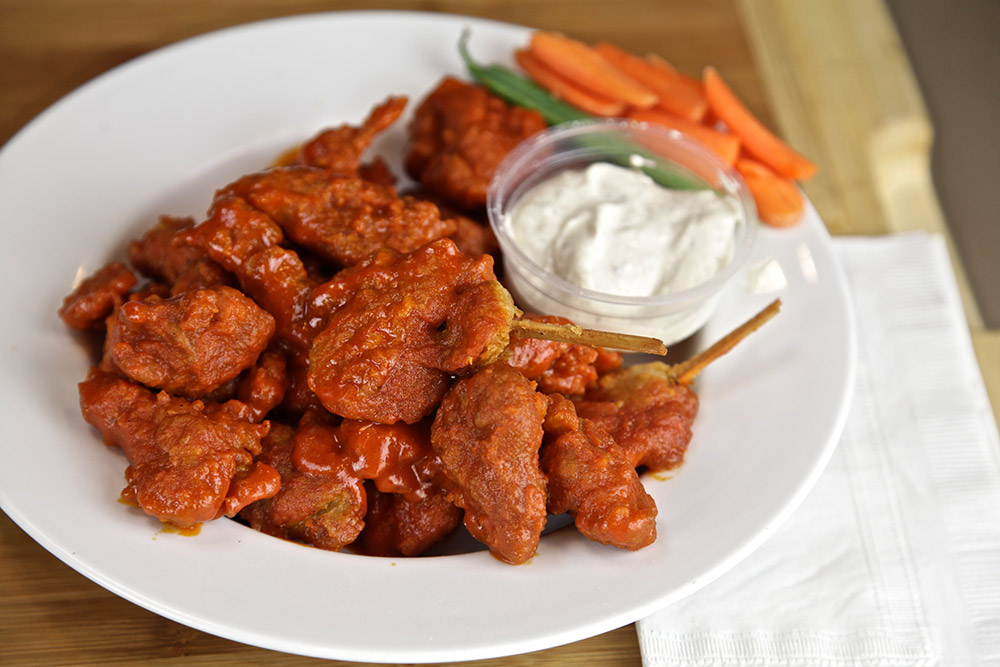
Whenever I see things with “buffalo” flavouring, my mouth instantly starts to water. Back when I had an omnivore diet, hot chicken wings were my guilty pleasure. While I now think about how abhorrent it is to consume the little wings of young chickens, the desire for that flavour doesn’t leave you and I am forever on a search for the perfect buffalo wing replacement. Enter: Clean South’s Vegan Buffalo Wings.

I am not prone to using OMG to describe foods, but O.M.G. these were good. I honestly couldn’t even be bothered heating them for the first half of the box, but then when I did and paired them with Daiya’s dairy-free blue cheese dressing, flipping’ ‘eck bro, things got crazy-good. Now, in restaurants I have tasted some darned good vegan ‘wings’ but this was the first packaged ones I’ve had that just nailed it. Texture, chewiness, beautiful tangy and hot sauce (and plenty of sauce), tasty and addictive. I’m a big fan of Franks’ Red Hot sauce inspired hot wings sauce, so this was just right for me.

Being that I was in the US and this was a local LA product, I kind of expect things to be a wee bit cheaper, but no, these were quite expensive at US$9. I’m happy to support a local, small producer that is banging out awesome food though. I desperately wish I could get these in Australia, but I’m also glad I can’t get them too easily as I’d be broke 😅


More to come….


Plant-based paradises: Chiang Mai

It’s getting easier to find vegan products in shops and cafes in the western world, but despite this it is still not as ubiquitous as I’d like. As far as I feel like we’ve come in Australia, I still have to hunt around for restaurants which are often a decent drive away from my suburb, or I get stuck with the usual terrible quality in convenience stores, petrol stations and corner chip shops.

There are places in the world, however, where there are plant-based options around every corner, especially when global tourism collides bringing together an amassing of worldly-wise visitors demanding ethical food options.

I am in one of those places now: Chiang Mai, Thailand.

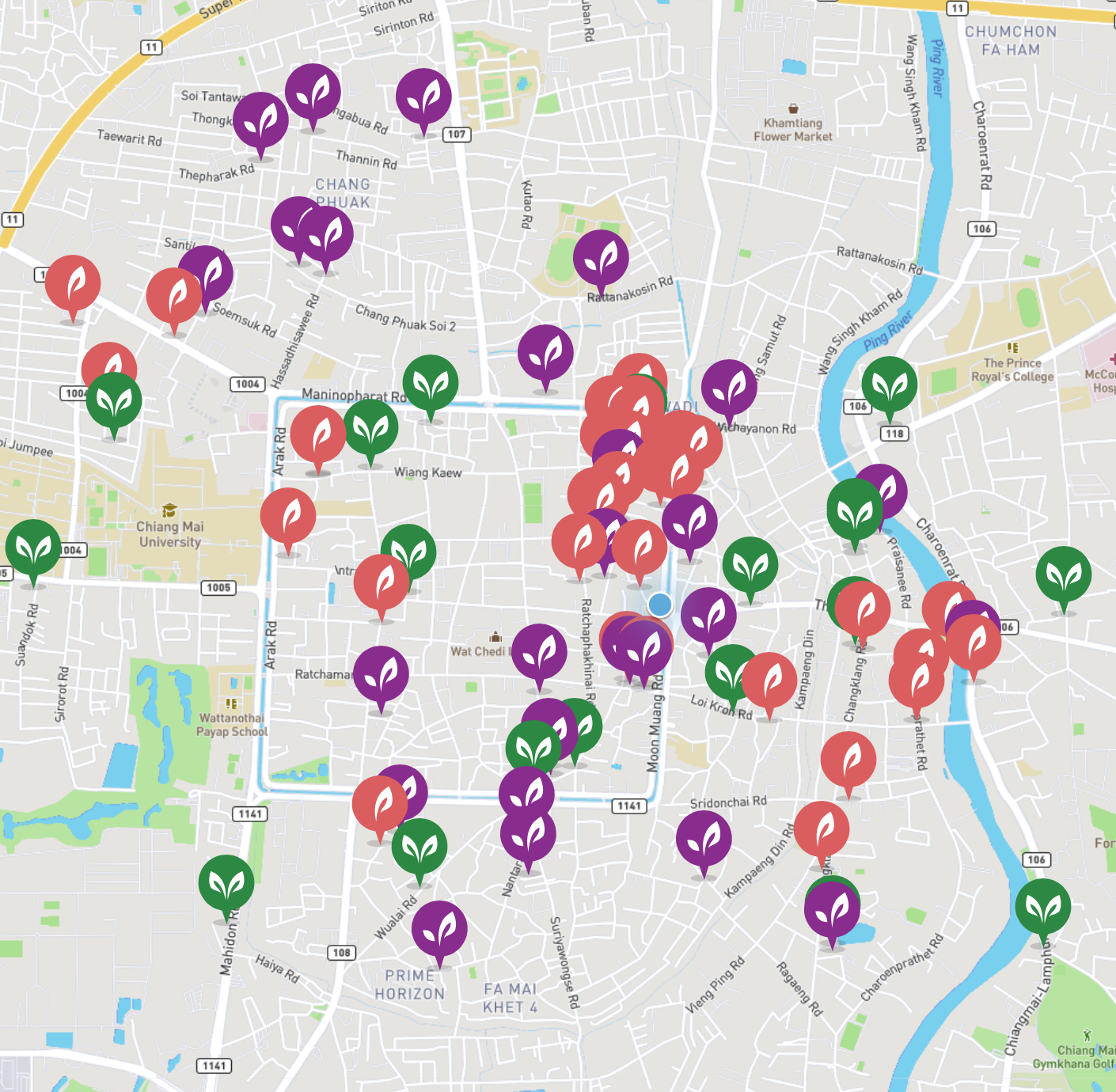
Going back a few years, CM was already rising to meet the needs of vegans even though the momentum had not yet really hit its stride in the West. Coming back now, I’m am in plant-based paradise looking at the abundance of not only 100% vegan establishments, but a general awareness in many cafes that acknowledge and allow customisation to accommodate non-meat and dairy customers. My favourite phone app (also a website), Happy Cow, shows off the glorious results of Chiang Mai’s options with so many green pins (100% vegan) but encouragingly so many others with genuine accommodating options.

Screen Shot 2019-02-01 at 2.40.57 pm.png

Chiang Mai’s central tourist area around the Old City. Scale of this image is approx. 4km across

By contrast, my hometown of Adelaide, Australia – while improving every year – will have restaurants/cafes that offer “veg options” (red pins) but quite often that will just mean that one main meal on the menu is veg-friendly and even that might still have cheese on it. On top of that, the majority of the listings above in Chiang Mai are restaurants open all day; in Adelaide, over 75% of all vegan or vegetarian establishments are only open at lunch.

IMG_8300.jpg

Mouthwatering massaman curry with brown rice and salad at Bohdi Tree 2, Chiang Mai

The quality of the food in Chiang Mai varies like anywhere, but often it is at a very high standard. I have tried a variety of cuisines (lots of Thai options of course, but often Italian, American, Middle Eastern and Indian are the one that are covered well) plus exotic salad shops, street stalls and specialty places like dessert cafes. There are many places doing their own mock meats or non-dairy cheeses, etc to varying success as I suspect that finding international commercial products is not as easy or viable to keep costs down, but this also provides some great opportunities for chefs to try something different.

As competition increases, it’s easy to start pitting one vegan place against another. However, I am still gleefully just trying places, thankful for so many ethically-minded people and in a state of awe at the variety of options at my disposal. I try not to be too critical as I want this industry to succeed, and luckily much of the food equates to hardy home-cooking which will always satisfy on some level. To be fair, I am also not seeking out high-end eateries as there are so many low-to-midrange ones, so if you’re after fine dining, there might be fewer places available for you.

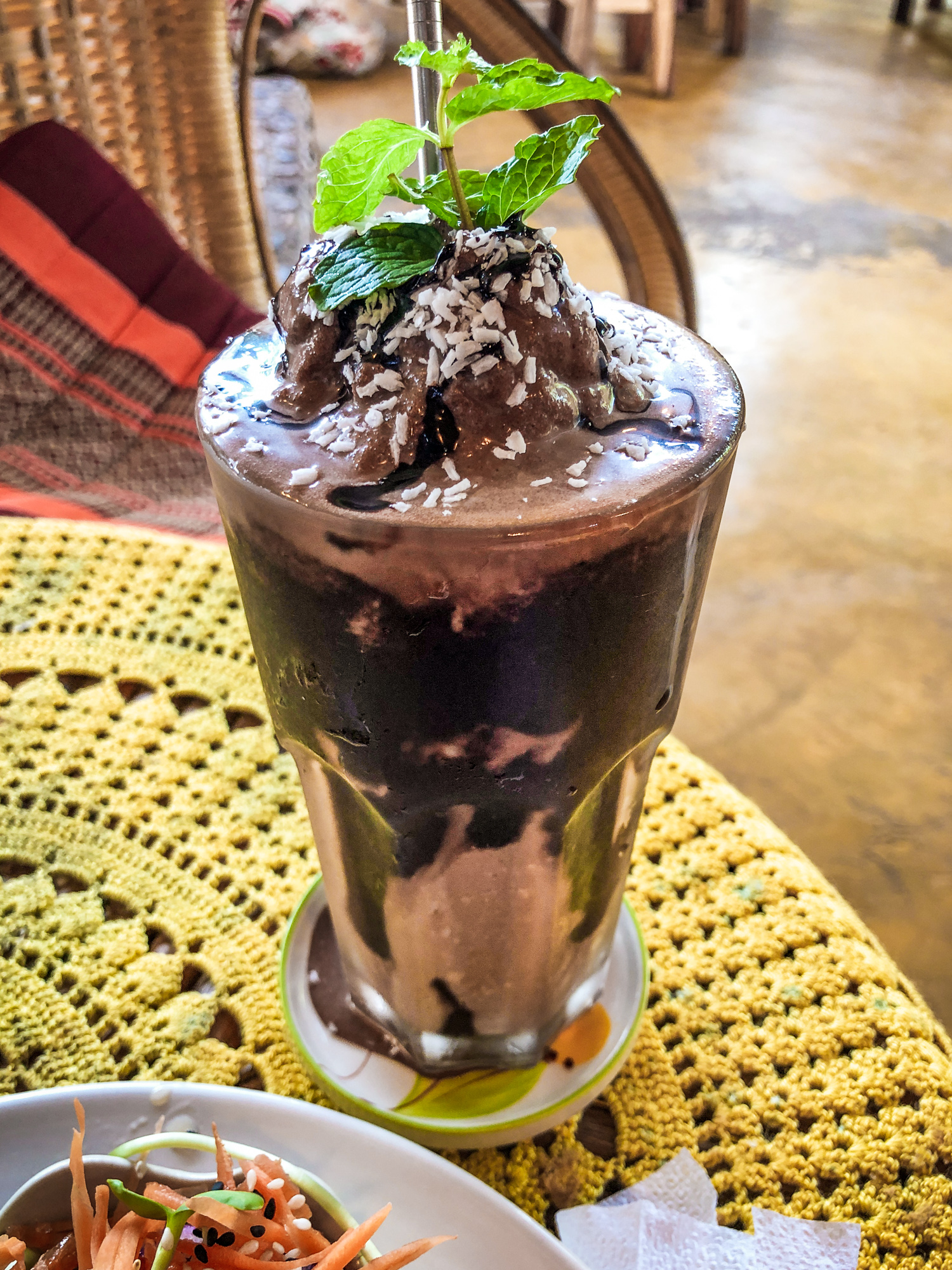
I have also visited Pai – about 4 hours’ drive from CM – and it too is well-endowed with vegan options given it’s tiny size. Check out this delicious mushroom-based bbq “pulled pork” roll I had plus gorgeous choco smoothie at Blossom Cafe.

The future is bright and the menus are exploding with choices!

IMG_8498.jpg

img_8499

Vegan food shopping pet peeves

htrbqvair2pz.jpg

Being vegan ain’t always easy. Actually, a lot of the time it gets me either really sad or truly angry. That is actually rarely about the food itself and more about the politics of raising animals for meat and dairy, the inherent cruelty of our animal agriculture system and the wilful destruction of our planet to feed people so-called “food” they don’t actually need to eat in order to survive.

When it does come down to the food though, there are so many great options, who can complain, right? Well, now… 😬   Here come my pet peeves (of today):

Unnecessary infiltrators

There could be SO MANY more vegan-friendly foods if companies that make an otherwise vegan product either slip “milk solids” or something stupid in there, or have a “May contain” list that includes dairy, eggs, etc even though the product doesn’t have those things in it. This happens far more often than it should!

Who decides on what the “perfect” hot dog is anyway?

There is a perception by meat-eaters and vegans alike that a vegan product has to faithfully reproduce the best version of a meat or dairy product or else it will be deemed unsuccessfully. The scrutiny is unfair and besides, who’s standards are we going by? In any food discussion, you’ll have people who swear by a certain thing, and someone else who thinks it is terrible. There is almost no gold standard for anything so we may as well get creative. If something “isn’t quite a meat item” but tastes awesome and looks very different, does it matter? If taste is paramount, then it should win out no matter what it looks like, even if the mock-meat is grey or a funny shape. If it looks weird AND tastes bad, well, that’s different. However, if it tastes “wrong” because someone was trying so hard to make that, say, blue cheese equivalent look, smell and taste identical, then maybe we need to address why it can’t just be it’s own thing. We need a new food category where foods are totally new but independently taste great without comparative scrutinising.

Making the food secretly vegan

Products that don’t mark specifically that they are vegan, nor dairy free and yet on the ingredients they have no animal products. If it isn’t on their allergens list (which they legally need to have) then it should be fair dinkum vegan, right? If so Food Company, why not just put vegan-friendly or dairy-free on the box?? Why make vegans hunt around and then take a risk or have to waste time contacting the manufacturer? You’re missing out on a growing market here people!

“Green-washing,” vegan style

Why is the vegan equivalent of a meat or dairy-based product by large companies still charged at a higher cost than the original meat/dairy item? Bigger companies are actually saving money on their core ingredients and their R&D departments are already well-funded and aren’t needing to recoup their development investment the same as a boutique company might justify their higher prices.

I am aware that animal products are heavily subsidised plus farmers are paid a pittance for what they do (which, in turn, results in the animals getting treated horribly in order to keep some profit margin). But pulses, veggies, grains and so on are cheap…

Of course, as I’ve been told before, the price of meat and dairy in western nations is unsustainably competitive. The “true” tally of our grocery bill should be about 2-3 times higher than it is, so maybe vegan foods are closer to the “real” cost. So while this one is a pet peeve because I just want to pay the same as everyone else, I could understand this price inflating if that were the real reason. However, I think it is just good old fashioned gouging.

Vegan options all in one spot

This one is more of a wish than a pet peeve I guess, but it would be utterly fantastic if vegan-specific products either got a special coloured tag at grocery stores or were all clustered in one area of the store. At the moment, the cool and frozen products tend to be together in their respective sections (albeit sprinkled together with vegetarian and gluten free and low fat – all things very much not vegan or just irrelevant to veganism) but the other products are often dotted around the store. Probably the former idea of a bright tag would be better as you cruise around the store, but either way I’m sure there are countless products that I simply miss which is unfair to the producer….and to mah belly! 😂

To end on a positive note though, I’m very thankful for all the people that are doing their best to give vegans a growing bounty of options! One day soon we’ll see a real respect by stores, food companies and the general public alike in accepting vegan foods as a genuinely profitable area worth exploiting at the benefit of our planet, our animals and us. 😊

844e0ae3da7976db794bd5cfe8c5a5e9

Why do vegans eat faux-meat and mock-dairy?

A question that is frequently asked of vegans is: if you are against the idea of consuming animal flesh and think that humans don’t need it, then why do you eat pretend meat and dairy products? While not all vegans eat faux meat depending on how long they have been vegan and why they gave up meat in the first place, there is a large market for mock-meats by vegans for good reason. For the most part, this can be boiled down to tradition, flavour, protein and social-acceptance. But let’s unpack it a bit…

vegan-hot-wings-processed-stills-11

Buffalo hot “wings” recipe at The Edgy Veg

If we first dial all arguments back to core rationale, vegans are either:

  • fighting for animal cruelty to be vastly reduced,
  • environmental chaos caused by animal agriculture to be stemmed,
  • vast health improvements that can be had by reducing animal intake in humans, or
  • a combination of the first three.

The main things that meat-eaters have on their agenda besides basic sustenance are: flavour and protein. And maybe “tradition”.

Looking at faux meat and dairy strictly from the omni “flavour” perspective, the past 3 or 4 years in particular have seen an immense increase in not only the volume of great-tasting vegan products, but a rise in innovative preparation of those products which is delivering vast improvements in taste and texture.dnLzZYG

If a meat-eater hasn’t tried vegan products for over 5 or 6 years and are still claiming vegan meats are tasteless and rubbery, they are basing their assumptions on early incarnations that used more basic technology and ingredient arrays to contribute to a much less exciting flavour. To be honest, anyone would be forgiven for criticising early vegan foods, many of which are inedible by today’s high standard of gastronomic delights.

In addition to flavour, the nutritional component to many vegan products is at a very high standard. In an effort to further attract buyers that may be looking for products strictly for health rather than compassionate reasons, there are countless organic, gluten-free, preservative-free, low saturated fat and low GI foods made from whole foods which make “going vegan” an even healthier option. Given that these foods are now marrying health and full flavour to create an alternative to most meat and dairy items, there seems less and less reasons to be able to rationalise breeding, raising, feeding, torturing and slaughtering sentient beings and then storing hunks of rotting animal carcass in order to obtain something that can be done an a far more humane, efficient and nutritionally complete manner.

Speaking specifically on protein, thanks to an increasing array of comprehensive studies, we are able to confidently strike back at nay-sayers when it comes to a plant-based diet. One such large study recently compared the nutrient profiles of around 30,000 non-vegetarians to 20,000 vegetarians and around 5,000 vegans. We now know that vegans average 70% more protein than the recommendation every day (RDI). Protein is by far the most overstated nutrient. People are unnecessarily obsessed with protein – but it’s very, very difficult to actually be deficient in protein, and only people who are falling far short of their recommended daily calorie requirement (such as people with eating disorders) will be deficient in protein. It is very easy for a vegan diet to meet the recommendations for protein. Nearly all vegetables, beans, grains, nuts, and seeds contain some, and often much, protein.

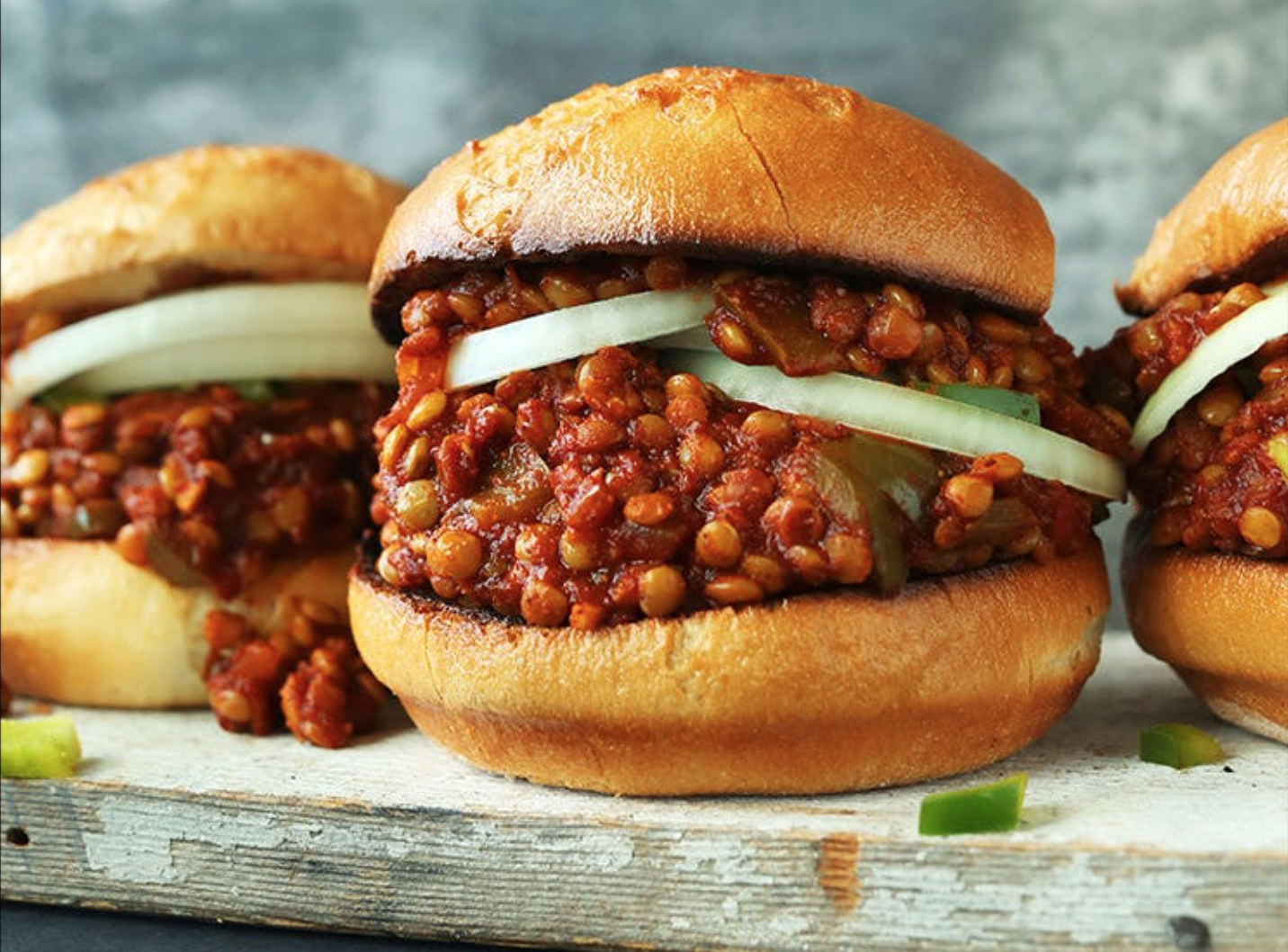
Screen Shot 2018-11-15 at 12.50.37 PM

@minimalistbaker on Instagram

So, back to the original question: why does faux meat and dairy even exist and why do many vegans seek these products out? The simple answer of course is that most vegans once ate meat and dairy as tradition led our parents to feed us that stuff, as well as being conditioned by the Powerful Influencers (corporate advertising). Now that we have left that cruelty mostly behind us, we are still left with familiar meals and flavours that we enjoyed. Seeing as we are unwilling to enjoy those flavours at the expense of an animal having to lose its life or be tortured, mock-meats became a suitable substitute. It’s not that we eat faux meat because we want to imagine the flesh that went along with it, its the seasoning, texture and flavour that is familiar and that we can have but without the cruelty.

The ethics and values of vegans are our strength, and we literally gave up on our so-called “favourite” foods because it wasn’t worth eating them if something had to die miserably or kill the planet in order to fulfil a selfish pleasure. I have great admiration for vegans who did this when there was no alternative (eg. 10, 20, 30 years ago) but to completely change their diets overnight and not be able to still enjoy the flavours they had become accustomed to. Of course, even worse back then was the fact that you were surrounded by meat-eaters giving you grief about your choices.

I would like to ask a few questions to meat-eaters, such as:

  • Why do meat eaters make food that doesn’t look like a piece of flesh? aka. sausage, burgers, meatloaf, fish fingers, chicken nuggets, etc. If humans were “designed to eat meat” then why aren’t pieces of animal sold with fur, hooves, etc so we can dig our big carnivore incisors into it and eat if fresh off the bone? Why disguise it?
  • Why do non-vegans kill animals in order to eat something that could be made with plants instead? Given that faux meats are now extremely similar in their characteristics to animal products, it literally makes no sense for people to eat something that tastes similar but where one requires a creature to die to satisfy one’s tastebuds.
  • Why do non-vegans make their food with vegan ingredients? Meat-eaters that give vegans grief are generally hypocrites as they will still eat bread made from grains, fries made from potatoes, lettuce and tomato on their hamburger, baked beans, vegetable-based soups, “meat and 3 veg”, etc etc. It’s not like they are eating meat with no other elements – maybe they should if they are self-professed carnivores. As one person said on Facebook: “Why not boil your… steak with blood or something… and season them with burned ashes”

The bottom line is: we don’t need meat and dairy. If you are a vegan reading this, then you are living, breathing proof that you are not currently dead because you are missing meat and dairy from your diet. For those meat-eaters who claim that it is their choice to eat meat, then I will say that your choice is a selfish one: the accumulated death, resource depletion and money tied up in health care due to your choice affects us all. It’s OUR PLANET TOO. Best yet, there are delicious alternatives so you don’t have much to give up!

Further reading on protein sources and amounts, especially if you are an athlete wondering how much to get, try the No-Meat Athlete or this guide at Healthline which shows specific food types and how much protein and other nutrients they provide.

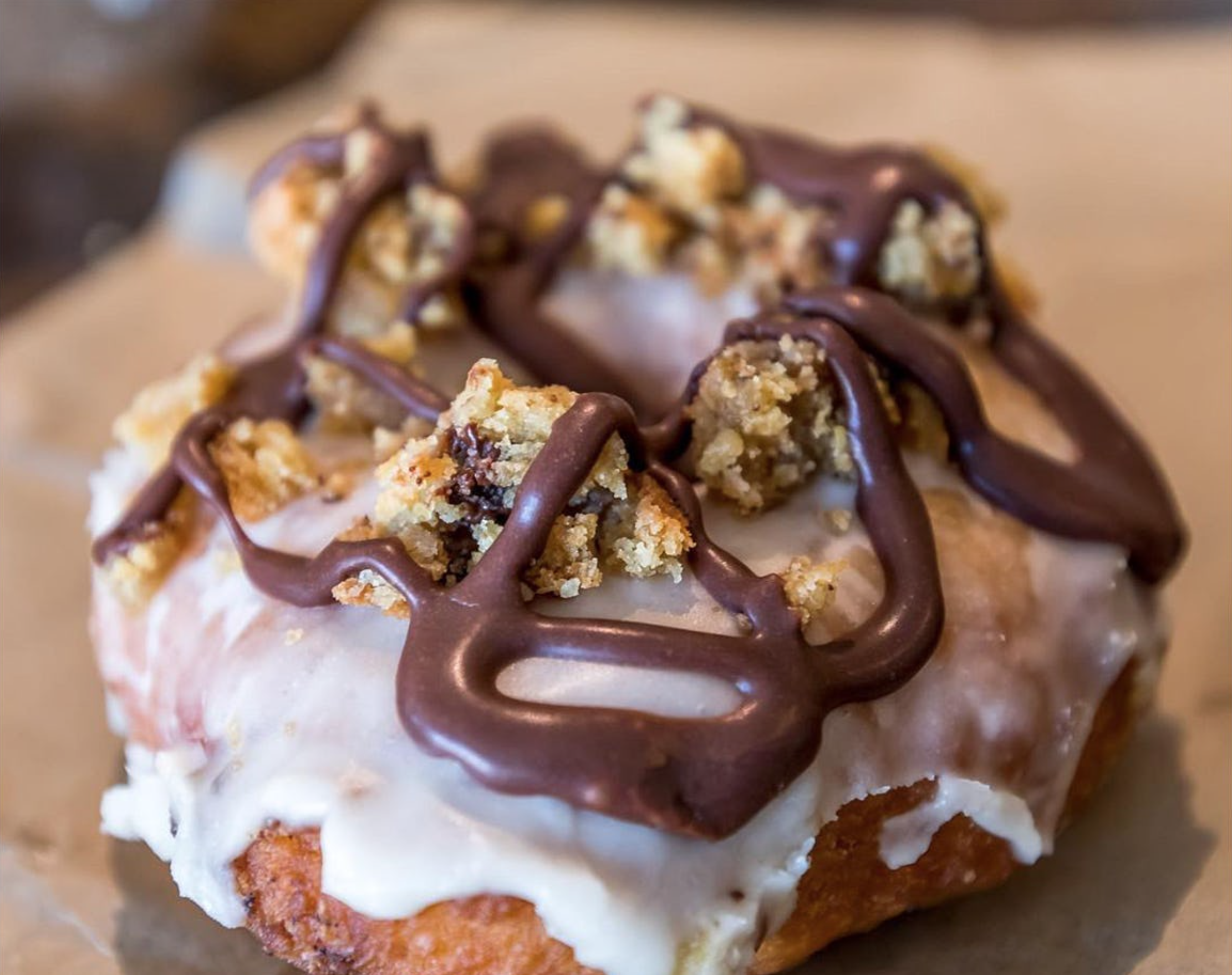
Screen Shot 2018-11-15 at 12.47.36 PM

@consciouschris on Instagram

Vegan foods reviewed – part 4

I’m excited to be getting back into reviewing products, especially now that there are both so many new foods to try but also so many new vegans every day choosing a cruelty-free life! To those who might be reading, kudos to you! Even though longer-time vegans are generally good at scouring the shelves and internet for any new products, I thought I’d put my 2 cents in as well since it’s harder to find groupings of reviews in one place. Eventually I hope to make it a separate and searchable area, with links to products.

vegan-symbol

These reviews are particularly geared towards former omni eaters who are keen to have that meat or dairy favourite available as a tasty cruelty-free equivalent.

Ratings are for what I consider the important elements of an appealing food product, with “Texture” being one that you might not normally see for other food reviews, but to me it is quite indicative of the success of a meat or dairy substitute. I choose “Value” over “Price” as vegan foods are generally more expensive than their meat or dairy counterparts (or rather, the latter are unreasonably and irrationally cheap given what they are) so I choose to focus on how good they are for the amount you pay.

On to today’s reviews:


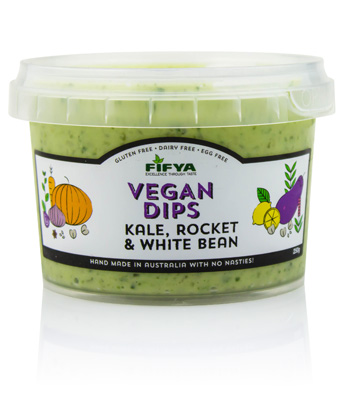
PRODUCT: FIFYA – KALE, ROCKET & WHITE BEAN DIP
Type: Snack food
Country of origin: Australia
Quality Food World

overall-5
flavourrating-5
texturerating-5
valuerating-3

2505264-fifya-vegan-dips-kale-rocket-white-bean-250g-web
The title of this dip isn’t the most enticing you’ll come across as, on their own, none of these things are that mouth-watering items of desire. However, the way that FIFYA has combined them where the white bean becomes the creamy binding element giving it a smooth texture and the spiciness of rocket and the other flavours like pumpkin seeds, lemon juice, apple cider vinegar and olive oil round out the dip in a very appealing way.

FIFYA does a variety of vegan, gluten free, preservative free dips like roasted eggplant & parsley, pumpkin & roast capsicum plus sweet potato to name a few. I intend to try them all in due time and I’m not sure how I came to try the kale one before these more obvious  choices with “roasted” veggies (my fave) given that kale is low on my veggie list (not my fave). I’m glad it happened though, as it is a satisfying dip for snacking.

The most impressive part of this dip is the flavour which is punchy and a nice balance of savoury elements, and is perfect on crackers, pita or with fresh cut veg. The texture is smooth and good, although perhaps a bit runny and lumpy as far as dips go, but it’s not a big issue. The dips represent ok value; I am not sure if it is because they are a smaller company or if by adding “vegan” onto something they can charge more, but at $2 per container more than most of their competition for ingredients that are far from exotic, $5.50 is a bit high to pay for a 250g dip. Being 100% vegan, I will reach for it if I’m tiring of hummus but I would buy even more often if it were a bit lower in cost.


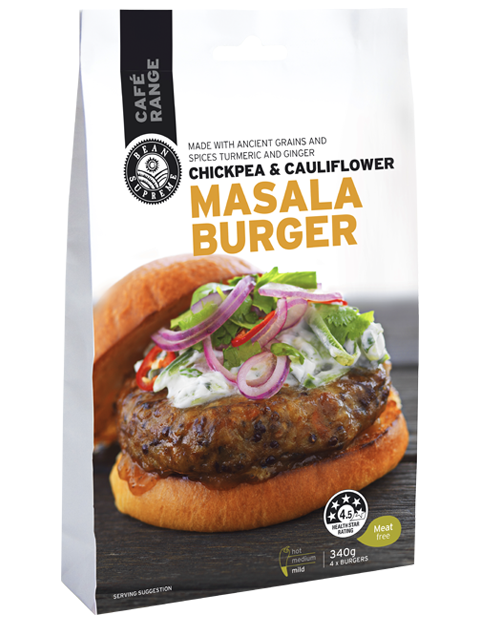
PRODUCT: CHICKPEA AND CAULIFLOWER MASALA BURGER
Type: Burger patty
Country of origin: New Zealand
Bean Supreme

overall-5
flavourrating-5
texturerating-5
valuerating-4

masala-burger-packaging

On first viewing of these Bean Supreme products, I find the packaging quite appealing: clean, modern and super-tasty looking food. I would be very surprised if a meat-eater would look at that image and not be seduced into trying it.

That does happen a lot with vegan foods I suspect, but the trouble is that the flavour doesn’t always match the what the image is selling. Unfortunately, even with vegans – most of whom started out as meat and dairy eaters – there is an expectation that certain foods that look a particular way will taste how we have become accustomed to them tasting. I pity the vegan product-makers who create foods with amazing flavours but someone who has a preconception might reject it simply because it doesn’t precisely match what they were expecting. Anyway, I digress…

What does that all mean with regards to Bean Supreme’s Masala Burger? Well, unfortunately the image oversells the product by a fair amount. When I first saw the raw patties, I was reminded of the ABC show The Checkout which has a segment that displays a product’s marketing photo vs what it really looks like. This was kind of the same: the patties were yellow and thinner with speckles like seeded mustard. Still, I hoped for the best and thought that as they browned they would look like the photo.

I baked them as it suggested that was a “healthier” way to prepare them, but when I took them from the oven they looked a bit anaemic, so I gave them a fast fry to brown them up. They looked better but were very dense and fairly dry compared to the juicy-looking photo. This is one of those cases where a beefy looking image was a omnivore’s nightmare, with a very-beany patty with blandish flavour. I didn’t get a sense of the intended “fragrant Indian spices” and it even was hard to dress up with some bbq sauce which I resorted to in the end.

At $8.60 for 4 patties, they weren’t the most expensive patties but they also were not that cheap, and given the competition in this category, I’d likely opt for something else before having these again.


PRODUCT: VEGANAISE
Type: No-egg mayonaise
Country of origin: USA
Follow Your Heart

overall-4
flavourrating-4
texturerating-5
valuerating-4
Organic-vegenaiseThis item has been around for awhile so it’s far from revolutionary, but it continues to be a shining example of how a vegan product can so effectively eclipse the item it is emulating.

Follow Your Heart has a lovely backstory of four vegetarian friends getting together 40 years ago to do a business that followed their ideals. You can see that there is a lot of love and successful tinkering in this product as I would say it is near-perfect. When I was an egg-eater 6+ years ago, creamy mayo had me hooked…I didn’t care for the low-quality stuff and ones that had a funny texture that was “slippery” and broke apart (like Hellmann’s) but rather liked Thomy’s very creamy and flavourful type. Vegenaise finds a good place in between flavour and texture-wise so it is as appealing as a spread as it is as a dip (the latter of which I am guilty of using it more often than anything else!).

I haven’t tried the organic version side-by-side with the regular version, so I don’t know if there is a real taste difference. I also love the garlic version which is much more aioli-like but not overly garlicky. Their byline is “better than mayo” and while I’d say that it is “as good as high-quality egg mayo” in terms of taste, the fact that it is eggless makes it far, far better.

The only thing that knocks down my score in terms of value is that I still don’t understand why there is a mark-up on vegan products when they contain no exotic ingredients (you’ll hear me harp on about this a lot 😝). At $9 per 473ml jar, it comes in 50% more expensive than gourmet egg mayos and twice as much as “regular” egg mayos. Even taking into consideration industry subsidies and economies of scale, I still think it is unnecessary to charge so much. If Follow Your Heart has been around for 40 years, they shouldn’t be considered a boutique brand anymore either.

Price rant aside, it’s one of my favourite daily-use products!


Vegan foods reviewed – part 3

It feels like I’ve semi-abandoned the vegan and sustainability part of this site but I’m getting back into it as I ramp up my focus on plant-based living and working.

The last products I reviewed were 5 years ago and wow, have things exploded in the vegan realm since then. The expanded range of options in every food group is impressive and exciting as the vegan movement takes hold of the world’s meat and dairy eaters. There are so many good dairy-free options now too, that I suspect even on-the-fence vegetarians might finally ditch their one last hold-out to full vegan eating!

I’ve made this page more extensive and visual, and will try to give variations on the same product type in order to truly compare the options that you have. I generally review products that have meat or dairy equivalents since otherwise they can just be called “food” since anyone can and does eat them.

vegan-symbol

These reviews are particularly geared towards former omni eaters who are keen to have that meat or dairy favourite available as a tasty cruelty-free equivalent.

Ratings are for what I consider the important elements of an appealing food product, with “Texture” being one that you might not normally see for other food reviews, but to me it is quite indicative of the success of a meat or dairy substitute. I choose “Value” over “Price” as vegan foods are generally more expensive than their meat or dairy counterparts (or rather, the latter are unreasonably and irrationally cheap given what they are) so I choose to focus on how good they are for the amount you pay.

On to today’s reviews:


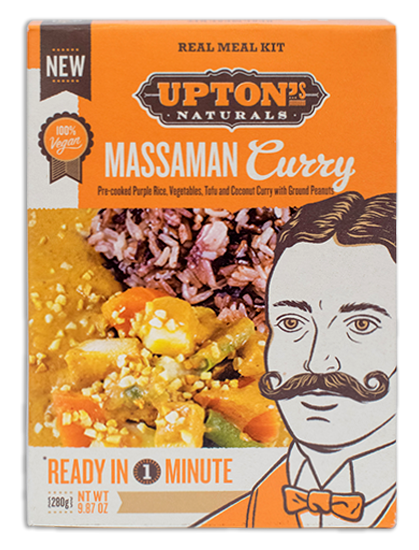
PRODUCT: UPTON’S NATURALS – MASSAMAN CURRY
Type: Prepared meal
Country of origin: USA
Upton’s Naturals

overall-5
flavourrating-5
texturerating-5
valuerating-3

massamancurry_0.pngI have seen Upton’s moustached men gracing their product boxes on grocery shelves for a couple of years now, but was only just made aware that this Chicago-based brand has been around since 2006. Their website shows off an impressive and mouthwatering array of products, many of which we still don’t get here in Australia (I’m looking at the seitan chorizo and mentally willing someone to distribute that here!) I did, however, note that this particular one that I am reviewing – the Massaman Curry – is a “Product of Thailand” so I’m afraid to ask if the ingredients are sourced in Thailand, shipped to America to prepare and then shipped to Australia for us, meaning there’s a whopping 25,000+ kms of fossil fuels attached to this item. Eeek!

Pushing that aside for the moment, their local distributor has just started importing the Massaman and I have to say, it is bloody delicious. There is a slightly enhanced zestiness to it that I wouldn’t say is my vision of a typical “massaman”, but it doesn’t matter because the plate is empty before you’ve had long to critique that point. Rich with flavour, crisp and fresh-tasting veggies, firm and flavourful tofu – it really was a satisfyingly delish meal.

The meal comes in microwave-ready vacuum-sealed plastic pouches, with separate purple rice, curry and crushed peanuts. My only peeve is that the package says it is “2 serves” which is quite wrong. It is only a 280g/480Cal packet and the serve that I heated up was smaller than my usual single-serve of curry (and I don’t eat exceptionally large serves by any means). It is really just a light lunch size but not a dinner for 2 or “I’m rather hungry” size. Because of this, the $9 price point is a bit steep for what it is. It may well be more expensive due to importing from the US (but then I do see it at US online retailers for US$6 so that’s comparable). I could understand the seitan or jackfruit or other specialty “meats” being a bit pricer, but non-organic tofu, rice and veg shouldn’t jack up the price that much.

Overall, a great choice for a guaranteed delicious meal, though not 100% “massaman-ish” and a bit pricey for the size you get.


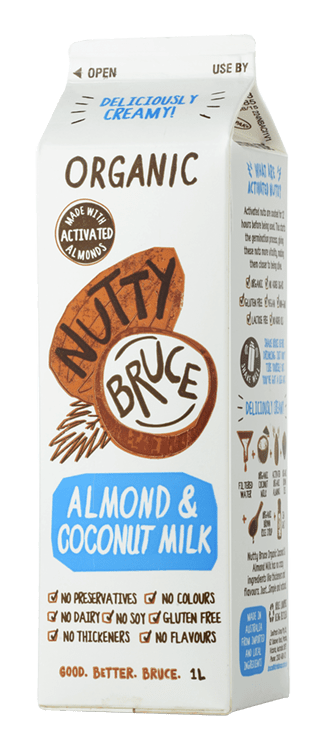
PRODUCT: NUTTY BRUCE
Type: Nut milk
Country of origin: Australia
drinkbruce.com

overall-5
flavourrating-5
texturerating-5
valuerating-4

nutty-bruce-coconut-almond-milk-2d-clipped-png-web-re-size-e1541133829246.png

Far and away the best nut milk I’ve come across to date. It is pleasantly creamy and not watery like so many long-life almond milks (probably due to having 2-3 times as much almond and coconut than other mylks). It only comes fresh (not in long-life tetra packs) so that might contribute to its more “lively” flavour too.

It is organic, has no thickeners, is slightly sweet (brown rice syrup) and is perfect for nearly everything I might have used dairy milk for in the past. When I go back to other almond milks, they taste limp and bland by comparison. Other coconut milks just taste like watered down coconut cream you’d use for cooking. It also doesn’t separate in tea or coffee like other organic milks I’ve had (I’m looking at you “Australia’s Own”).

Price-wise, it’s also the most expensive compared to any of the long-life milks. At normal non-sale price, they often sit at nearly double the price of others. Given that the others almost seem unpalatable now that I have had Bruce, it seems like good value, though it still adds up and I cringe a bit when I pile on 3L in the cart at over $17!

The brand is fun, it’s local and I love em! Yummmm!


PRODUCT: ALTERNATIVE DAIRY CO. – CHEDDAR BLOCK
Type: Non-dairy cheese
Country of origin: Australia
Alternative Dairy Co. (FB)

overall-4
flavourrating-4
texturerating-5
valuerating-4

22177_cheddar.jpgDairy cheese is a strange confection as it has a property which makes it congeal and go gooey, and for some reason we have found this to be appealing. I would be lying if I said that I am not attracted to this feature when it comes to pizza or lasagne or Mac n’ cheese, but it’s still a weird thing. So of course we want our dairy cheese substitute to have the same characteristics, but many vegan cheeses struggle to simulate this well.

As far as rating a vegan cheese, this is a semi-important feature in my book as it does bug me when you make a pizza or toastie and the cheese is in a semi-solidified state even after cooking for awhile and now it is at risk of burning.

Alt. Dairy Co. has found a happy place where their cheese has excellent texture, bold flavour without a dominant coconut oil taste and pleasant meltability. It is still just cheddar, but you wouldn’t feel embarrassed to serve it to your bovine-breast milk-loving friends. High snackability on crackers or straight off the block. The feature that bolder flavoured non-dairy cheeses I’ve had might be the potato starch which I think might be the secret agent to making good faux cheese. Another favourite brand of mine, Vegusto, use potato in theirs and it is also delicious and not relying just on coconut oil to get by.

Overall, this is a great effort from a local company who are just starting to make headway with their brand. I look forward to trying more of their offerings!


Queensland communities and roadtrip wrap

This blog entry represents the end of our current “road-trip” but I have to remind myself that this past 4 months has simply been part of a larger journey, and not a holiday as many people we meet think that we’re on. It’s difficult to quantify the success of the trip in terms of how far it has moved us along into any definitive results, but we’ve made countless good contacts, gleaned tons of valuable info, IMG_9146got insight into the values of others and how that colours their own dreams, plus the myriad of possibilities out there.

Heidi and I are confronted with mixed emotions about this expedition, as we feel more confident about what interests us and what really doesn’t, but there are particulars that might cause conflict. As a couple, we know that some of our choices don’t align with the other person’s dreams or might end up distancing ourselves from people we know, or may have financial requirements that are beyond our means. We also simply know that we haven’t yet figured out the best first step to take in this new direction and it is a frustrating place to be now with all this new knowledge before us.

Brisbane posed some interesting questions in terms of where we might like to set up shop. We both love the SE Queensland sub-tropical climate and lifestyle, its beaches, Brisbane’s multicultural communities like the West End and both know many great folks there. IMG_9484However, it’s far from the south where the bulk of Heidi’s friends and her family are (including ageing parents), it’s more expensive and Queensland in particular is less friendly to things like co-operative properties and communal living.

Here are some of the people we met and the kinds of things that are happening on the intentional community living front in SE Queensland:

Queensland communities

We visited several groups/couples/individuals who had a variety of styles of community either planned or currently active. A big thanks to everyone who shared with us, listened to our stories and ideas, fed us and are keen to follow a similar path in life. It’s just great to meet like-minded people on this alternative journey! 🙂

  • our first connection in Queensland with Wendy in Caboolture (just north of Brisbane), a friend of a friend whom we were told was in the process of building some sort of community dwelling. It turns out she was quite far along with a unique house build; she had taken an off-the-plan development and was altering it to accommodate numerous groups under one roof, particularly immediate-need people like refugees or homeless as her background was in social work. Her idea was to create a house with moveable partitions to allow for small rooms with individual kitchenettes and some shared facilities to accommodate people for temporary stretches. From a “communal” point of view, she could see this being a more permanent community down the track, but for now it would be a space to help folks get back on their feet
  • next we connected with Mark & Cath and several others who had started an urban community within a huge 4-storey terraced house in Brisbane’s West End. They were woven through the Waiters Union group who lived out their spirituality living amongst the marginalised of society. We really appreciated the combined life experience of the group and their desire to do life together in this vibrant, diverse but sometimes challenging neighborhood. Their model was more share house than we would personally want to do, but in this high density environment, it is really the only option. They openly invited us to start taking steps to be part of their community as I think they could see the shared values that we have, but we’re still not 100% sure if a super-urban lifestyle is what we want.
  • the following day we connected with musician friend Aaron and his wife Christy plus renewed acquaintance with past friend Christel and partner Scott. All of them have been considering a rural piece of property a couple of hours south of Brisbane to start a community. They were in fairly early stages of development and were keen to hear about our IC experiences to that point. This was one of our first experiences of really seeing different personalities playing a role in early decision-making and whom would be good to potentially live with. There were lots of differing directions at play; definitely an early meeting with lots of broad strokes. Cool to be part of and I look forward to that conversation with potential community members when we’re at that place. However, I’m not ruling anyone out at this stage!
  • a trip up to the Sunshine Coast hinterland brought us briefly to three places:
    1. we stopped in for a visit with Catherine and Andrew at a small cluster of houses that was their pseudo-intentional community. It was a tightly laid-out group of homes in a reforested area that was quite beautiful. Most people had some regular communication with one another but no really formal IC structure as such. Lots of potential and we were grateful for our hosts’ time and enthusiasm to show us strangers around on a brief visit;
    2. we decided to camp while up on the Sunny Coast and chose the eco-park at one of Australia’s most famous intentional communities, Crystal Waters. Comprised of hundreds of folks in quirky eco-homes built on freehold plots, CW has a distinct community intention but some people are critical of it just being nothing more than an eco-suburb these days. Since we were camping on the property, we were invited to be part of some weekly gatherings like Friday movie night and Saturday morning coffee & fresh sourdough where we could see a good sense of community togetherness. DSC02536Obviously we were experiencing this community more passively so I can’t be terribly thorough, but on the surface it felt a bit too sprawling, remote and not as intentional as I’d personally like.
    3. finally we visited Manduka Co-op for a brief pop-in visit and were received by the delightful Cara who was a more recent member but that was good for a fresh perspective as we often hear from long-time members. Manduka has all the trappings of being a vibrant community with a good size, great attitude, close-knit cluster of homes, connection with nature and a mindfulness for sharing. There were some internal issues that were being rectified and it seemed that the community was in a bit of a transitional period. Cara seemed to think that an infusion of new and younger members could invigorate things and take them to the next step. The only downside for me was a desire to bring animals for meat onto the community but there was otherwise some appealing elements to Manduka.
  • DSC02661we were grateful to our new friend Brooke to enjoy a “pop-up community” as we like to think of it, as she welcomed us into her home for more than 5 weeks. We met her extended family, learned valuable information about aboriginal Australians and lived in a share-house sense of “community.” She invited us to consider using her home as a community which would have been a fun experiment! Well, no doors are closed in our books…who knows if we might not end up in Queensland at some point in our life journey now that we know all these wonderful folks are there! 😀
  • eventually Heidi and I decided to head south again and give Adelaide some more of our time as we had found an interesting place to stay there in early August (more about that later), so we made a hasty departure for a quick trip down the coast again. We popped in on friends on the way and then connecting briefly with Matt and Ashlee in Sydney who had just put their house up on auction and purchased land a couple of hours out of the city with the intention of building a community on it. They were just starting to work out the details with who was going to be involved (about 6 interested folks so far), what the community will look like, how the community would support itself and so on. They seem interested in the farming side of things which is one thing Heidi and I have deemed ourselves not to be as interested in (plus they are raising animals for meat as well, which isn’t our belief/interest area) but are educating themselves up on permaculture and having bees for honey in preparation for life on the land. They are both young, high-energy and motivated to do this, so will likely be the perfect type of folks to kick-start a community and build it from the ground up.
  • IIMG_9649 encountered an unexpected community when I decided pay a WWOOFing visit to tiny house-builder Rob and his family north of Sunbury, Victoria. Tiny houses have become my fascination of late, to the degree that I am considering training myself in carpentry/design and building some myself or collaboratively. Rob lives with his wife, 3 teenaged kids, his son-in-law and granddaughter, plus there are numerous friends and people attending workshops coming and going regularly. There is also quite the community of animals intermingled wherever you walk making for a very interesting intersection of lifeforms. Not coming from a large family, I always marvel at these groupings of folks all sharing life in a compact space and making it work, but it truly is a form of community. The difference of course is that they are community by necessity not by choice (for the kids I mean). Still, it is interesting to watch the group dynamic at work. In the end, not so much house building took place, but it was an interesting last stop.
The case for Communal Living
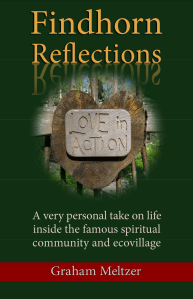
findhornDuring our travels, I have been reading Graham Meltzer’s book Findhorn Reflections which, as you might guess, is a series of articles about his 10+ years living at the famous Findhorn intentional community in north Scotland. The book paints the picture of a wonderful and balanced community, with Graham a transformed and joyous-sounding man who is benefitting from all that Findhorn has to offer (and vice versa). I would love to visit this town of 700-ish people and get swept up in the possibilities for successful larger-scale communal living. At the end of his book, Graham summarises communal living in a way that resonates with me and why Heidi and I are seeking this life:

“To my mind, communal living doesn’t need to be justified, defended or even celebrated in terms of its purpose. I see communal living as a default setting i.e. it’s the most natural way for human beings to cohabitate. It should be the norm, and of course it was, up until the Industrial Revolution some 300 years ago. For millennia beforehand, we mostly lived as fully interdependent, mutually supportive members of tribes, hamlets, villages and towns. And we lived sustainably! If present day communal living has a purpose at all, then perhaps it’s to remind us of this now forgotten fact.

Particularly over the last 150 years, a sense of oneself as an integrated member of society has been supplanted with a measure of one’s economic worth, which has in turn been closely associated with status and power. Human values have fundamentally shifted from the social and cultural to the economic and material. Most recently, human need has been dissociated from social satisfaction and cultural meaning; it’s aligned instead with consumption, not only of commodities, but also ‘entertainment’ and substances. Never mind that this trend has fuelled global warming and climate change; it’s more than enough that it has eroded our innate capacity for creativity, service and love.

If we are to regain our basic humanity then the specious satisfaction offered by consumption needs to be replaced by satisfactions that are non-material. Communal settlements are the perfect setting for replacing psychological attachment to material gain with location-based social fulfilment and cultural rejuvenation. Anti-consumerist values are, in fact, common amongst members of intentional communities and axiomatic for many sectarian, egalitarian and alternative lifestyle groups. Intentional communities model a more humane, pro-social, values-based way of life. In so doing, they encourage a return to a more modest, measured and, dare I say, spiritual way of life.” (http://www.goodreads.com/book/show/25480605-findhorn-reflections)

I love the idea that communal living is a default setting of humans which we need to return to in order to stop the current fracturing of society. My ideal communal structure is the car-free “Villagetown” idea introduced by Claude Lewenz (someone whom I admire a great deal for his progressive ideas and whom I will dedicate a blog post to soon), which is the only major aspect not integrated into Findhorn’s design.

ecovillage view the field ecohouses ©Findhorn Foundation/Eva Ward

Without a doubt, one of the main things this trip has reaffirmed is that communal living is essential: I don’t want to return to suburb living; I don’t want to be part of the current economic system/expectation; even as an introvert I recognise the need to connect with like-minded people, not just shut away those who are on a very different path to me; I need to pursue my new calling even at the expense of shifting away from familiar career and lifestyle paths and not worry about other people’s expectations of how things should be.

Roadtrip reflections

A great finish to this whole trip is that we return to Adelaide with a 2-month stint at the best urban intentional community in Adelaide: Christie Walk. We managed to rent a place there from the tenant who is overseas, so while it isn’t a permanent step into community, it’s a good test-drive! Hopefully we can roll it onward into more community-related living.
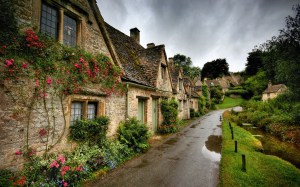
The parts of this recent journey where we were engaging with communities were very exciting and valuable glimpses into what is possible, both for our own created community (should we take that path) or what we can expect in that world. From the perspective of creating our own, we realise that there is a lot of work involved. The payoff is developing a dream into a reality, creating a unique version of how community can look. Heidi and I differ in this dream as I am probably in the mindset that I could be involved at the ground level whereas the people and community take precedent for her, however or wherever she feels drawn to get involved. I believe that a curated community can much more deliberately invite like-minded and similarly-valued folks to develop and inhabit it, and I have a desire to live out life with folks with similar outlooks and ambitions.

Beyond this idea of how we might instigate a community or join one in progress, Heidi and I are still feeling out what our roles might be in the community and what the basis of it might be. The parts that have become clearer for me as necessities in my future community are:

  • fundamental shared values of members are important: people who genuinely care about the physical, emotional and spiritual wellbeing of the planet and its inhabitants is primary.
  • authenticity and transparency is key; to ones self and each other. Honesty, integrity, compassion, patience, tolerance, trust, respect.
  • creativity in all areas of life: creative thinkers, problem-solvers, visual artists, food producers/preparers, engineers, building, ecologists, musicians, etc
  • celebration and gratitude: finding ways to build in regular moments of thankfulness to keep the joy and passion of life alive and well
  • healthy mind, body and soul: healthy eating, meditation/yoga, exercise/sport, socialising, communication, working together, education, innovation, fun

Those are some of the fundamental elements which may or may not have changed much since before we started visiting communities, but when I write each of these things down now, my mind is directly connecting them to things I either liked or thought were lacking in places we’ve been.

As things stand, the path forward is as wide-open and uncertain as it’s ever been meaning that we will have to strike out in some direction and just start trying something or else we’ll just be thinking about it forever. At least we have a better grasp on options, challenges and locations now to help inform the path we take. Thanks for following our journey and thanks to everyone we’ve met along the way!
DSC02590

Save

Save
Dharmananda: on the farm with the Dharm.

~ DESTINATION FOUR: THE CHANNON, NSW ~

Cows, creepy-crawlies and communal living.

One of the most common remarks that I have heard by folks who lived at or know the Dharmananda community is that they think it’s one of the best they have come across. For two weeks Heidi and I incorporated ourselves into this community discovering that the quality relationships, good ethos, strong values and beautiful location does indeed support the high esteem that this community is held in.

DSC02429

Interestingly (well, to me anyway), this trip has consisted of us randomly picking communities that we know nothing about but sound good to visit and then turn out to be historically significant in one way or another. It turns out that communal living on the Dharmananda property actually preceded the 1973 Aquarius festival. Aquarius is largely considered to be the birthplace of most of the communities in Australia that have existed for over 40 years. In this region (and arguably Australia), Dharmananda and Tuntable Falls (our second choice while researching) are considered the best known and well-respected communities, with Bodhi Farm right up there (a place we might visit as we head south in July). It was a privilege therefore to be opportunity to spend time with this group and find out what makes it so unique.IMG_8794

Right off the bat, our day-one first impressions were a mingling of the people, the place, the creatures and the dairy. The people were outgoing and friendly though you could sense that WWOOFers and other visitors were a common occurrence seeing as how well-oiled their guest machine worked! My first thoughts of the place itself are rich with adjectives: densely lush tropical forest; creative open-plan homes made from recycled materials; a homey and cozy community house; buggy, rough, open, remote, quiet. IMG_8772The creatures were quite visible from the outset with the web of a hand-sized spider positioned strategically by the door to the community kitchen, a large huntsman welcoming us to our room, skittling cockroaches in and on everything when we opened the door, and a carpet python living in the rafters above our bed. Welcome to the jungle! Lastly, as we were welcomed by mooing bovines, the fact that this is a working dairy farm wasn’t lost on us during planning (an interesting challenge given our leaning towards veganism), but we decided to look past that initially and focus on the people and relationships before delving more deeply into the state of the cows.

What makes Dharmananda such an intriguing place? Well, a few things: the members of the community are an eclectic mix of personalities, many of whom (particularly the founders and those born into the community) have been here more than half their lives. They care for the land and for each other, their bond with both ensuring ongoing health and unity. There is a good blend of creative, practical and relational skills with everyone participating in their roles with dutiful acceptance. There’s also not too few or too many folks here: at around 20-25 at any given time, a good balance has been struck between in-your-face-all-the-time and I-never-see-some-people. DSC02528There is a shared meal available nearly every night at the community house with most people taking part at some point through the week. Besides the humans, an abundance of wildlife and wildness in general is both a virtue and something that you need to get accustomed to, but for the most part it is stunningly beautiful, tranquil and a wondrous thing to be able to be so close to nature. Credit for this forested and lush environment goes to the founders who rehabilitated barren animal-grazing land and made it what it now is. You’d scarcely believe that it was largely devoid of trees 45 years ago given the current diversity of native flora (and, increasingly, eradication of non-native weeds) plus rich habit for birds and creatures.

DSC02434

The people and the place. That’s pretty much Dharmananda’s magic ingredients in a nutshell!

For Heidi and I, coming in again under the label of WWOOFers, the deceptively simple idea of “people and place” needed to be experienced first-hand, and it reminds me again of the importance of staying in a community for a little while. As we pulled out weeds for folks like Sho – a Japanese chap who came 15 years ago as a WWOOFer and never left – or Leigh – a fixture since 1979 who is the King of the Cows – we gleaned a great deal of interesting info about the community at different stages. IMG_8825Maggie – a stylish, humorous and feisty 84 year old member – makes cheese during the week and has regaled us with stories of the farm. Carol (pictured) – one of the original founders and a sassy tell-it-like-it-is woman with a beautiful house on the hill – was quite candid about Dharm’s history and her thoughts on her ageing community family. We were also lucky enough to experience the group in social activities together, like Saturday dinner where everyone is looser with wine, laughs and board games, or at their monthly meeting where we got to experience their decision-making and democratic behavior with one another at work.

You might note that above I said pulling “weeds” and not “weed”. Dope. Pot. Ganja. Marijuana: no matter what you call it, it’s not available here. Dharmananda has had a strict “No Dope, No Dole” policy for most of its existence which is probably why it is a tight and focused community still after 44 years. Where other communities have to worry about raids and secretive activity surrounding what their community gets up to, Dharmananda seems pretty clean. According to neighbour Chris, that’s not to say that they haven’t been lumped together with the other communities in the eyes of the police. Chris regaled us with stories of actual gunships that have landed on the property from time-to-time as the Australian Federal Police (AFP) periodically perform drug raids. Apparently the AFP refer to Dharmananda as “Sector 4” while Chris’ place has defiantly actually used their Sector 5 moniker as their official community name – in true rebellious activist spirit. Those early days and the busts of the 80’s and 90’s must have been some wild times in this region!

IMG_9051

Leigh, one of the early members, on his trusty tractor

From a farming point of view, the heart of Dharm is the dairy operation. A number of interesting things transpired to do with this, as I went in as a staunch believer that dairy is part of a cruel industry, somewhat unhealthy and ultimately an unnecessary activity. However, heading onto the farm, I wasn’t wearing my Vegan hat and didn’t feel trepidation about the forthcoming experience, likely due to the fact that I really had no basis for comparison having never spent any time on a dairy farm. IMG_8789On about day 3 at Dharm, however, male calves were just being separated from their mother (and due for slaughter; a cruel by-product of the dairy industry) and had started a two day-long crying out to each other, day and night, which was difficult to experience. That evening, at a dinner table filled with community members who spend hours a week processing the dairy and living off of it, we had a fairly lively conversation about the ethics behind it and Leigh surprised me with taking a firm but compassionate stand about how he struggles with parts of the dairy routine, like separating the calves. A sly reminder to the other members at the table, he commented that “this is all done so we can eat our cheese and butter.” This impressive show of humanity was coming from the man who has carefully tended to the cows 7 days a week for over 30 years. I would learn over the rest of our stay that he treats those cows with diligent care, talking to them and calling them by name. Watching the cows follow him around made me realise that there was a lot of heart invested into what he does. It’s one of those strange hypocrisies that humans are often involved with, and despite my inherent objection to the whole idea of dairy, I could see genuine caring and good intentions behind the way the cows were treated here which says a lot about the type of people who live at Dharmananda. Due to the lengths that they go to to care for the animals, who in turn fertilise the land for their veggies, I could no more condemn them than I could myself for driving a petrol-powered car and contributing to polluting the Earth. It was a healthy thing to experience; I could more clearly separate intensified factory dairy farming done by faceless corporations from this sort of small, bio-dynamic and holistic approach. IMG_8788My feelings about consuming dairy remain the same, but I am not lumping everyone together into one box.

The farming part of life inspired some interesting conversations with community members. From at least 4 separate conversations, I was told that Dharmananda wouldn’t have been someone’s first choice anymore if they knew how centred around the dairy, labour and food production that it is. In fact, each of these people mentioned neighbouring Bodhi Farm as their preferred choice. In their next breath though, all those individuals also said that it was the people that kept them here and they were all family so they endured. It did cause Heidi and I to perk up our ears with interest about Bodhi Farm, however. We are considering visiting there on this trip too; from comments we heard, it sounds like the virtues are that that Bodhi is in the quiet forest, more aesthetically-oriented, more focused on music and creativity and less on farming and labour, less about vehicles and more practising/observing Buddhism. Certainly some of those considerations would likely be shared by Heidi and I as we are interested in arts-centred communities with a spiritual core. It therefore makes Dharmananda even more of an enigma; people are compelled to come and stay despite the lifestyle not necessarily being their first choice. It says something about the vibe or people or location or something deeper….but I also sense that change is in the air. IMG_8833The big question will be: once this particular “constellation” of folks (as Carol calls the founders and current group) moves on, will the next generation maintain this type of farm-centric existence?

Overall, our experience of life in the community was very positive. As WWOOFers, we generally worked 4 hours a day from 9am til about 1 or 2pm with generous morning tea and lunch breaks, after which we could do as we pleased. We probably had our fill of weeding tasks as about 75% of what everyone wanted us to do involved that, but we did learn a lot about native vs non-native plants, prepared the food beds for Dharm’s next crops, participated in the regeneration of the bushland and IMG_8839helped improve the community in general. The downside might be that we also got bitten by ticks, jumping ants and leeches in the process, but we worked alongside a 2 metre carpet python one day, which was pretty exciting. We got to spend most of our days outdoors, chatting with community folks, basking in the unusually warm late-autumn sunshine and soaking up the clean air in the beautiful forest.

One of our exciting WWOOFing assignments was to go up to the meditation centre that was co-built and co-owned by Dharm and Bodhi, on the top of their hilly property in the untouched, ancient rainforest. This retreat was graced by hundreds-of-years-old trees, with little “cootees” (or sleeping/mediation huts) dotted around, a communal kitchen and a large centre for group mediation. I thought the farm was pretty peaceful, but up here there were no human-created sounds except the whip birds and wildlife. DSC02501Even the sun and wind could barely get through the dense trees.  We were very thankful for the invite to come up with Jen and her partner and stay over night as this place clearly illustrated to me one of the reasons that people are so passionate to save these forests and to live in this soul-filling region. (I’ve posted a bunch more photos from this beautiful spot plus the rest of Dharmananda in my photo gallery)

DSC02517

DSC02516

DSC02485We rounded out our visit with trips to the local village, The Channon, which had a throw-back feel to it, plus we saw their famous monthly market which was all local arts and crafts complete with all the old hippies and other locals walking around there. A must-see on our list was also famous Nimbin and it’s healthy hemp and pot industry, but it had a bit of a seedier feel to it than I expected. Still, it was a very interesting spot and worth a visit. The countryside in the region is impossibly pretty; truly Australia’s Tuscany in my opinion. Without a doubt, we need to explore the area more as it is thick with intentional communities and the exciting community-at-large makes it one of the most interesting parts of the country for like-minded folks, I imagine. Dharmananda was a great introduction to the area and I hope we can experience more of it and learn from the pioneers of communal living in Australia!

There was so many amazing photo opportunities in this region and on the property that I made a separate gallery to show off more pics than what fits in this blog post.

As always, please check out Heidi’s site about this visit as well for her unique insights on our journey.

IMG_8773