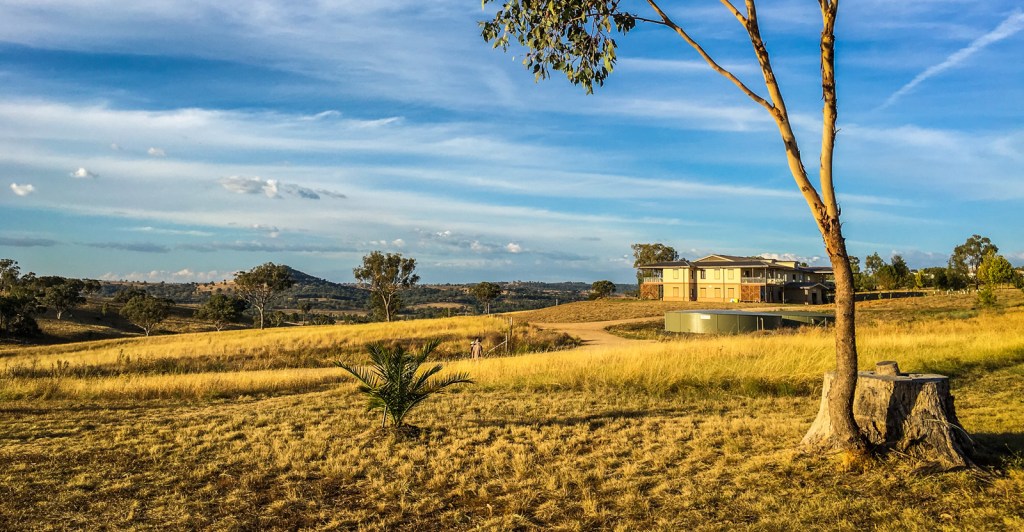
~ DESTINATION TWO: ELSMORE, NSW ~
Serving Jesus to the max
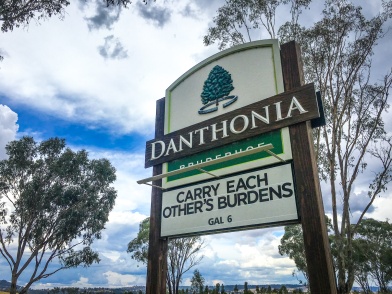
It’s been two days since we left Bruderhof’s “Danthonia” community near Inverell, about 3 hours west of Coffs Harbour in New South Wales. In that time, Heidi and I have had numerous conversations and debates about the place: challenges, opinions and comparisons.  The reason for all this ruminating is due to the depth and complexity that makes up this most intense community. While the point of this blog is to try and explore communities from a non-judgemental and objective perspective, Danthonia struck a chord with us in a variety of deep and personal ways.
Bruderhof is an umbrella organisation for a whole global network of intentional communities whose members live as if they are a single entity – despite being spread across vast distances. From beginnings in Germany in the early 20th century, they moved the community to England, were politely forced out and then found their way to Paraguay, eventually moving to eastern USA and more recently expanding to Australia. They now have communities in each of these regions with members routinely being relocated within the system. One odd feature: most individuals have an west coast American-styled accent, which was a bit bewildering (someone referred to it as the “Bruderhof accent” as it isn’t really specific to a particular part of the US).
Bruderhof is not easily defined as there is a lot of stuff happening on many layers. But at its core, it is a Christ-centred community, a point which they take very seriously (as in, literally commit their life to). The basis of their faith is largely around following Jesus in the way of early Christians, being people of immense faith, simple living, and “united in a bond of solidarity and equality in which each one says: Whatever I have belongs to the others, and if I am ever in need, they will help me.”
A major stipulation of being a member of Bruderhof is that you dissolve all assets and personal possessions and give them away. That sentence is worth re-reading and thinking about as it is easily one of the biggest commitments that anyone, anywhere will voluntarily make (consider: prospective members who are home owners will sell property, car and furniture, drain bank accounts, sell shares and relinquish pensions. All of it is donated to charity (or to Bruderhof if you desire, but they are quick to say that this is not a requisite. They would prefer that you sort out your affairs before joining)). The reason for this is that in order to fully and completely follow Jesus, the members of the “brotherhood” believe that this is only possible without a way to back out or with potential expressions of individuality becoming a distraction.
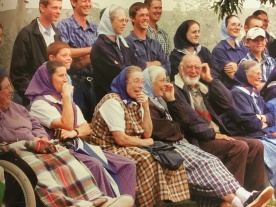 In terms of “authentic community”, Bruderhof takes the concept of sharing to the only logical conclusion given their beliefs, and it is truly impressive. Most dwellings are homes which are shared between several couples, singles and families with shared kitchens and bathrooms as well as modest-sized personal space. Homes are somewhat utilitarian (almost institutional) in their design, outfitted with all the basic needs but not much more than a handful of members’ personal ornaments, books or pictures on the walls. A dining hall furnishes members with at least one shared meal a day. Doors are not locked and money is never exchanged so keys and wallets are unnecessary.
  All clothing is supplied as required and they have largely settled on a “uniform” of sorts: blue jeans and checkered shirts for men, somewhat formless Amish-style long dresses with head scarves for women. Rather than see these as sacrifices, Members embrace them as gifts: a way to keep them focused and pure; a way to keep life simple and sustainable; a way to dispense of the frivolities and unnecessary intrusions of modern life; and especially a way to keep their mind on the task of serving Jesus.
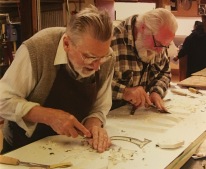
There is a co-operative business that helps pay for ongoing costs called Danthonia Designs, a commercial sign-making shop that does very high-quality products which you can see throughout the region. From a community-and-business perspective, they have nailed this one on the head: the product is competitive in every way with no corners in durability, design or service; it can be staffed by nearly anyone in the community
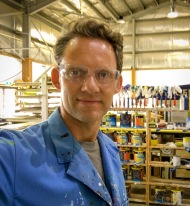
Me getting into some sign work
(Heidi and I both paid our way by working there), and that staff doesn’t require a wage; the building is on-site so no rent need be paid, meaning that all profits from very low overhead goes back into maintaining the community. Brilliant.
Initially, I had some real concerns as soon as we entered into this community. I was a real fish-out-of-water in my inability to talk-the-talk biblically-speaking, which can be intimidating in a 300-person community who are all deeply committed to God. Then, upon arrival, when our friendly neighbour suggested that Kito would be fine staying outside in a meter-square cage, I was concerned that dogs were not going to welcomed warmly and our pup might have a terrible week (to their credit, they quickly welcomed Kito into the house when we balked at that, and he stayed in our cozy room most of the time). Concerns increased still as the entire community seemed to be 100% meat-eaters (not so convenient given we are mostly vegan; also a bit hard to understand why the compassion they show through their faith doesn’t extend to animals), although 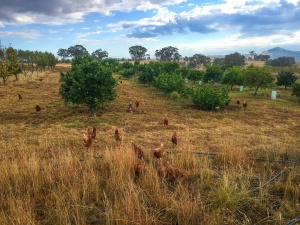 I give full credit for the whole community making a valiant attempt to accommodate us with a vegetarian diet instead (sidebar story: there was a funny moment when a “Tyrolean folk song” about the harvest was sung that featured the lines: “If we raised nothing for people to eat // Then what would they live on if there were no meat? // No roast and no dumplings, for coffee and cream // No eggs and no chickens – Oh what a bad dream!” which had people around us giggling. Heidi and I sang the ending “oh what a good dream!” instead 😀 )
We quickly came to appreciate how hospitality is central to how Bruderhof residents operate, although my fears about acceptance due to my “different” faith were always present.
The Bruderhof has an open-door policy. No matter who you are, we are delighted to meet and spend time with you.
As with most dedicated followers of Christ, hospitality plays a very large part of their lives and Danthonia’s members were certainly no different. Indeed, we were shown SO much hospitality over our 6 days there that we were fairly exhausted by the end of it. Some days, we had appointments for every meal plus afternoon tea, and this was besides the likelihood that most people we came across while walking through the village would stop and chat. 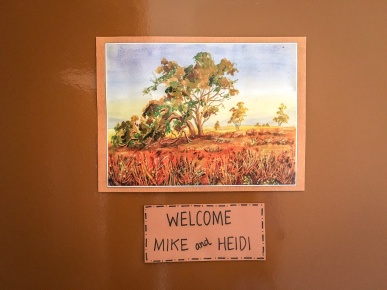 Most people that we met started their day before sun-up, so breakfast invitations were a constant source of struggle for me to be ready to talk at 6am. And this wasn’t idle chit-chat; in nearly every circumstance, some deep-down faith discussions were the topic on hand. As I mentioned above, this was something I wrestled with as my spirituality is a complicated mix of things that doesn’t fit neatly into a box. It might seem petty to mention given the extreme hospitality we experienced, but the only thing that bothered me was the level of evangelism that seemed to be happening in numerous visits. I fully understand that if you are committed to your faith and it is supposed to be a joyful centre of your existence then you want to share that, but I certainly felt like we were being challenged and preached to (and me, a little judged perhaps) at times.
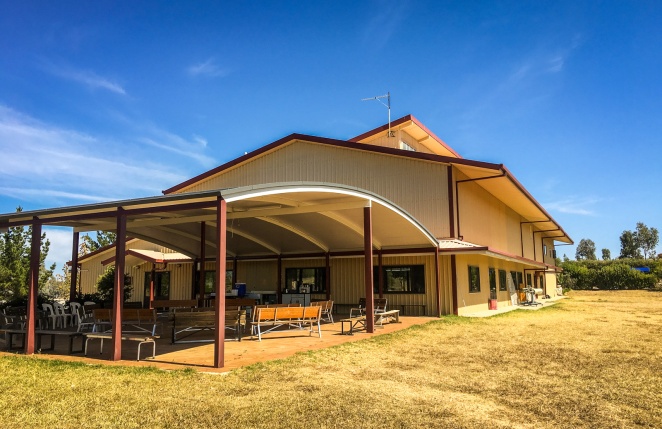
I don’t want to sound as though I am being too critical though; this community was the most well-formed, connected, cooperative and smooth-running as you’ll find anywhere. In fact, I suspect that by experiencing this before others on this trip, we’ll be seeing nothing like it and will possibly be disappointed if similar unity is not achieved. Members worked side-by-side with ease, played and prayed together, co-existed freely from young to old, broke bread en masse and planned to spend life with one another for now and the hereafter.
Some more stuff we learned and experienced at this unique community:
- people sing regularly: in the morning, singing can be heard from any window as families gather and sing before a meal or elsewhere on campus. There were never sounds of television or canned music playing (in public spaces)
- there’s no eye-contact avoidance that you expect in mainstream society these days; people all say hello and will stop and talk.
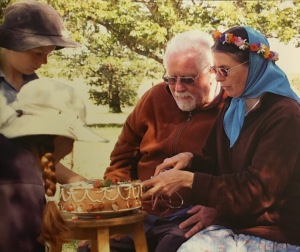 This wasn’t just because we were new; I saw everyone doing the same
 - the system cares for all people: single, families, disabled or elderly.
- quality education seems to be of high importance (as it should be) with mainstream groups starting to take note at the results coming out of Bruderhof’s own schooling system. The overall impression I got of students and kids in general were a well-behaved, respectful, and intelligent group.
- At 18 years old, teens leave the community for a “gap year” of sorts, but are usually placed in another community to experience a more independent lifestyle. Many of them stay on and become full members (committing themselves to a life-long arrangement in the community after they turn 21). We met many 2nd and 3rd generation individuals who had never lived outside the Bruderhof system!
- Aboriginal elders have been very taken with Bruderhof and our hosts spoke of how they have a permanent invitation to Aboriginal lands
 speaking of our hosts – Bill and Grace Anna – they were incredibly helpful, accommodating and forthcoming with their desire to make sure our stay went smoothly. Bill is soft-spoken with a wry sense of humour and gave us lots of reading material to take with us; Grace Anna was kind and fed us numerous times as well as provided guidance on campus. We are very thankful for both of them and the dozens of others we met and whom welcomed us in
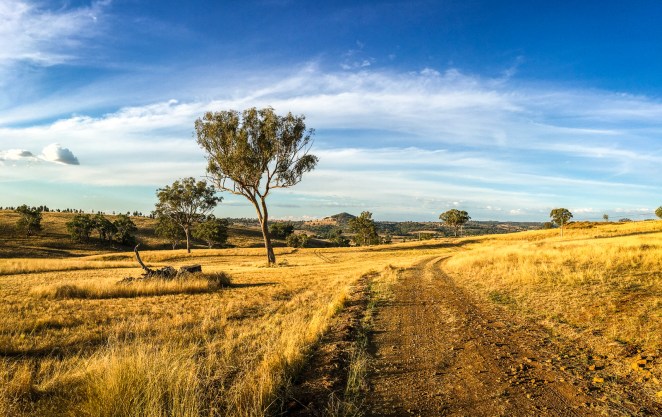
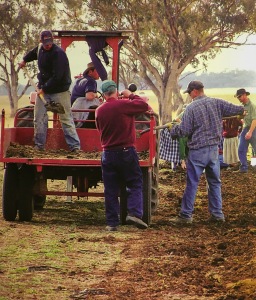
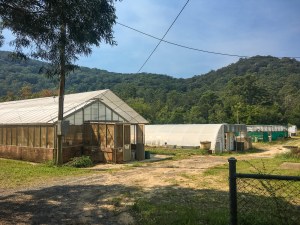
- permaculture and rejuvenation of the former pasture lands are moving in full-force with widespread tree-planting, soil improvement, cattle pasture rotation techniques resulting in return of birdlife and other improvements
- the community reaches out to different degrees, from local support for people in crisis or globally with a particularly tight connection with World Vision, among others.
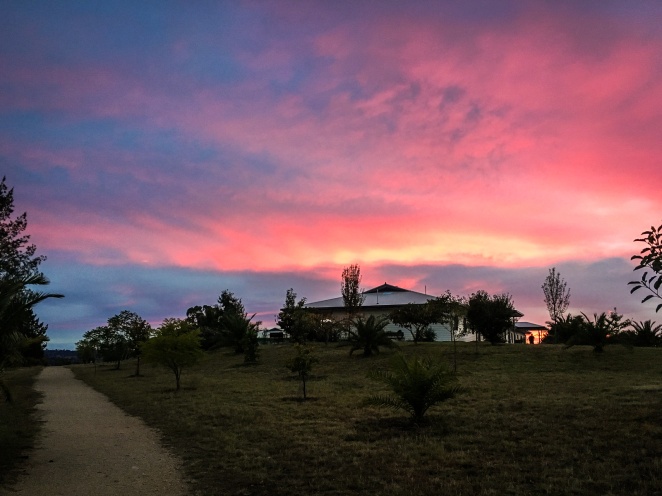
Overall, you can tell that Jesus is central and community followed in and around that. Most members were happy to tell us that and I believe that this is the only way a community like this can work. People were quick to say that this life isn’t for everyone and that community life is never perfect and can be terrifically difficult at times, but that it was all worth it. Heidi’s faith is more aligned with theirs, but she admitted that she would struggle with a few elements despite the benefits of an immersive Christ-centred community (she can tell you about her impressions in her blog. Her thoughts are far less critical than mine 🙂 ). For me, there are some powerfully unifying things that make this community one of the tighter ones I may ever come across, but I don’t know if I’ll ever have a level of faith that is required to personally commit to this community. Despite this, the people were wonderful and hopefully we’ll be able to keep in touch and visit sometime in the future.
For more on the Foundations of the Bruderhof community, check out their informative website.
Bruderhof also has its own publishing house, Plough, which produces a wide range of spiritually-focused print and e-books but that also cover a broad range of topics as well (while there, I was reading an interesting, non-faith-specific book called “Why Forgive?” which was very good). Visit their online bookstore.
As I mentioned earlier, Heidi’s impressions of this community can be found on her blog.


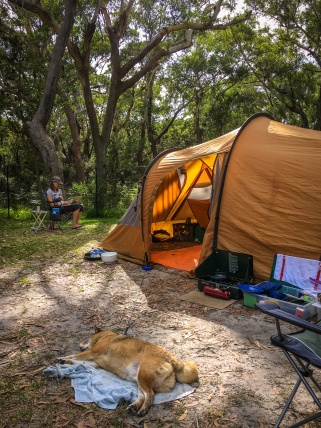

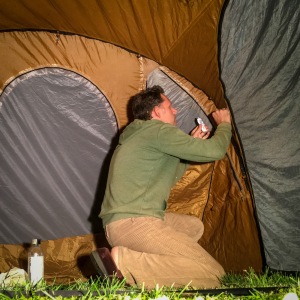 A few days before that, I indiscriminately grabbed boxes of camping gear from our long-term storage, and packed them into our car without even looking inside them to check everything was there. Thinking of this now confirms to me the somewhat blasé nature of this current expedition we are embarking on compared to the “fanfare” of last year’s first trip. That’s not to say I am treating this trip lightly, but perhaps I am approaching it with a bit more knowledge and confidence in this life direction we’re learning about.
 Big Tiny Adventure